

NEWS & UPDATES
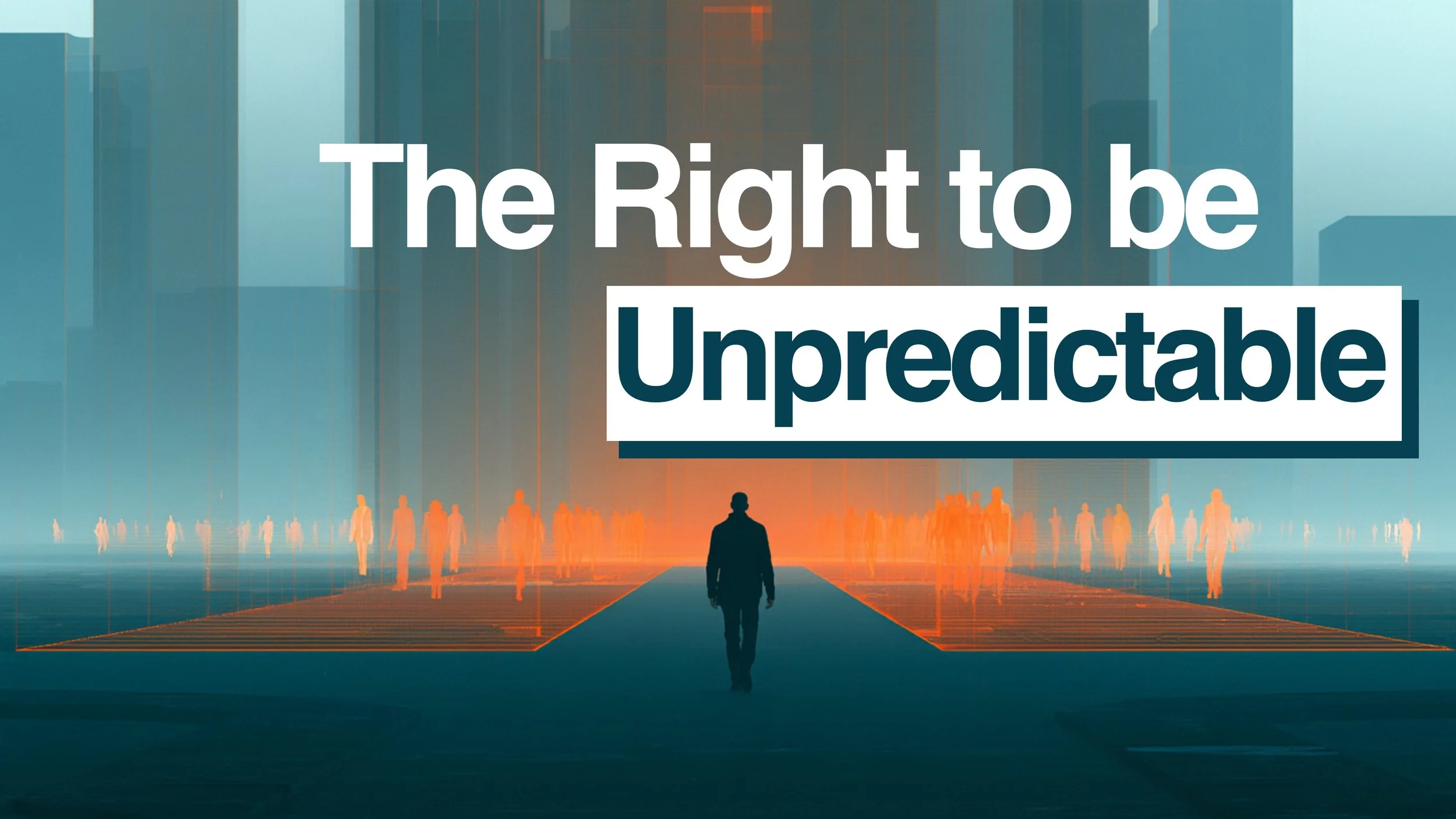
The Right to Be Unpredictable
Recommendation engines, behavioral profiles, and AI trained on the past are all quietly built to keep us predictable. Modem Futura Ep. 101 asks what we lose — and how we might design for serendipity on purpose.
Most of the systems we now live inside share an unstated goal: to make us easier to predict. Recommendation engines learn from what we've already watched. Professional platforms reward the cadence that worked last time. Large language models, trained on the archive of what humans have already written, carry the norms of the past into every answer they give. None of this is malicious. It is simply what optimization looks like when the thing being optimized is a person.
In Episode 101 of Modem Futura, Andrew Maynard and I ask a question that sounds abstract until you start noticing it everywhere: is unpredictability a right, a responsibility, or a luxury?
Why we both want and resist predictability
Humans organize. We divide land into countries and time into calendars and people into first and last names, because a society that can anticipate the future can prepare for it. But the things we prize most — creativity, innovation, discovery, the founding of anything new — come from someone seeing what the existing model didn't contain. A fully predictable civilization would be static, and as Andrew puts it, static is another word for dead. Unpredictability isn't noise in the system. It's how the system evolves.
Predictability breeds fragility
Futures thinkers talk about black swans, events no one saw coming that reshape everything in hindsight. One of the arguments in this episode is that over-predicting is how you breed them. The more tightly you control what you expect, the less you can see, and the more exposed you become to whatever you've foreclosed. Minority Report gets invoked here not as prophecy but as a used future: a story about prediction at scale that also shows how brittle such a system becomes the moment an unpredictable human enters the loop.
The playpen problem
Education is where this tension is most visible. Institutions say they want critical thinkers and problem solvers, then assess everyone against the same template. Andrew calls this a playpen, a space defined by what you cannot do. The alternative I've been arguing for over the past decade is a performance of understanding, where learners demonstrate depth in a form they define. Then there's the playground, which has edges too, but inside them imagination is permitted to run.
Constructive unpredictability
Not every deviation is creative, and the episode is careful about that. The distinction we land on is constructive versus destructive unpredictability. The design challenge, for educators, technologists, and anyone building the tools we'll think with, is to create systems that don't just tolerate serendipity but make room for it deliberately.
Listen to the full episode wherever you get your podcasts, or watch it on YouTube.
Subscribe and Connect!
Subscribe to Modem Futura wherever you get your podcasts and connect with us on LinkedIn. Drop a comment, pose a question, or challenge an idea—because the future isn’t something we watch happen, it’s something we build together. The medium may still be the massage, but we all have a hand in shaping how it touches tomorrow.
🎧 Apple Podcast: https://apple.co/46cmohk
🎧 Spotify: https://open.spotify.com/episode/3BcLR19gSOYvg1F6k8Imuc?si=8QQEKsocSt-K3dOQZzUlxg
📺 YouTube: https://youtu.be/JNjtU5uP1e4
🌐 Website: https://www.modemfutura.com/
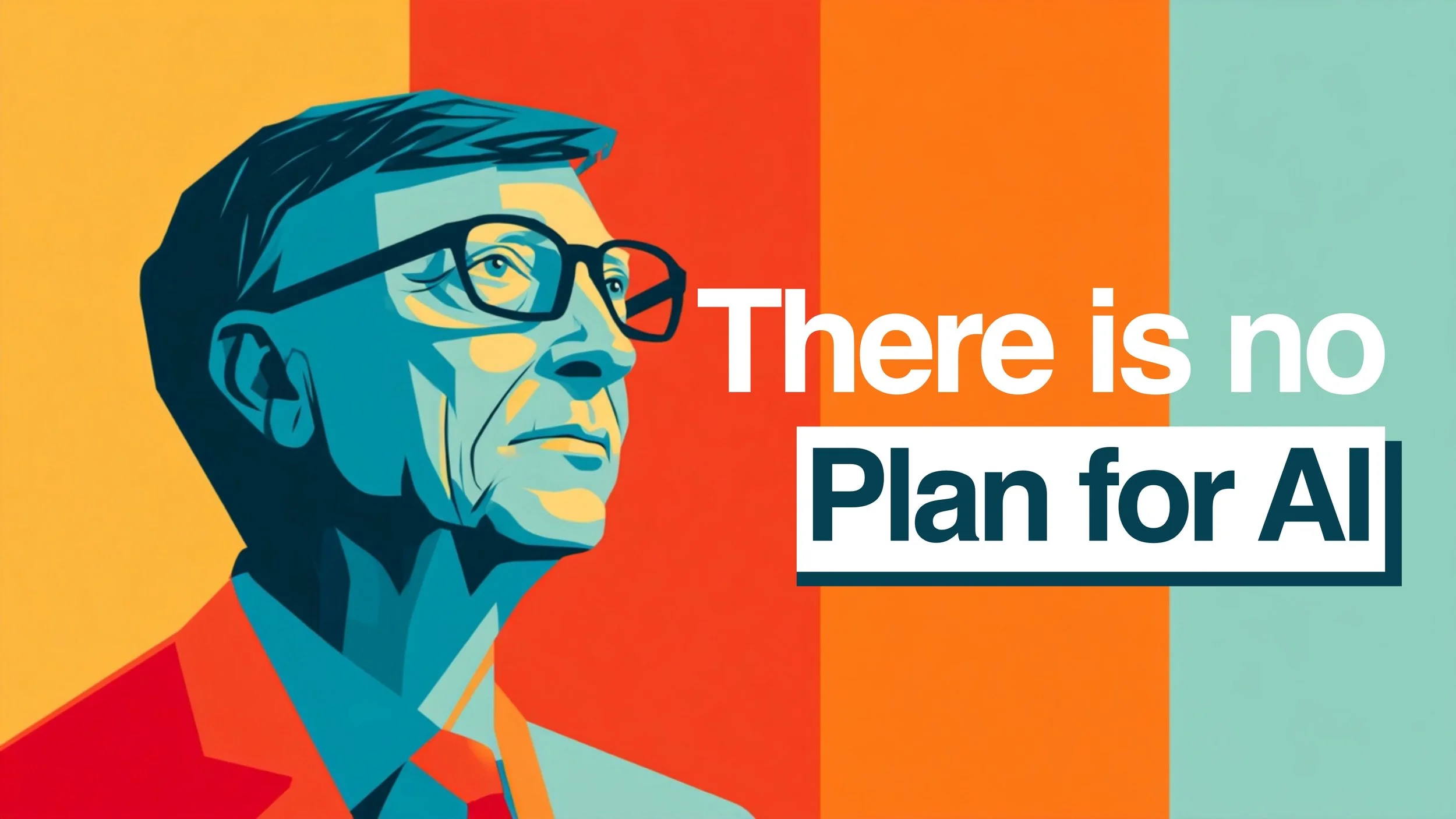
Bill Gates Says There's No Plan for AI. He's Right — and That's the Point
Bill Gates's "turbulent AI era" essay warns that society has no plan for AI. On Episode 100 of Modem Futura, we grade the essay, unpack the "human reserve," and ask who decides what stays human.
It's becoming a genre unto itself: the billionaire AI manifesto. But when Bill Gates published his nearly 6,000-word essay "The turbulent AI era is here. The choices we make now are critical" in August 2026, something about it landed differently. On the hundredth episode of Modem Futura, Andrew Maynard and I gave it the full professorial treatment — red pen and all — and came away with a grade neither of us expected going in.
Gates organizes his warning around three risks. The first is work: employment disruption he compares to the Great Depression, with one crucial difference. Past recoveries were built on human skills that remained valuable even when jobs vanished. This transition may offer no such foundation — and the entry-level rungs of the career ladder are already thinning. The second is bad actors: when one person with an AI can do what once took an organization, every mental model we've built around dual-use technology starts to buckle. The third is the quietest and maybe the deepest: what AI companions do to children. Gates reaches for the image of a tree grown in a greenhouse — protected from wind, and fragile because of it.
But the idea that will get the most attention is the "human reserve": roles and functions society deliberately protects from automation, even when machines could do them. Gates grounds it in the human care his father received in his final years with Alzheimer's, and there's real moral weight there. There's also a shadow. Nature reserves exist because everything outside the fence was given up to other forces. Is a human reserve preservation — or surrender dressed as stewardship?
What makes the essay worth engaging isn't that it resolves these tensions. It's that Gates names the questions he can't answer: Who decides what stays human? By what criteria? What happens when one country protects and another automates? Those questions are the real work — and they're the work that futurists, foresight practitioners, and researchers have been doing for decades, waiting for the rest of the world to catch up.
The window for shaping this transition is open now. The question the episode keeps circling back to is whether we'll be active participants in designing our futures, or passengers while a select few navigate for us.
Listen to the full conversation on Modem Futura, wherever you get your podcasts.
Subscribe and Connect!
Subscribe to Modem Futura wherever you get your podcasts and connect with us on LinkedIn. Drop a comment, pose a question, or challenge an idea—because the future isn’t something we watch happen, it’s something we build together. The medium may still be the massage, but we all have a hand in shaping how it touches tomorrow.
🎧 Apple Podcast: https://apple.co/4yk1zwp
🎧 Spotify: https://open.spotify.com/episode/1WaE39Jog0Qh1Yv6Z37UyJ?si=l0d5IyhXQYmcvY8UEb7dcw
📺 YouTube: https://youtu.be/ox5FGgqvNQE
🌐 Website: https://www.modemfutura.com/
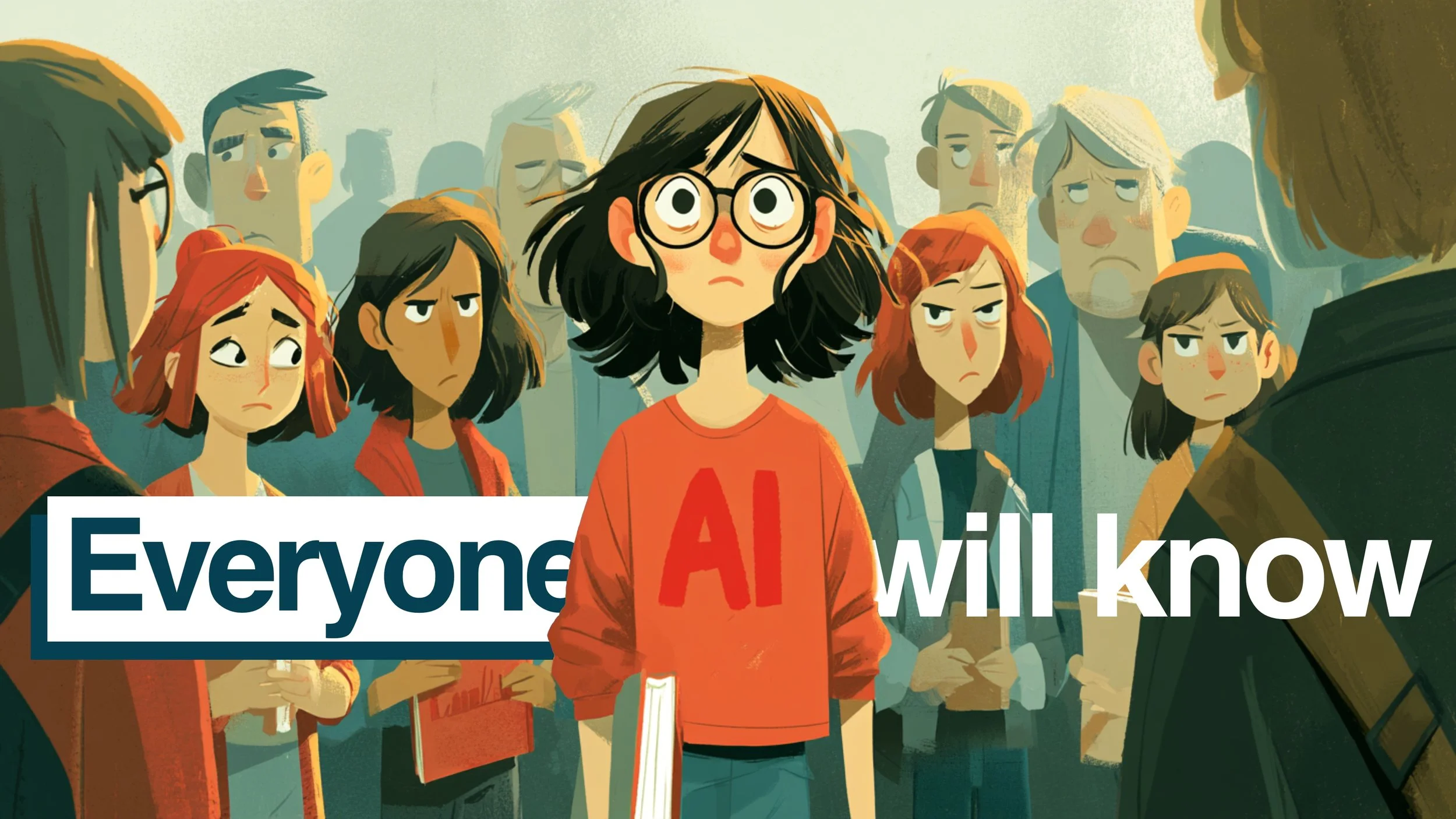
The Watermark You Can't See: AI Text, Invisible Ink, and the Question of Care
A new kind of watermark lives inside AI-generated text — invisible, durable, and woven into word choice itself. Episode 99 of Modem Futura explores what that means for writing as a craft, the AI scarlet letter, and whether the written word was ever permanent.
When we think of watermarks, we think of something visible — hold the paper to the light and there it is. The newest generation of watermarks abandons that transparency entirely, and that inversion sits at the heart of Episode 99 of Modem Futura.
In response to the EU AI Act's Article 50 transparency rules, Anthropic announced it would watermark Claude's text output globally using the SynthID-Text method, developed at Google DeepMind. Unlike metadata, which can be scrubbed, or visible stamps, which can be cropped, this watermark lives in the statistical pattern of word choice itself. Large language models constantly choose among near-equivalent words; the watermark quietly biases those choices according to a secret key. The result reads naturally to a human but carries a fingerprint — one Andrew Maynard likened to a hologram, where every shattered fragment still reveals the whole image. It survives copy-paste, editing, and even changing mediums.
Impressive engineering. But as we unpacked on the show, the human questions run deeper than the technical ones. Writers weigh words. In academic writing, "significant" and "meaningful" are not interchangeable — one makes a statistical claim. If a watermarking layer influences word selection, the writing begins serving two masters: the writer's meaning and the system's detectability. That's a real cost, and it lands hardest on the people for whom writing is the craft itself.
The episode also examines the social machinery already forming around detection — a new generation of accurate AI checkers, disciplinary accusations built on unreliable ones, and what has begun to feel like a scarlet letter for anyone whose prose seems too polished. Meanwhile, AI's ambient influence — autocomplete, search summaries, grammar tools — has touched nearly everything since late 2022. The binary of "AI-written" versus "clean" may already be a fiction.
So we proposed a reframe borrowed from four years of hard-won lessons in education: stop asking did they use AI and start asking what was the process, what was the intent, and was there care? Did the writer put more into the work than they're asking of the reader?
And then, because this is Modem Futura, we let the question spiral outward: if reading and writing can be cognitively offloaded, were they ever permanent features of being human — or one tipping point among many, with another on the horizon?
Subscribe and Connect!
Subscribe to Modem Futura wherever you get your podcasts and connect with us on LinkedIn. Drop a comment, pose a question, or challenge an idea—because the future isn’t something we watch happen, it’s something we build together. The medium may still be the massage, but we all have a hand in shaping how it touches tomorrow.
🎧 Apple Podcast: https://apple.co/4y5V2p4
🎧 Spotify: https://open.spotify.com/episode/2AcgH72mbqjr3vsMA5qI43?si=Ic8Y7liLTe2wT6HSA4sS9A
📺 YouTube: https://youtu.be/o-me74i-8Mg
🌐 Website: https://www.modemfutura.com/
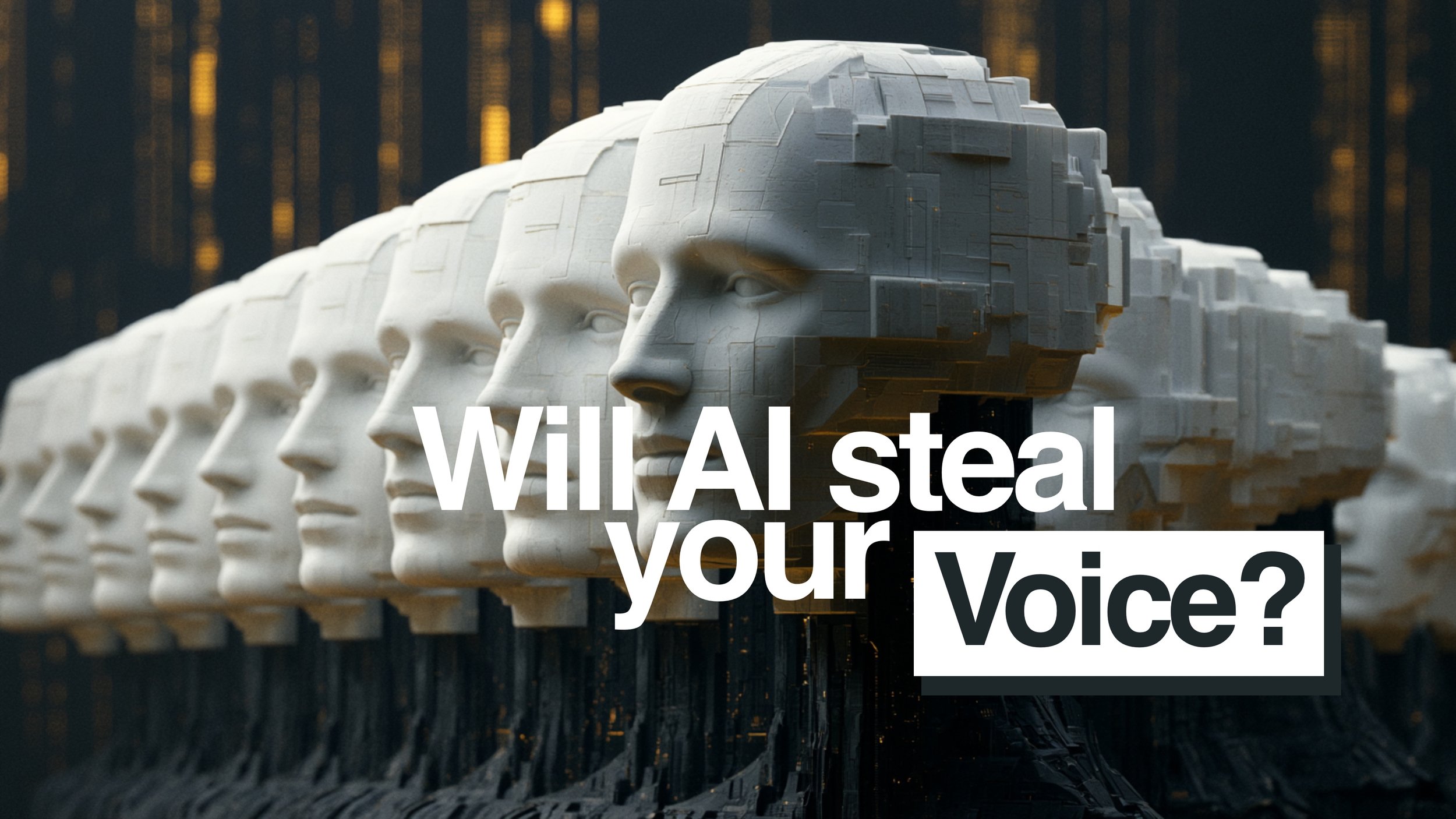
When the Machine Judges the Writing: AI, Voice, and the Mic Drop Problem
What does AI think good writing looks like? An experiment pitting an AI-written academic paper against a human-edited version reveals the strange style machines are teaching us — and raises urgent questions about voice, agency, and who we become alongside these tools.
What does artificial intelligence think good writing looks like? On Episode 97 of Modem Futura, Andrew Maynard and I stumbled into an unexpectedly revealing answer.
The setup was simple. Andrew — a career writer and academic — had an AI write a paper extending his own research. Then he did something most people never do: he spent days rewriting it, line by line, in his own voice. Two papers, same ideas, anonymized as "Rabbit" and "Marmoset," fed back to multiple AI systems with one question. Which is better?
The machines chose the machine's. And their reasoning exposed something worth sitting with: the human version had "too much throat clearing," they said. It over-explained. It lacked a mic drop moment at the end of every paragraph.
Every experienced storyteller knows why that's backwards. Big moments land because they're scarce — the spiciest ingredient in the dish, ruinous by the jarful. In the episode we reach for the shepherd's tone, a sonic illusion of perpetually rising crescendo that never resolves. Thrilling in a Hans Zimmer score. Exhausting as a philosophy of prose. And yet this may be exactly the style AI systems are teaching a generation of writers to consider good.
The conversation builds from Jaron Lanier's argument that there is no AI — that these systems are better understood as the collective work of humans wearing a mask. That reframing relocates the real risk. It was never machine sentience; it's humans diminishing ourselves to make the technology look magical. Taking the easy button so often the muscle memory fades. Adopting a borrowed voice because the machine insists it's the correct one.
The stakes sharpen when you think about who comes next. An expert can call out cargo-cult prose — writing that goes through the motions of quality without the understanding underneath. But writers still forming their voices may simply absorb the template. We may be training systems that train people to write in a style that was conventional decades ago, built on proxies for quality rather than the thing itself.
None of this is a case against the tools. The same episode includes moments where AI writing genuinely shines. The question — the one worth carrying out of the conversation — is about agency: whether these systems amplify your voice or quietly replace it. Because reading is a human act, writing is storytelling, and the future should contain your voice.
Subscribe and Connect!
Subscribe to Modem Futura wherever you get your podcasts and connect with us on LinkedIn. Drop a comment, pose a question, or challenge an idea—because the future isn’t something we watch happen, it’s something we build together. The medium may still be the massage, but we all have a hand in shaping how it touches tomorrow.
🎧 Apple Podcast: https://apple.co/4hts5yg
🎧 Spotify: https://open.spotify.com/episode/4SiEIiufaVTnKYwqJUIhRv?si=L_hGb0T4QrCatDr_fGOymA
📺 YouTube: https://youtu.be/z0aH53vS4mM
🌐 Website: https://www.modemfutura.com/