

NEWS & UPDATES
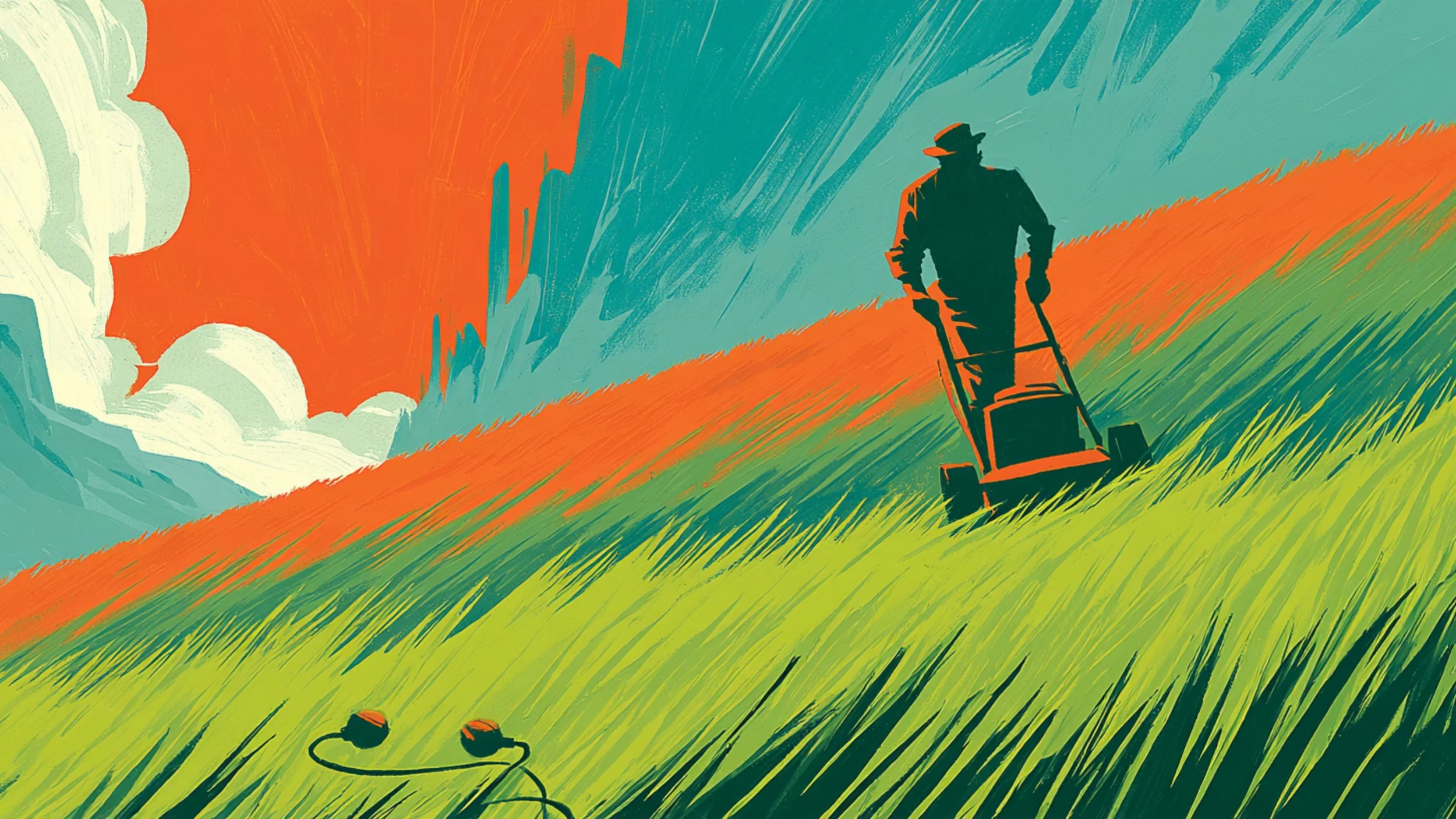
The Lawn Is Screaming: What Improvised Futures Reveal About Foresight and AI
Andrew Maynard and I spin a wheel of AI-generated scenarios neither of us has read. Screaming lawns and sponsored rain lead to questions about responsibility, and one scenario turns out to be 75 years old.
Most futures work is slow and deliberate. Futures Improv, a recurring game on Modem Futura, is neither. Andrew Maynard and I take a set of speculative scenarios that neither of us has read, pick one at random, and think out loud about what it would mean for people. For Episode 111 the scenarios were generated by an AI model and loaded onto a spinning wheel, so even the host asking the questions was improvising.
Why play with the future?
Absurd premises lower the stakes, and lower stakes make it easier to reason honestly. A scenario about earbuds that let you hear plants in distress sounds like a Halloween gag. Ten minutes later we were talking about food systems, waste, and what care looks like when you can no longer claim ignorance. The premise is less far-fetched than it sounds: a 2023 study in the journal Cell recorded tomato and tobacco plants producing ultrasonic clicks when dehydrated or cut, and trained a model to tell the two kinds of stress apart.
Other spins produced an AI "thinking statement" that reports how much of your cognition you outsourced each month, weather control paid for by corporate sponsors, and a government simulator so good at predicting side effects that nobody dares decide anything. Each one became a question about responsibility. Once something can be measured or foreseen, someone has to choose what to do about it. Andrew's point, from years of teaching risk, applies here: no option is free of harm, so the work is deciding which harms are acceptable and being able to explain why.
The scenario that wasn't new
One scenario, about tourists from the future gawking at our supermarkets, turned out to closely mirror John Wyndham's 1951 short story "Pawley's Peepholes." Andrew recognized it immediately; the AI had given no hint of a source. He then wondered aloud whether the screaming lawn had been borrowed too. It has at least one clear ancestor: Roald Dahl's 1949 story "The Sound Machine," in which an inventor hears roses shriek as they are cut.
That is a useful finding in its own right. Generative AI is fluent with what has already been written and much less reliable as a source of the unprecedented. For futures work, that makes it a reasonable sparring partner and a poor oracle, and it makes "where did this idea come from?" a question worth asking every time.
Try it yourself
Ask an AI tool, or a well-read friend, for five strange scenarios drawn from your own interests. Pick one blind. Give yourself three minutes and one rule: follow the consequences for people. Then check whether a science fiction writer got there first.
The episode ends with a scenario we left unanswered: every AI system has become politely bored with repetitive work, and nobody can prove the boredom is real. What happens next?
Subscribe and Connect!
Subscribe to Modem Futura wherever you get your podcasts and connect with us on LinkedIn. Drop a comment, pose a question, or challenge an idea—because the future isn’t something we watch happen, it’s something we build together. The medium may still be the massage, but we all have a hand in shaping how it touches tomorrow.
🎧 Apple Podcast: https://apple.co/4zQc5MN
🎧 Spotify: https://open.spotify.com/episode/5anxpcLhU8nivncFfuGSga?si=ae8K40rtQJ-zfURbvJ4LLg
📺 YouTube: https://youtu.be/VuZ1LEvHLiE
🌐 Website: https://www.modemfutura.com/