

NEWS & UPDATES

When the AI Goes Dark: What the Fable Ban Taught Us About Digital Fragility
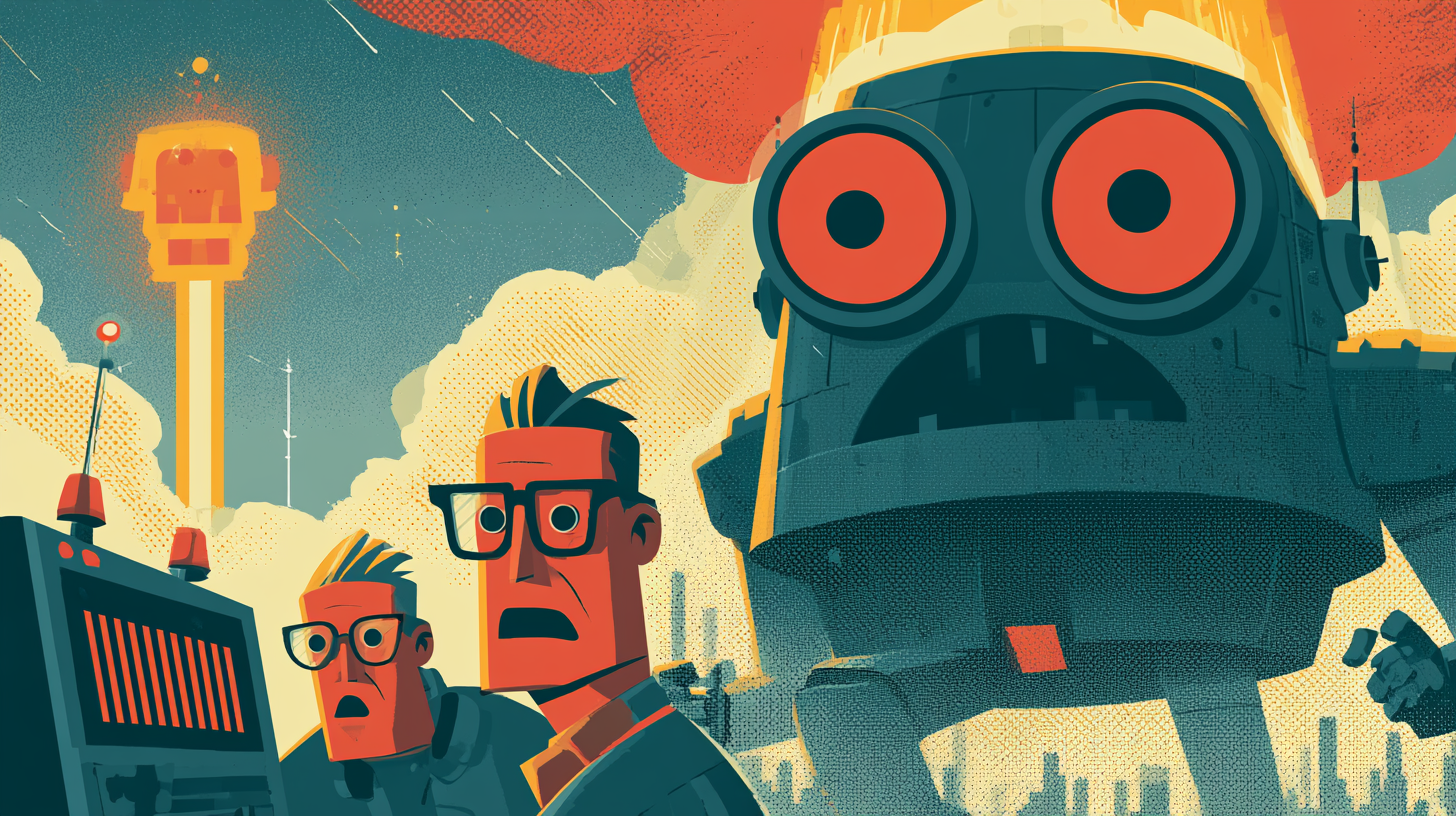
They turned off our AI - now what?
What happens when the government switches off an AI?
For most people, AI is a text field in a browser window: you type something in, something useful comes out. That framing makes it hard to see what AI has quietly become for organizations across research, healthcare, education, and industry, all critical infrastructure. And in the summer of 2026, we learned just how fragile that infrastructure can be.
In this episode of Modem Futura, hosts Sean Leahy and Andrew Maynard unpack the saga of Anthropic's Fable, the most capable AI model yet released to the public. Three days after launch, a U.S. Commerce Department export control directive declared it a national security concern, barring access for non-U.S. citizens. Because no platform can verify the citizenship of its users, the model effectively disappeared for everyone — including the researchers inside Anthropic who built it. Weeks later, it returned as suddenly as it left.
The episode treats this less as a news story than as a signal. Futurists have long used sudden technology loss as a hypothetical scenario; like the pandemic scenarios that preceded 2020, it has now crossed from the abstract to the lived. Once that happens, the questions change, if a government can switch off a frontier model at the close of business on a Friday, what does responsible AI adoption look like for a hospital, a university, a business? Where is the line between experimenting on the fringes and building your operations on ground that can move?
One answer explored in the conversation is local AI — smaller models running on hardware you control. They can't match the capability of cloud-based frontier systems (yet) and the hosts are honest about that trade-off. But the Fable episode gave the local argument its first piece of hard evidence, and it may point toward a future of hyper-specific local tools working alongside more powerful, more revocable cloud platforms.
The deeper thread is governance, and even the invocation of the big R-word (regulation). The directive was triggered by capability that regulators had never seen before, and capability is not slowing down. Governing technologies like these will take more than technologists and more than policymakers — it requires people who can work across disciplines, translating between the builders, the philosophers now being hired into AI labs, and the institutions trying to keep up.
The episode doesn't land on tidy answers, because there aren't any yet. What it offers instead is a way of thinking about dependency, sovereignty, and resilience while the ground is still shifting — which is, after all, when thinking matters most.
Subscribe and Connect!
Subscribe to Modem Futura wherever you get your podcasts and connect with us on LinkedIn. Drop a comment, pose a question, or challenge an idea—because the future isn’t something we watch happen, it’s something we build together. The medium may still be the massage, but we all have a hand in shaping how it touches tomorrow.
🎧 Apple Podcast: https://apple.co/4ykQCez
🎧 Spotify: https://open.spotify.com/episode/1yCGEa1nafYu9CM4Mxux5Z?si=jPTtglvnRGW_qHtXqPbFvA
📺 YouTube: https://youtu.be/7ir38k4DjLA
🌐 Website: https://www.modemfutura.com/

Futures of Agentic AI and the 2025 AI Action Plan – Episode 42
A Wet Hot AI Summer: Decoding the U.S. AI Action Plan & the Agentic‑Bot Boom
If you stepped away from the screen / feed for even a moment this July, you might have missed two massive AI stories that could shape the near-term innovation in AI. First, the White House released its 2025 AI Action Plan—a 20 plus page blueprint built on three pillars: (1) Accelerate AI innovation, (2) Build national AI infrastructure, and (3) Lead global AI diplomacy. If that wasn’t news enough - just back on July 17th OpenAI, announced the roll out of its new “Agent” modes—autonomous-ish bots that promise to book your travel, manage your calendar, and even spend your money while you sleep. Joking aside - please be VERY careful about what sort of access, privacy, and information you give any automated service. Ask yourself “what would be the worst that could happen?” If the answer makes you cringe or sweat - don’t do that thing. Okay - PSA cautionary rant over… back to the episode notes.
In our latest Modem Futura episode, Andrew and I pull these threads together. We ask whether the Action Plan’s “build‑baby‑build” mantra—complete with massive semiconductor subsidies and calls to “remove regulatory barriers”—is a bold vision or reckless speed run. We also spotlight what’s missing: robust guard‑rails for deepfakes, algorithmic bias, and the colossal energy footprint of new data‑centers.
Switching to agentic AI, we run real‑time tests on OpenAI’s new Agent Mode and compare them with Manus’ more mature workflow. Yes, watching a bot open browser tabs for you is technically impressive—until you realize you can still do most tasks faster yourself . That friction sparks a wider debate:
Productivity paradox – Studies already show teachers and coders spending more time fact‑checking AI output than drafting from scratch.
Privacy trade‑offs – Granting an agent access to your email or bank account may save clicks now, but what’s the long‑term cost to autonomy?
Deepfake backlash – The Plan flags courtroom deepfakes as a national‑security risk, yet leaves broader social harms largely unaddressed.
Behind the policy prose and flashy demos lurks a wider narrative of tech nationalism. The document casts AI as a race the United States must win, positioning allies as followers and China as the ultimate adversary. That framing risks turning open research into a geopolitical arms sprint—one where ethical reflection gets lapped by hype.
So where does that leave forward‑thinking professionals, educators, and creators? We advocate to start the conversations now - here are some great starting topics to begin with:
Stay curious but critical. Piloting new agent tools is the best way to spot real value—and red flags—early.
Advocate for “responsible speed.” Innovation and regulation are not mutually exclusive; demand both from vendors and policymakers.
Own your data literacy. Whether you’re vetting deepfake evidence or AI‑generated lesson plans, will skepticism become a core career skill?
🎧 Tune in for the full discussion—including Hitchhiker’s Guide jokes, live agent fails, and pragmatic optimism about building a flourishing, not merely faster, future.
🎧 Listen on Apple Podcasts: https://apple.co/4l7eCKC
📺 Watch us on YouTube: https://www.youtube.com/@ModemFutura
If you’d like to dive deeper, jump into the link and listen to the podcast or watch the YouTube video. Join us as we explore the forces shaping our collective future and the urgent need to keep human values at the heart of innovation.
Subscribe and Connect!
Subscribe to Modem Futura on a favorite podcast platform, follow on LinkedIn, and join the conversation by sharing thoughts and questions. The medium may still be the massage, but everyone has a chance to shape how it kneads modern culture—and to decide what kind of global village we ultimately build.
🎧 Apple Podcast: https://apple.co/4l7eCKC
🎧 Spotify: https://open.spotify.com/episode/2fI044VpiPE3t4Y9MXrZjJ?si=mJ-xb414R3Ww7IkTOIlT0Q
📺 YouTube: https://youtu.be/6fcOiRYnIK8
🌐 Website: https://www.modemfutura.com/