

NEWS & UPDATES

Built, Not Born: What SpudCell Asks Us About Being Alive
When a cell is built, not born
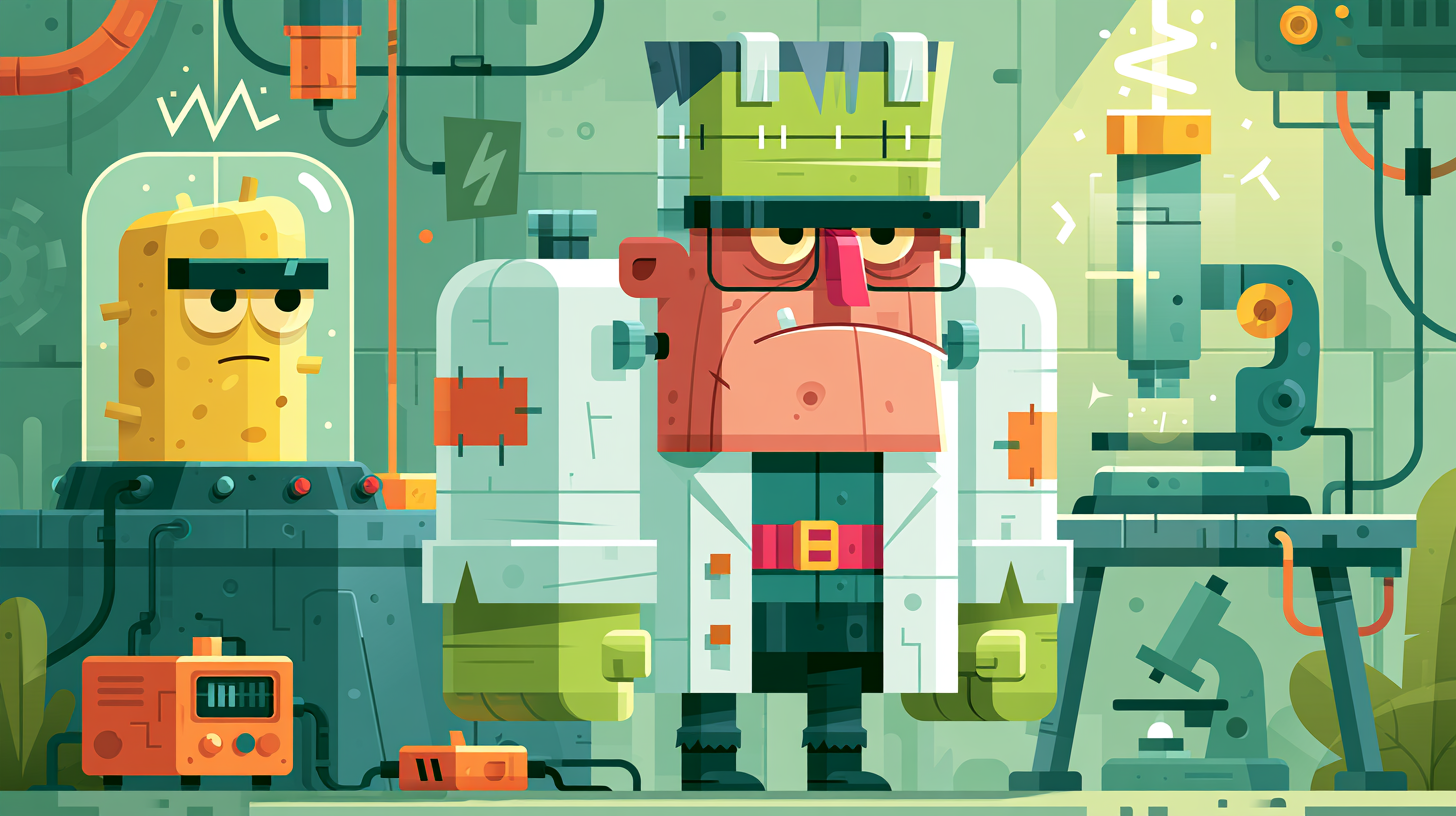
It’s ALIVE! Wait, no - wait, yes - err no - wait, Maybe?
Every so often a piece of science arrives that's less interesting for what it does than for the question it forces you to sit with. SpudCell is one of those.
Announced this summer by Kate Adamala's lab at the University of Minnesota and reported by Carl Zimmer in The New York Times, SpudCell is a synthetic cell built from the bottom up — assembled from lab chemicals rather than descended from a living parent. It has a lipid membrane. It carries a small, engineered genome. It metabolizes, grows, and — remarkably — divides. It does most of what we expect a cell to do. It also, by the researchers' own cheerful admission, looks like a potato.
The temptation is to file this under "cool science" and move on. But the more time you spend with it, the more it turns into a mirror. Because SpudCell does enough of what living cells do that our usual definition of alive starts to wobble. One of the researchers offered the most honest framing available: life is not binary. There is no single test the cell passes or fails. There's a cluster of behaviors we associate with life, and SpudCell exhibits most of them — which means "synthetic" is no longer a clean fact about the object. It's closer to a decision we make.
And it gets harder from there. When a synthetic cell divides, is the copy still synthetic? At what point, if any, does something cross from made to alive? These aren't rhetorical flourishes. They're the questions that will shape how this technology is regulated, funded, and imagined — the kind of governance work scholars like ASU's Emma Frow have been doing in synthetic biology for years.
There's genuine promise in the frame, too. Cells engineered this precisely could become micro-factories: producing proteins and medicines on demand, or acting as a responsive second layer of immunity. That's a hopeful future. It's also, unavoidably, a future that arrives holding hands with new safety and biosecurity questions. Both things are true at once, and the honest move is to hold them together rather than pick the more comfortable one.
What we keep returning to on Modem Futura is that these edges — where the technical meets the definitional — are where the human stakes actually live. SpudCell isn't asking whether we can build a cell. We can. It's asking what we mean when we call something alive, and whether that word still does the work we need it to.
Subscribe and Connect!
Subscribe to Modem Futura wherever you get your podcasts and connect with us on LinkedIn. Drop a comment, pose a question, or challenge an idea—because the future isn’t something we watch happen, it’s something we build together. The medium may still be the massage, but we all have a hand in shaping how it touches tomorrow.
🎧 Apple Podcast: https://apple.co/4fMcFDN
🎧 Spotify: https://open.spotify.com/episode/7yAfMf8JsGztjSUJueMbM6?si=_BusGR3OS1OK-lewJGJ4XA
📺 YouTube: https://youtu.be/MZtGt8ujmxk
🌐 Website: https://www.modemfutura.com/