

NEWS & UPDATES
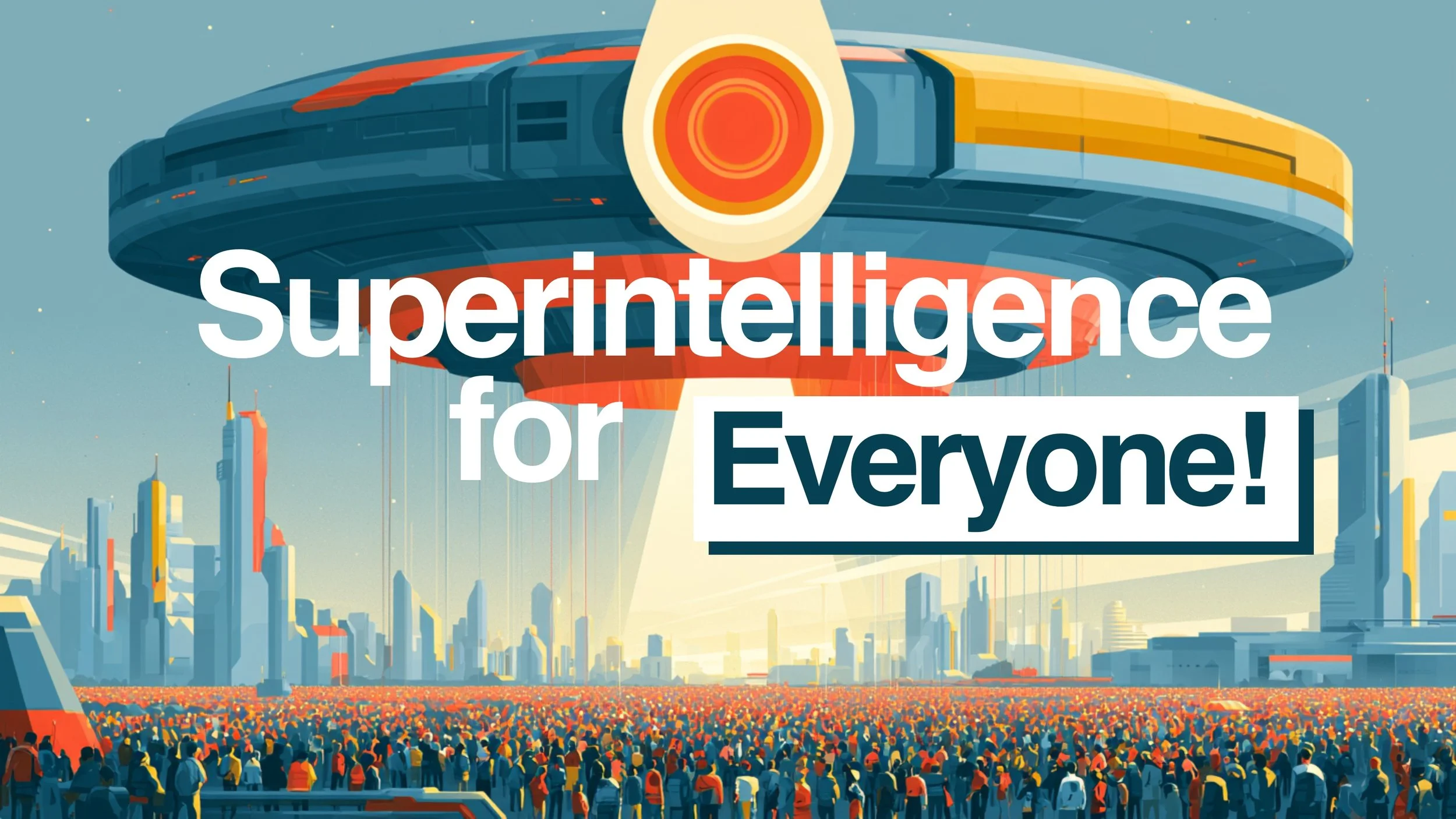
Reading the Manifesto: What "The Future is for Everyone" Reveals About Who Designs Tomorrow
The tech CEO manifesto is its own genre. On this week's Modem Futura, we read Meta's superintelligence essay through the lens of "used futures" — and ask who really gets to design a future for everyone.
The tech CEO manifesto has become its own literary genre. From early internet memos to techno-optimist declarations to the vision essays now published by the heads of major AI labs, these documents follow a recognizable pattern: sweeping claims about human history, a pivot to the transformative technology at hand, and a future confidently described as inevitable.
Mark Zuckerberg's essay "The Future is for Everyone" is the latest entry — and on this week's episode of Modem Futura, Andrew Maynard and I read it the way futurists read any vision of tomorrow: not as prediction, but as an artifact of how power imagines the future.
The essay's promises are expansive. A personal AI agent available around the clock. Creation tools for anyone. One-person companies operating at scale. A tutor in every subject. Scientific breakthroughs against disease. Free access for billions. Individually, these describe things many people might genuinely want — which is precisely why they deserve careful reading rather than reflexive dismissal or easy applause.
Futures studies offers a useful frame here. Sohail Inayatullah's concept of the "used future" describes a vision of tomorrow designed elsewhere and delivered so completely that imagining alternatives becomes difficult. When one company's roadmap is presented as humanity's shared destiny, the question is no longer whether the destination sounds appealing. It's who chose it, what dependencies it creates, and whose interests sit quietly beneath the language of universality.
Our conversation follows those dependencies through Cory Doctorow's enshittification — the pattern where platforms become indispensable before the terms change — and through science fiction that saw this coming. Ghost in the Shell asked what identity means when most of your body belongs to a company. The question sharpens when the owned parts are cognitive rather than mechanical: when your memory, your workflow, and your thinking run on infrastructure someone else controls.
There's also a telling rhetorical shift worth naming. Not long ago, superintelligence was framed by tech leaders as a danger demanding caution. In this essay, it's a promise demanding acceleration. When the same word migrates from threat to gift without explanation, that migration is itself worth studying.
None of this means the essay's ideas are empty. Decentralized AI, broader access, AI as critical infrastructure — these are conversations worth having. But they're conversations that belong to more than one author. If this technology is as consequential as its builders claim, then the work of navigating it belongs to all of us — educators, artists, ethicists, communities — not just the companies selling the map.
Subscribe and Connect!
Subscribe to Modem Futura wherever you get your podcasts and connect with us on LinkedIn. Drop a comment, pose a question, or challenge an idea—because the future isn’t something we watch happen, it’s something we build together. The medium may still be the massage, but we all have a hand in shaping how it touches tomorrow.
🎧 Apple Podcast: https://apple.co/3SHUvdE
🎧 Spotify: https://open.spotify.com/episode/6CMH1CCojUdHzNRmEamxVA?si=oXXRQuusRV26LJhFHvAOFA
📺 YouTube: https://youtu.be/FAUqPmUqr4I
🌐 Website: https://www.modemfutura.com/

Show Me the Receipts: the Futures of AI Super-intelligence – Episode 44

Superintelligence “In Sight”? Cutting Through Hype to Keep Humans in the Loop
If you’ve felt whiplash from this summer’s AI headlines, you’re not alone. In our latest episode of Modem Futura, we unpack Big Tech’s bolder‑than‑bold claim that “developing superintelligence is now in sight”—and ask for something simple before we all sprint into the future: receipts. We break down what companies are signaling when they talk about AI systems that “improve themselves,” why that sounds momentous, and where the marketing ends and the evidence begins.
First, definitions that matter. Today’s tools remain narrow—powerful, yes, but specialized. AGI is the hypothetical jump to general capability; superintelligence (ASI) is the further leap beyond any human capability. We explore why those terms are often moved like goalposts, and why declaring ASI “near” without a stable definition confuses the public, policymakers, and practitioners alike, and from my perspective is irresponsible.
Then we zoom into a practical pain point: reliability. When platforms silently change models, tools, or defaults, workflows break (hello GPT-5). In education and professional settings, that unpredictability isn’t just irritating—it’s costly. We share real examples (from transcripts labeled with the wrong speakers to model behavior shifting overnight) and discuss what “enterprise‑grade” should mean for LLMs people depend on.
We also play with the upside—digital twins and imaginative design. If a campus has a high‑fidelity digital twin, why stop at mirroring reality? Why not prototype preferable futures—safer, more inclusive, more sustainable spaces—and test them before we build? Of course, reliability matters there too; when operational systems depend on simulations, unintended tweaks can ripple into the real world.
Across the hour, we push back on technological solutionism—the reflex to cast AI as the single answer to complex, “wicked” problems. Yes, we’re excited about AI’s potential; no, it won’t magically resolve conflict, poverty, or disease without broader social, economic, and political work. Framing ASI as our only lifeboat risks narrowing our imaginations right when we need them most.
Ultimately, we return to our favorite question: What does it mean to be human when machines can emulate so much of what we do? For us, that means staying curious and critical, inviting more diverse perspectives into the conversation, and insisting on transparent claims we can evaluate—before ceding agency to systems we don’t fully understand.
If this episode gave you a useful lens on the AI noise, share it with a colleague, drop a comment with the boldest AI claim you’ve heard and the evidence that would convince you, and subscribe so you don’t miss what’s next.
🎧 Listen on Apple Podcasts: https://apple.co/41Ayf6J
📺 Watch us on YouTube: https://www.youtube.com/@ModemFutura
If you’d like to dive deeper, jump into the link and listen to the podcast or watch the YouTube video. Join us as we explore the forces shaping our collective future and the urgent need to keep human values at the heart of innovation.
Subscribe and Connect!
Subscribe to Modem Futura on a favorite podcast platform, follow on LinkedIn, and join the conversation by sharing thoughts and questions. The medium may still be the massage, but everyone has a chance to shape how it kneads modern culture—and to decide what kind of global village we ultimately build.
🎧 Apple Podcast: https://apple.co/41Ayf6J
🎧 Spotify: https://open.spotify.com/episode/0o1vePcG8wh2VmMtETRKjy?si=Fu0xyDEkSHKB-R3gkKKWoQ
📺 YouTube: https://youtu.be/XO9dLoYhIvY
🌐 Website: https://www.modemfutura.com/