

NEWS & UPDATES
Built, Not Born: What SpudCell Asks Us About Being Alive
When a cell is built, not born
It’s ALIVE! Wait, no - wait, yes - err no - wait, Maybe?
Every so often a piece of science arrives that's less interesting for what it does than for the question it forces you to sit with. SpudCell is one of those.
Announced this summer by Kate Adamala's lab at the University of Minnesota and reported by Carl Zimmer in The New York Times, SpudCell is a synthetic cell built from the bottom up — assembled from lab chemicals rather than descended from a living parent. It has a lipid membrane. It carries a small, engineered genome. It metabolizes, grows, and — remarkably — divides. It does most of what we expect a cell to do. It also, by the researchers' own cheerful admission, looks like a potato.
The temptation is to file this under "cool science" and move on. But the more time you spend with it, the more it turns into a mirror. Because SpudCell does enough of what living cells do that our usual definition of alive starts to wobble. One of the researchers offered the most honest framing available: life is not binary. There is no single test the cell passes or fails. There's a cluster of behaviors we associate with life, and SpudCell exhibits most of them — which means "synthetic" is no longer a clean fact about the object. It's closer to a decision we make.
And it gets harder from there. When a synthetic cell divides, is the copy still synthetic? At what point, if any, does something cross from made to alive? These aren't rhetorical flourishes. They're the questions that will shape how this technology is regulated, funded, and imagined — the kind of governance work scholars like ASU's Emma Frow have been doing in synthetic biology for years.
There's genuine promise in the frame, too. Cells engineered this precisely could become micro-factories: producing proteins and medicines on demand, or acting as a responsive second layer of immunity. That's a hopeful future. It's also, unavoidably, a future that arrives holding hands with new safety and biosecurity questions. Both things are true at once, and the honest move is to hold them together rather than pick the more comfortable one.
What we keep returning to on Modem Futura is that these edges — where the technical meets the definitional — are where the human stakes actually live. SpudCell isn't asking whether we can build a cell. We can. It's asking what we mean when we call something alive, and whether that word still does the work we need it to.
Subscribe and Connect!
Subscribe to Modem Futura wherever you get your podcasts and connect with us on LinkedIn. Drop a comment, pose a question, or challenge an idea—because the future isn’t something we watch happen, it’s something we build together. The medium may still be the massage, but we all have a hand in shaping how it touches tomorrow.
🎧 Apple Podcast: https://apple.co/4fMcFDN
🎧 Spotify: https://open.spotify.com/episode/7yAfMf8JsGztjSUJueMbM6?si=_BusGR3OS1OK-lewJGJ4XA
📺 YouTube: https://youtu.be/MZtGt8ujmxk
🌐 Website: https://www.modemfutura.com/
The Quiet Convergence: Reading the WEF's 2026 Emerging Technologies List

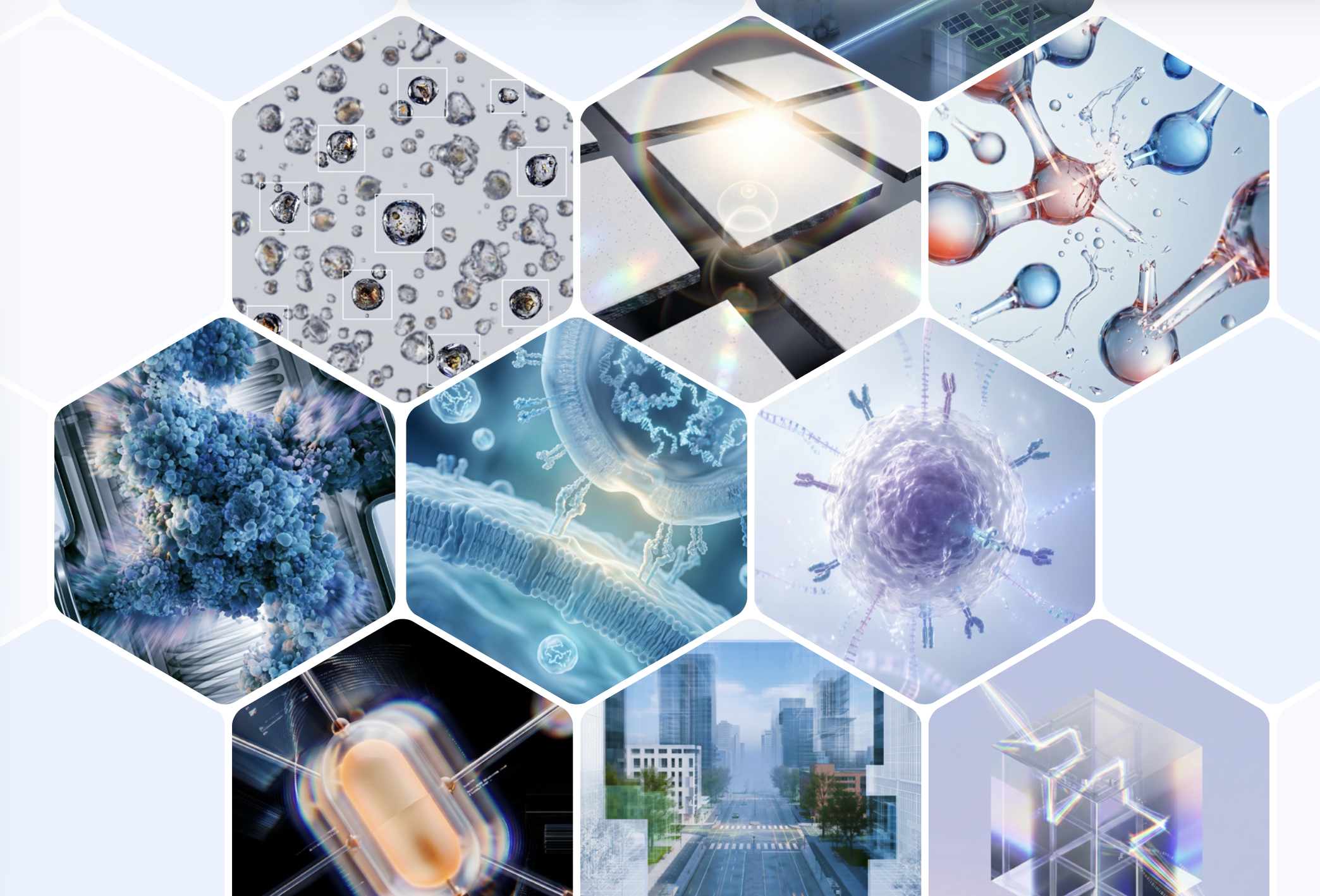
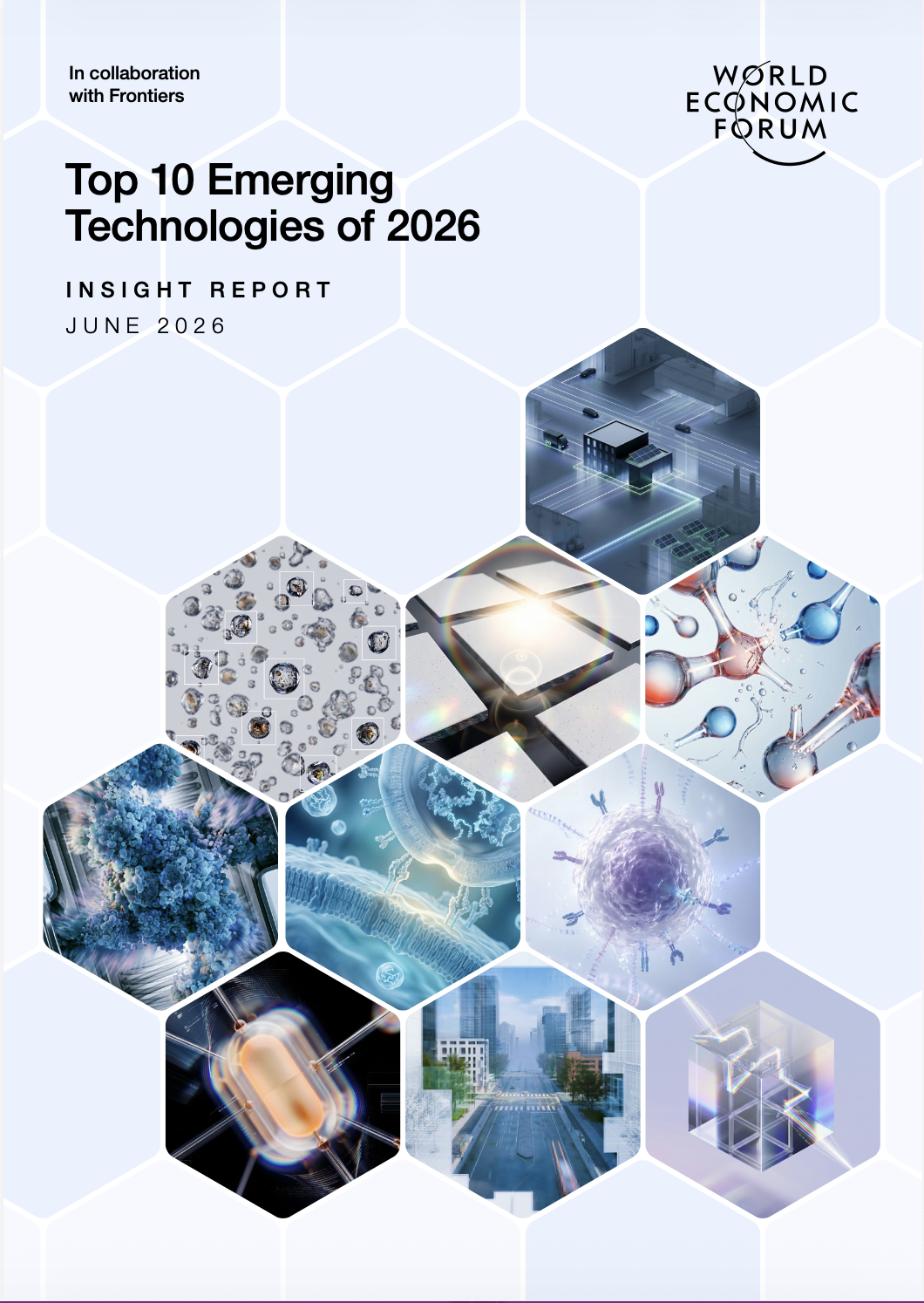
Every year, the World Economic Forum releases its Top 10 Emerging Technologies report — and every year it offers something more useful than a list of gadgets. It offers a read on where the genuine cutting edge is maturing: not the technologies dominating the news cycle, but the ones that have quietly reached the point where companies are investing, where the science has left the lab, where impact is becoming plausible.
This year's list is worth sitting with, and not only for the individual entries. Read together, the 2026 technologies tell a story about convergence.
An energy backbone. Three of the ten cluster around power: everything-to-grid systems that reimagine every building, vehicle, and device as an active participant in a distributed energy network; passive radiative cooling materials that release absorbed heat through a narrow band of infrared that escapes the atmosphere; and direct lithium extraction that addresses the supply bottleneck underneath nearly all modern electronics. None is flashy. All are foundational.
A biological turn. The middle of the list grows intimate. PFAS destruction tackles the "forever chemicals" we engineered to be indestructible — a vivid case study in how today's challenges are so often yesterday's innovations. Precision fermentation turns engineered microbes into microscopic factories for food, medicine, and materials. Exosome drug delivery and personalized mRNA cancer vaccines point toward medicine tailored to an individual genome — in some early trials, transforming survival odds for cancers long considered nearly untreatable.
A compute layer. Underneath runs the quiet infrastructure. Quantum simulation can model molecular interactions that classical computers find effectively impossible, opening once-"undruggable" diseases to discovery. AI world models aim to give machines an intuitive grasp of physical reality — learning through experience, the way a child learns gravity long before learning physics. And lattice-based cryptography hardens our data today against the quantum computers we expect tomorrow.
What makes the list compelling is how readily these pieces combine. Chain the biological and computational threads together and you approach something genuinely science-fictional: scan, model, fabricate, deliver. But convergence cuts both ways. Every capability here carries second- and third-order implications — questions of accountability when machines do the engineering, of unintended consequences when powerful tools meet messy human systems, of who shapes a world that artificial systems increasingly understand on their own terms.
Grab a copy of the full report directly from the World Economic Forum:
The honest takeaway isn't a prediction. It's an invitation to pay attention: to read the report, follow these technologies as they move, and ask not only what they make possible, but what kind of future they quietly assume.
Subscribe and Connect!
Subscribe to Modem Futura wherever you get your podcasts and connect with us on LinkedIn. Drop a comment, pose a question, or challenge an idea—because the future isn’t something we watch happen, it’s something we build together. The medium may still be the massage, but we all have a hand in shaping how it touches tomorrow.
🎧 Apple Podcast: https://apple.co/4w3oU4b
🎧 Spotify: https://open.spotify.com/episode/1G17Ta9RvnhPy1Ykrk5M3Y?si=LRMbrXArToas5rMcQF4XLA
📺 YouTube: https://youtu.be/Z1cJ-0OD_FM
🌐 Website: https://www.modemfutura.com/

When the Definition of Life Gets Blurry: Synthetic Cells and the Care They Demand
We tend to imagine that scientists know exactly what they're making. So it's oddly reassuring — and a little head spinning — to learn that one of the first challenges facing a National Academies committee on synthetic cells was simply agreeing on what a synthetic cell actually is.
That was the starting point for our conversation with Emma Frow, an associate professor at Arizona State University whose work sits at the intersection of bioengineering, science and technology studies, and the governance of emerging biotechnology. Emma served on the committee behind a recent consensus report on the responsible innovation of synthetic cells, and she described spending months wrestling with definitions before any other questions could even be asked.
A spectrum, not a thing
The reason is that "synthetic cell" isn't one technology, is because it is a spectrum of different variations and combinations. At one end is a simple membrane enclosing a handful of enzymes — something that may not be alive in any conventional sense, and that exists in a genuine regulatory gray zone between chemical and biological oversight. At the other end is the long-standing scientific ambition of building a living, replicating cell more or less from scratch. In between are the practical applications driving much of the field: programmable cells for drug delivery, biomanufacturing in bioreactors, and biological substitutes for agricultural chemicals.
Emma offered two clarifying questions that help locate any given creation on that spectrum: Does it contain genetic material? And can it replicate? Those answers shape everything about how seriously, and in what way, we ought to pay attention.
The mirror in the lab
The conversation's most striking turn concerned "mirror life" — organisms built from the reversed molecular handedness of all known biology. Every living thing we've found uses left-handed amino acids and right-handed DNA. A mirror organism would invert that. For years this was framed as a potential safety feature: something so alien it couldn't interact with existing life. But the scientific community has since questioned that assumption, and in late 2024 a group of leading researchers called for restraint, warning that a self-replicating mirror cell could pose risks we'd have no evolutionary defense against.
Care as an ongoing practice
What gives the episode its center of gravity isn't the specter of catastrophe. It's Emma's insistence that care isn't a box you check once. It's a posture you maintain throughout the work — and one the biotech community, by necessity, has cultivated more deliberately than some faster-moving fields. Biology resists the move-fast ethos. There is no perfect containment, and some experiments can't be undone.
The result is a conversation less about prediction than about practice: how thoughtful people decide what's worth building when the old categories no longer hold.