

NEWS & UPDATES
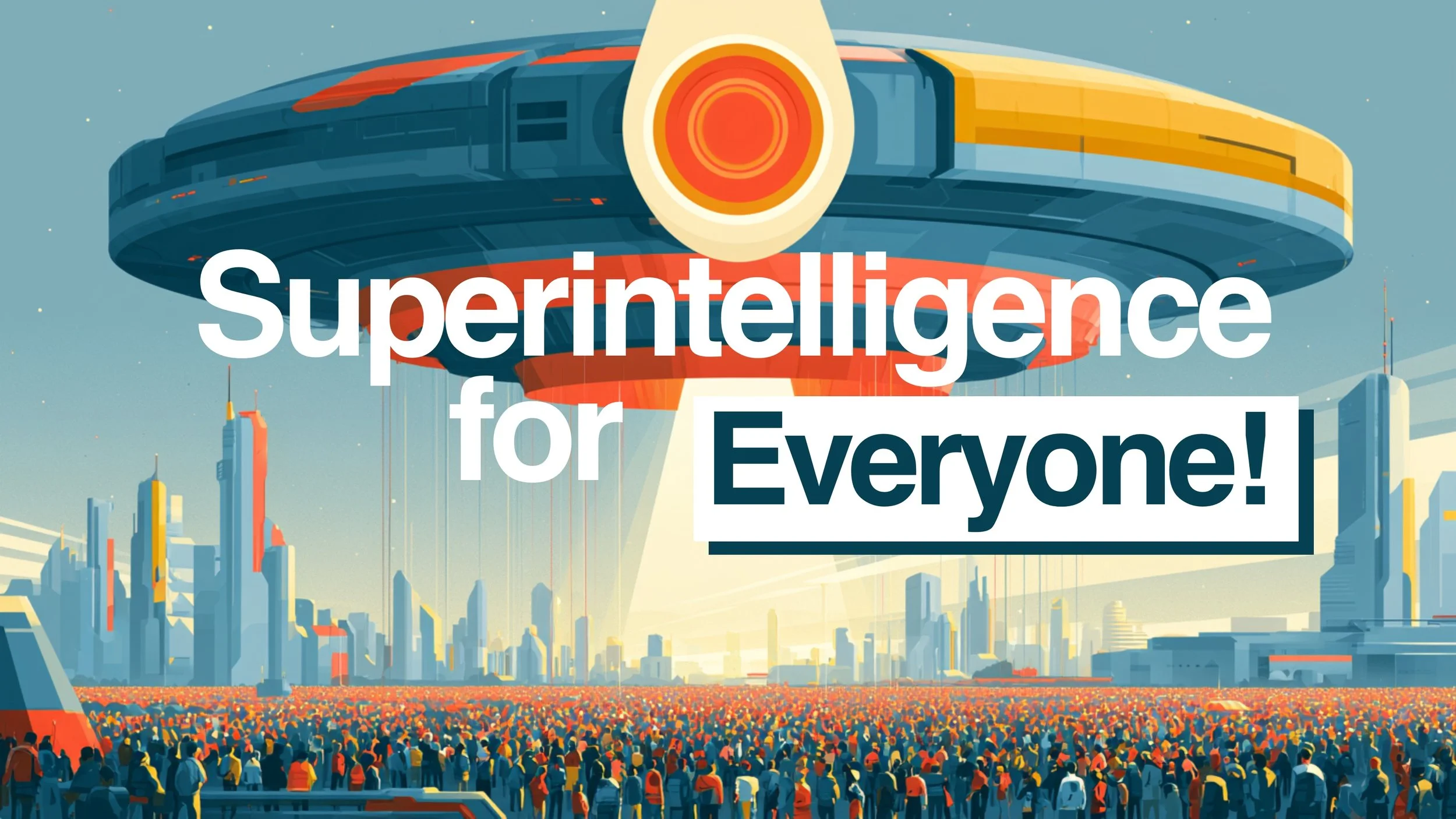
Reading the Manifesto: What "The Future is for Everyone" Reveals About Who Designs Tomorrow
The tech CEO manifesto is its own genre. On this week's Modem Futura, we read Meta's superintelligence essay through the lens of "used futures" — and ask who really gets to design a future for everyone.
The tech CEO manifesto has become its own literary genre. From early internet memos to techno-optimist declarations to the vision essays now published by the heads of major AI labs, these documents follow a recognizable pattern: sweeping claims about human history, a pivot to the transformative technology at hand, and a future confidently described as inevitable.
Mark Zuckerberg's essay "The Future is for Everyone" is the latest entry — and on this week's episode of Modem Futura, Andrew Maynard and I read it the way futurists read any vision of tomorrow: not as prediction, but as an artifact of how power imagines the future.
The essay's promises are expansive. A personal AI agent available around the clock. Creation tools for anyone. One-person companies operating at scale. A tutor in every subject. Scientific breakthroughs against disease. Free access for billions. Individually, these describe things many people might genuinely want — which is precisely why they deserve careful reading rather than reflexive dismissal or easy applause.
Futures studies offers a useful frame here. Sohail Inayatullah's concept of the "used future" describes a vision of tomorrow designed elsewhere and delivered so completely that imagining alternatives becomes difficult. When one company's roadmap is presented as humanity's shared destiny, the question is no longer whether the destination sounds appealing. It's who chose it, what dependencies it creates, and whose interests sit quietly beneath the language of universality.
Our conversation follows those dependencies through Cory Doctorow's enshittification — the pattern where platforms become indispensable before the terms change — and through science fiction that saw this coming. Ghost in the Shell asked what identity means when most of your body belongs to a company. The question sharpens when the owned parts are cognitive rather than mechanical: when your memory, your workflow, and your thinking run on infrastructure someone else controls.
There's also a telling rhetorical shift worth naming. Not long ago, superintelligence was framed by tech leaders as a danger demanding caution. In this essay, it's a promise demanding acceleration. When the same word migrates from threat to gift without explanation, that migration is itself worth studying.
None of this means the essay's ideas are empty. Decentralized AI, broader access, AI as critical infrastructure — these are conversations worth having. But they're conversations that belong to more than one author. If this technology is as consequential as its builders claim, then the work of navigating it belongs to all of us — educators, artists, ethicists, communities — not just the companies selling the map.
Subscribe and Connect!
Subscribe to Modem Futura wherever you get your podcasts and connect with us on LinkedIn. Drop a comment, pose a question, or challenge an idea—because the future isn’t something we watch happen, it’s something we build together. The medium may still be the massage, but we all have a hand in shaping how it touches tomorrow.
🎧 Apple Podcast: https://apple.co/3SHUvdE
🎧 Spotify: https://open.spotify.com/episode/6CMH1CCojUdHzNRmEamxVA?si=oXXRQuusRV26LJhFHvAOFA
📺 YouTube: https://youtu.be/FAUqPmUqr4I
🌐 Website: https://www.modemfutura.com/

Futures Thinking: Foresight You Can Use – Episode 49
We don’t predict the future, but we prepared for the uncertainties the futures will bring
Ever been stuck in traffic and thought, “Where’s my eVTOL button?” We open this episode right there—and quickly flip the fantasy into a lesson on systems: technologies don’t fix congestion (or most complex problems) unless policy, behavior, equity, and infrastructure evolve with them. From that launchpad, Sean Leahy and Dr. Andrew Maynard unpack futures thinking as a mindset—distinct from prediction—that helps people and organizations navigate uncertainty with agency. They walk through the classic triad of possible, probable, and preferable futures, then translate it into practice: horizon scanning (signals, trends, megatrends), scenario building, and backcasting from a desired 10‑year outcome to concrete actions today. Along the way, they surface guardrails like avoiding “used futures” (inherited visions of someone else’s desired future) and stress‑testing for unintended consequences, especially for vulnerable communities and the planet.
The conversation ranges widely—think SimCity lessons and Mars‑city thought experiments as mirrors for Earth’s complexity; protopian (step‑by‑step better) versus utopian/dystopian frames; and why foresight shouldn’t be a bolt‑on consultancy only, but a capacity embedded across teams. Educators will appreciate a practical take on bringing futures thinking into K–12 and higher ed without “one more thing”: weave foresight into existing subjects to build creativity, inquiry, and resilience. Pop culture helps, too—using films (à la The Moviegoer’s Guide to the Future) creates a low‑stakes, high‑insight space to explore tough issues together. And for those tracking AI’s breakneck pace, the episode doubles as an antidote to future shock—a way to slow down, widen perspective, and choose well‑considered next steps.
Why it matters: Futures Thinking is for everyone - all humans poses the qualities needed to engage in thinking about our collective futures. Whether you lead a product team, a classroom, or a community, cultivating a futures mindset helps you spot weak signals earlier, align around preferable outcomes, and take action that nudges the world toward human flourishing.
Join the conversation:
What “used future” have you noticed in your field? If you were backcasting from a 2035 future you’d be proud of, what’s the first move you’d make this quarter? Drop your thoughts—and feel free to borrow this episode in your class, team meeting, or strategy offsite.
🎧 Listen to the full episode to dive deeper into how films shape our futures: https://apple.co/4nrAIci
📺 Watch us on YouTube: https://www.youtube.com/@ModemFutura
🎬 What film has changed the way you think about the future? Drop a comment — we’d love to hear.
If you’d like to dive deeper, jump into the link and listen to the podcast or watch the YouTube video. Join us as we explore the forces shaping our collective future and the urgent need to keep human values at the heart of innovation.
Subscribe and Connect!
Subscribe to Modem Futura on a favorite podcast platform, follow on LinkedIn, and join the conversation by sharing thoughts and questions. The medium may still be the massage, but everyone has a chance to shape how it kneads modern culture—and to decide what kind of global village we ultimately build.
🎧 Apple Podcast: https://apple.co/4nrAIci
🎧 Spotify: https://open.spotify.com/episode/1OmUyc6fYdMIZ8thORheOJ?si=ZTQ-ZI7hQzSjNTy3jhjgfQ
📺 YouTube: https://youtu.be/85cTuht_a8k
🌐 Website: https://www.modemfutura.com/