

NEWS & UPDATES
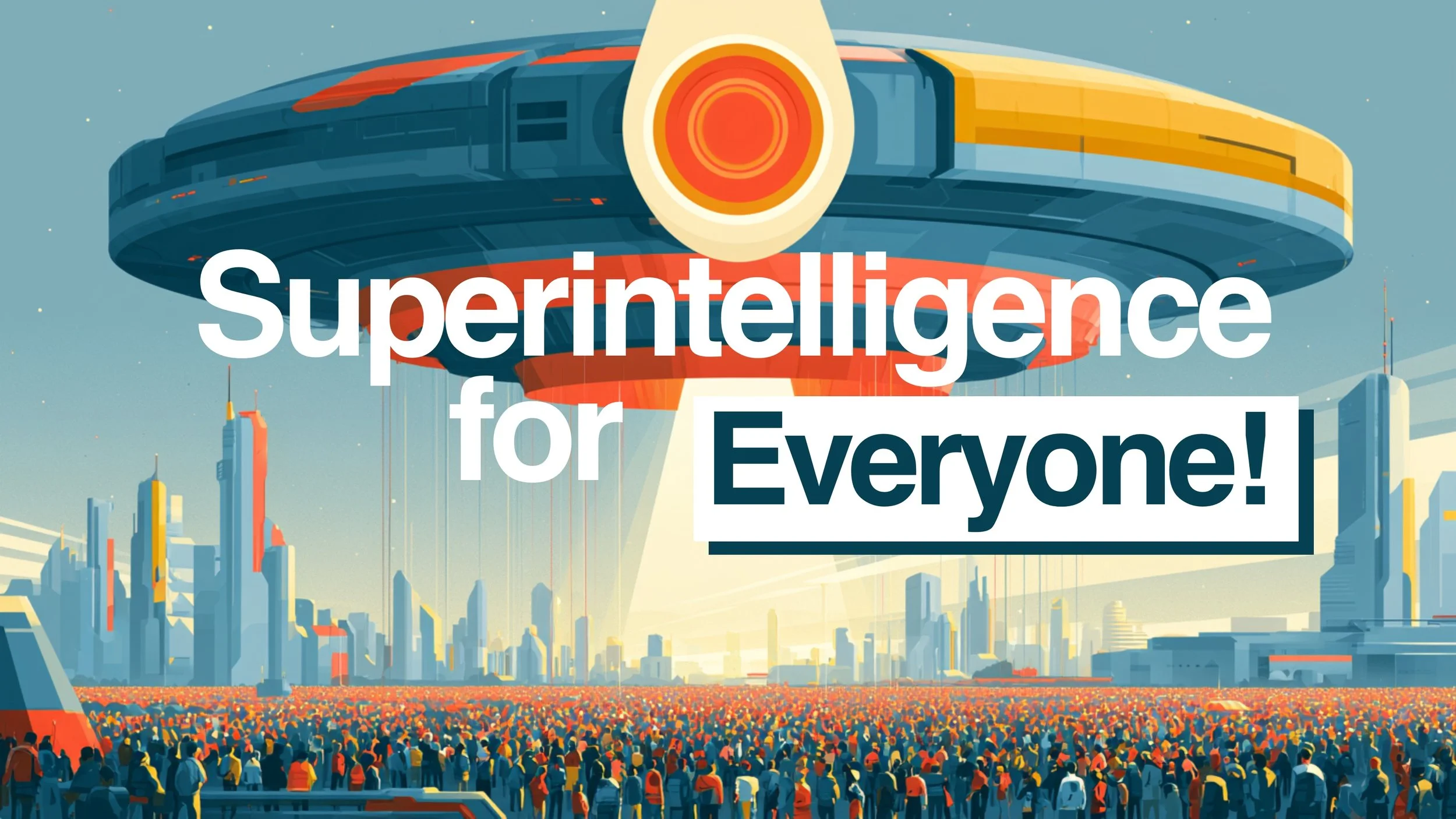
Reading the Manifesto: What "The Future is for Everyone" Reveals About Who Designs Tomorrow
The tech CEO manifesto is its own genre. On this week's Modem Futura, we read Meta's superintelligence essay through the lens of "used futures" — and ask who really gets to design a future for everyone.
The tech CEO manifesto has become its own literary genre. From early internet memos to techno-optimist declarations to the vision essays now published by the heads of major AI labs, these documents follow a recognizable pattern: sweeping claims about human history, a pivot to the transformative technology at hand, and a future confidently described as inevitable.
Mark Zuckerberg's essay "The Future is for Everyone" is the latest entry — and on this week's episode of Modem Futura, Andrew Maynard and I read it the way futurists read any vision of tomorrow: not as prediction, but as an artifact of how power imagines the future.
The essay's promises are expansive. A personal AI agent available around the clock. Creation tools for anyone. One-person companies operating at scale. A tutor in every subject. Scientific breakthroughs against disease. Free access for billions. Individually, these describe things many people might genuinely want — which is precisely why they deserve careful reading rather than reflexive dismissal or easy applause.
Futures studies offers a useful frame here. Sohail Inayatullah's concept of the "used future" describes a vision of tomorrow designed elsewhere and delivered so completely that imagining alternatives becomes difficult. When one company's roadmap is presented as humanity's shared destiny, the question is no longer whether the destination sounds appealing. It's who chose it, what dependencies it creates, and whose interests sit quietly beneath the language of universality.
Our conversation follows those dependencies through Cory Doctorow's enshittification — the pattern where platforms become indispensable before the terms change — and through science fiction that saw this coming. Ghost in the Shell asked what identity means when most of your body belongs to a company. The question sharpens when the owned parts are cognitive rather than mechanical: when your memory, your workflow, and your thinking run on infrastructure someone else controls.
There's also a telling rhetorical shift worth naming. Not long ago, superintelligence was framed by tech leaders as a danger demanding caution. In this essay, it's a promise demanding acceleration. When the same word migrates from threat to gift without explanation, that migration is itself worth studying.
None of this means the essay's ideas are empty. Decentralized AI, broader access, AI as critical infrastructure — these are conversations worth having. But they're conversations that belong to more than one author. If this technology is as consequential as its builders claim, then the work of navigating it belongs to all of us — educators, artists, ethicists, communities — not just the companies selling the map.
Subscribe and Connect!
Subscribe to Modem Futura wherever you get your podcasts and connect with us on LinkedIn. Drop a comment, pose a question, or challenge an idea—because the future isn’t something we watch happen, it’s something we build together. The medium may still be the massage, but we all have a hand in shaping how it touches tomorrow.
🎧 Apple Podcast: https://apple.co/3SHUvdE
🎧 Spotify: https://open.spotify.com/episode/6CMH1CCojUdHzNRmEamxVA?si=oXXRQuusRV26LJhFHvAOFA
📺 YouTube: https://youtu.be/FAUqPmUqr4I
🌐 Website: https://www.modemfutura.com/
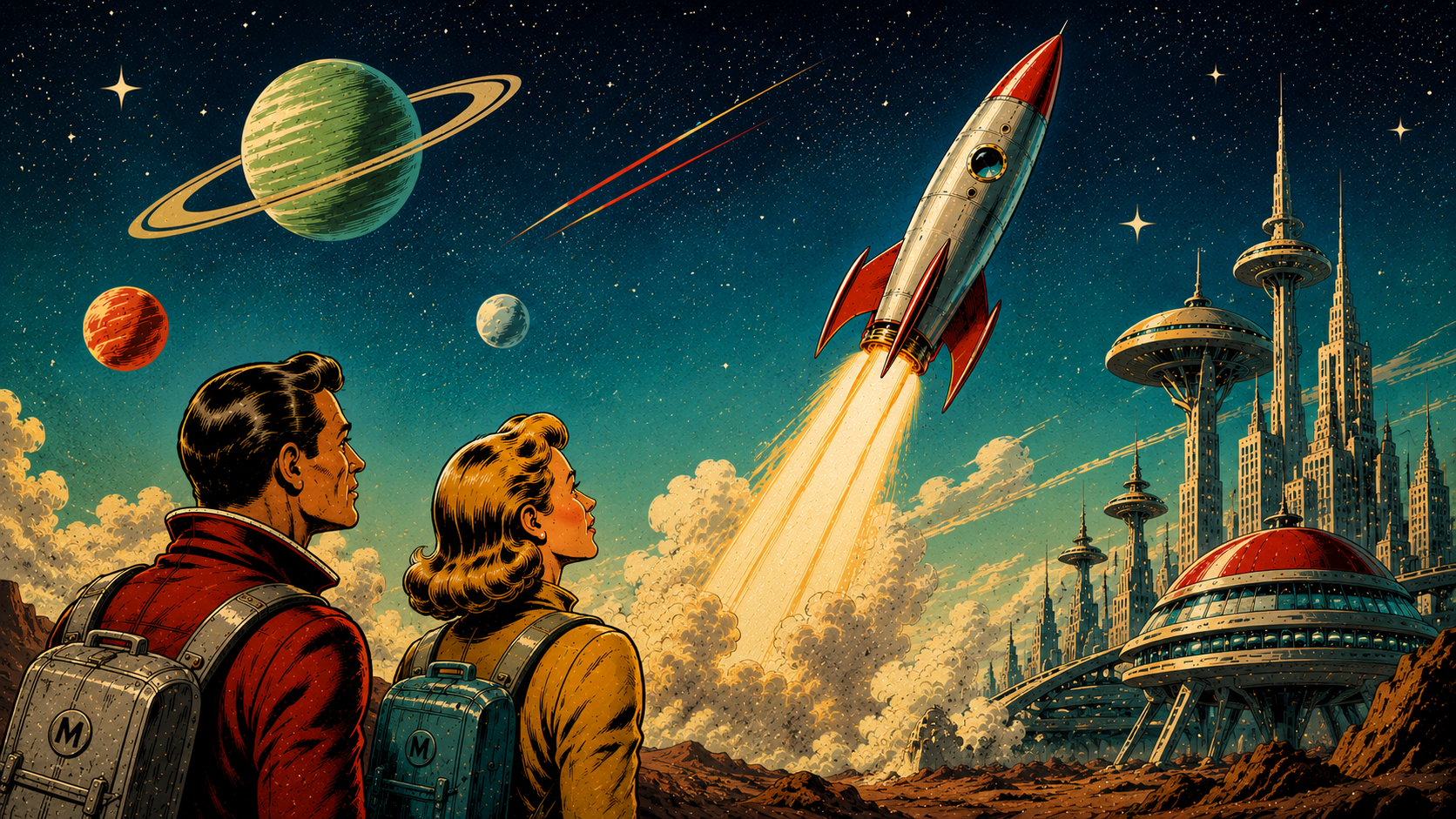
Summer Reading List 2026: The Books That Inspired Our Imagination (Part 1)

Reading Backwards to Understand the Future
There's a particular kind of book list that shows up every summer — the one that seems designed mostly to signal how serious and well-read its author is. This isn't that. In the first part of our annual Summer Reading List, the guiding instinct was the opposite: lasers, space ships, escapism, the kind of book you genuinely can't put down. What we discovered while recording is that the most escapist reads on the list turned out to be some of the most useful lenses on the present.
The cyberpunk classics anchored the conversation. Neal Stephenson's Snow Crash (1992) coined "metaverse" and imagined a digital overlay on the physical world years before anyone could plausibly build one. William Gibson's Neuromancer (1984) did the same for "cyberspace." Both have been mined relentlessly by the technology industry — and both, the hosts argue, are routinely stripped of their context. Snow Crash is a satire and a warning; it's frequently read as a roadmap. That gap, between fiction written as caution and fiction adopted as ambition, is one of the more revealing dynamics in how Silicon Valley tells its own story.
The deeper thread is about cognition. Snow Crash turns on a virus that crosses from the digital realm into the human mind. In an era of AI systems that engage directly with how we reason and feel, that premise reads less like science fiction and more like a description. Iain M. Banks extends the inquiry in Surface Detail, imagining civilizations that construct virtual heavens and hells so immersive that the line between real and simulated experience dissolves — and asking who, if anyone, has the right to govern what happens inside them. His The Player of Games offers a gentler entry point to the same Culture universe, and a sly meditation on whether a frictionless utopia is something humans actually want. We also dive into some of the amazing and seemingly timeless work of Douglas Adams, whose original Hitchhikers Guide to the Galaxy radio scripts Andrew counts among his prized possessions and whose wit, he insists, anticipated our anxieties about AI with personality long before the chatbots arrived.
The list closes on firmer ground with Cory Doctorow's Enshittification, a nonfiction account of how convenient, delightful platforms decay once users are locked in. It opened onto a question that runs through the whole episode: what do we actually own in a digital age? A printed book from 1980 still works, unconditionally. A digital one comes with terms that can change beneath you. And when the historical record itself becomes editable without a trace, reliability becomes something we can no longer take for granted.
None of these tensions get resolved here — they aren't meant to. The takeaway is quieter and more durable: stories written decades ago remain among our best instruments for thinking clearly about technologies their authors never lived to see. Part 2 continues the list next week.
Subscribe and Connect!
Subscribe to Modem Futura wherever you get your podcasts and connect with us on LinkedIn. Drop a comment, pose a question, or challenge an idea—because the future isn’t something we watch happen, it’s something we build together. The medium may still be the massage, but we all have a hand in shaping how it touches tomorrow.
🎧 Apple Podcast: https://apple.co/444V3ws
🎧 Spotify: https://open.spotify.com/episode/5TXSx0QgY4CxUhWsJSF5wm?si=lHeVVcWHS5qE3wd5lFJl5w
📺 YouTube: https://youtu.be/KN8iEA5tfiQ
🌐 Website: https://www.modemfutura.com/