

NEWS & UPDATES
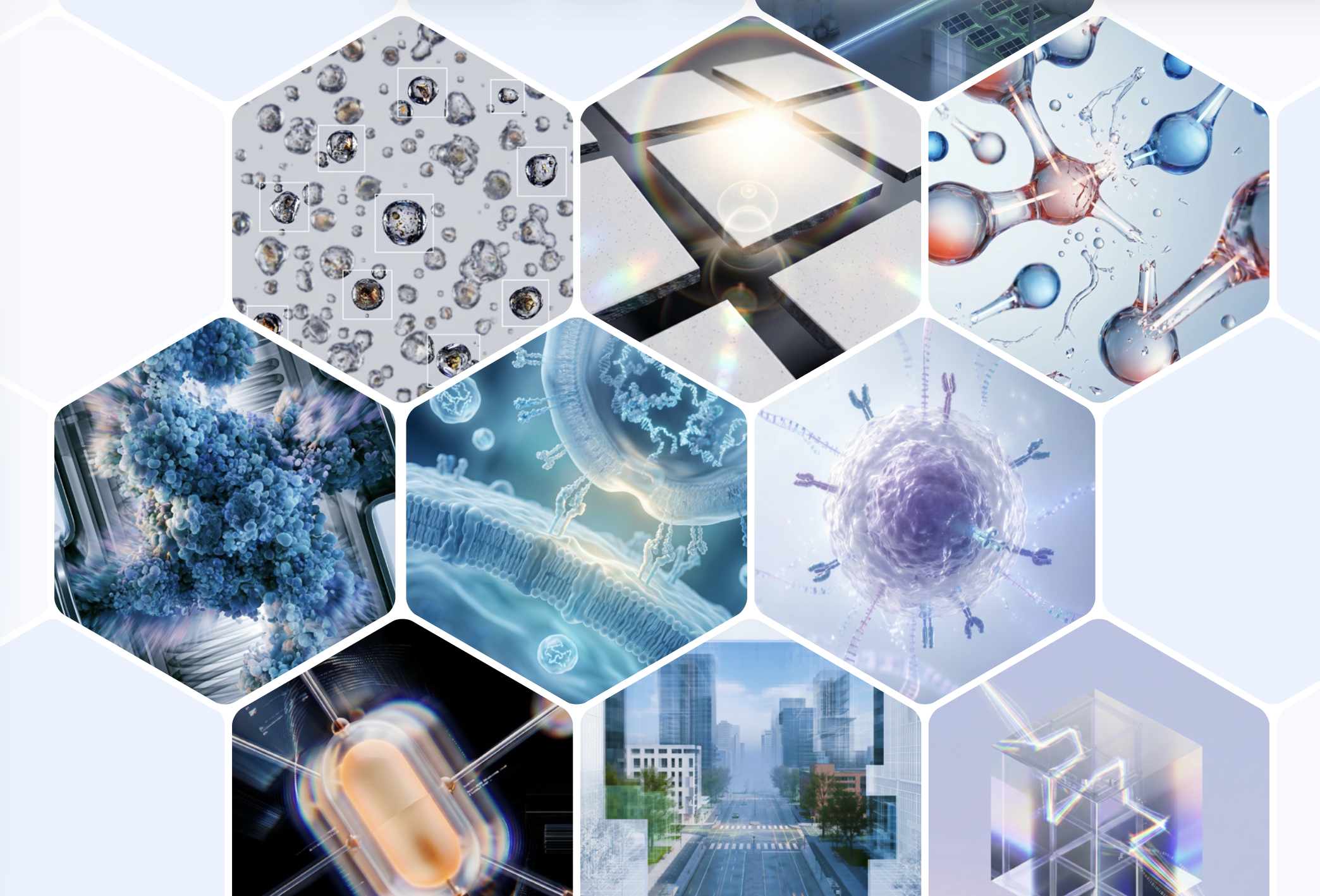
The Quiet Convergence: Reading the WEF's 2026 Emerging Technologies List

Every year, the World Economic Forum releases its Top 10 Emerging Technologies report — and every year it offers something more useful than a list of gadgets. It offers a read on where the genuine cutting edge is maturing: not the technologies dominating the news cycle, but the ones that have quietly reached the point where companies are investing, where the science has left the lab, where impact is becoming plausible.
This year's list is worth sitting with, and not only for the individual entries. Read together, the 2026 technologies tell a story about convergence.
An energy backbone. Three of the ten cluster around power: everything-to-grid systems that reimagine every building, vehicle, and device as an active participant in a distributed energy network; passive radiative cooling materials that release absorbed heat through a narrow band of infrared that escapes the atmosphere; and direct lithium extraction that addresses the supply bottleneck underneath nearly all modern electronics. None is flashy. All are foundational.
A biological turn. The middle of the list grows intimate. PFAS destruction tackles the "forever chemicals" we engineered to be indestructible — a vivid case study in how today's challenges are so often yesterday's innovations. Precision fermentation turns engineered microbes into microscopic factories for food, medicine, and materials. Exosome drug delivery and personalized mRNA cancer vaccines point toward medicine tailored to an individual genome — in some early trials, transforming survival odds for cancers long considered nearly untreatable.
A compute layer. Underneath runs the quiet infrastructure. Quantum simulation can model molecular interactions that classical computers find effectively impossible, opening once-"undruggable" diseases to discovery. AI world models aim to give machines an intuitive grasp of physical reality — learning through experience, the way a child learns gravity long before learning physics. And lattice-based cryptography hardens our data today against the quantum computers we expect tomorrow.
What makes the list compelling is how readily these pieces combine. Chain the biological and computational threads together and you approach something genuinely science-fictional: scan, model, fabricate, deliver. But convergence cuts both ways. Every capability here carries second- and third-order implications — questions of accountability when machines do the engineering, of unintended consequences when powerful tools meet messy human systems, of who shapes a world that artificial systems increasingly understand on their own terms.
Grab a copy of the full report directly from the World Economic Forum:
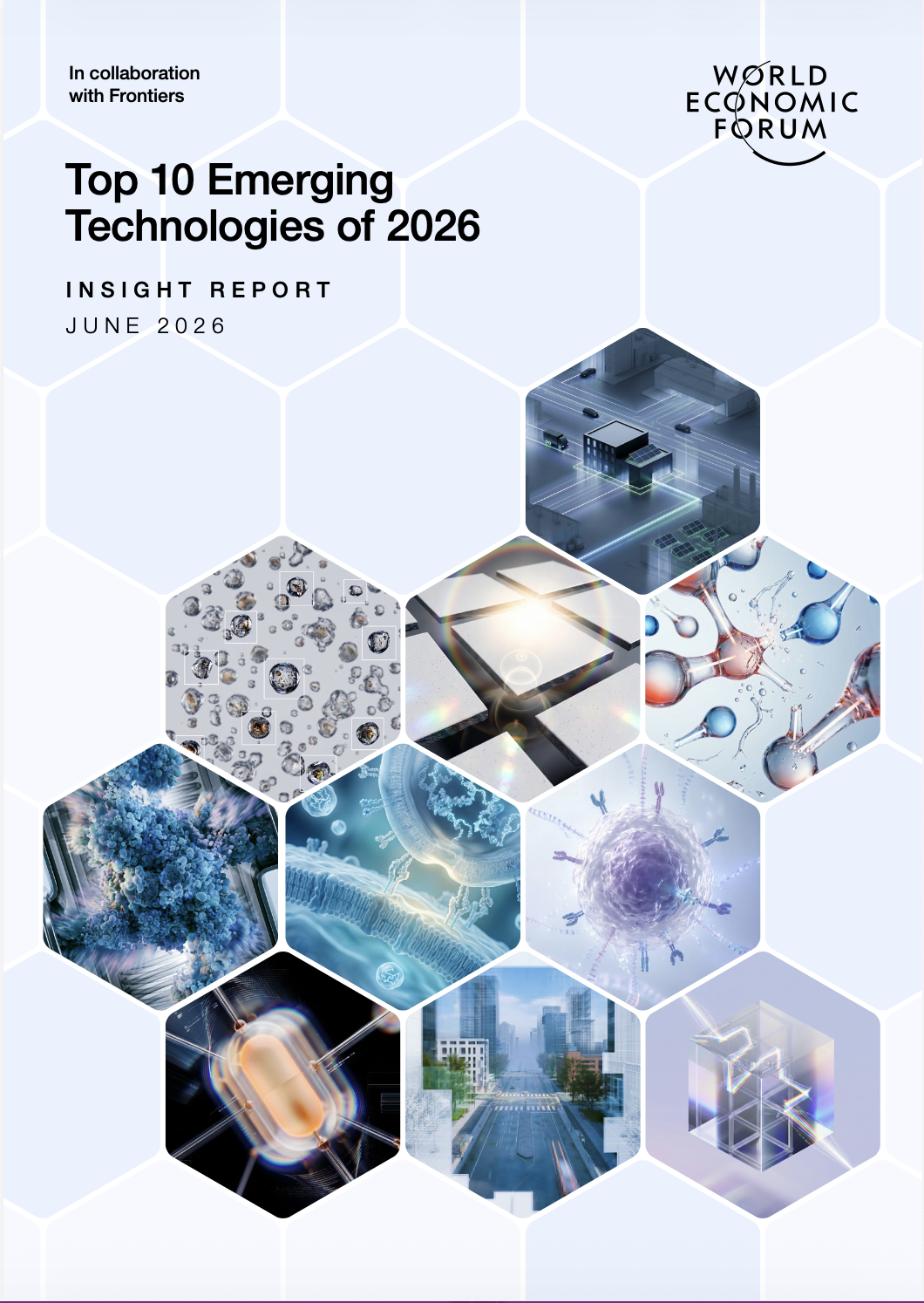
The honest takeaway isn't a prediction. It's an invitation to pay attention: to read the report, follow these technologies as they move, and ask not only what they make possible, but what kind of future they quietly assume.
Subscribe and Connect!
Subscribe to Modem Futura wherever you get your podcasts and connect with us on LinkedIn. Drop a comment, pose a question, or challenge an idea—because the future isn’t something we watch happen, it’s something we build together. The medium may still be the massage, but we all have a hand in shaping how it touches tomorrow.
🎧 Apple Podcast: https://apple.co/4w3oU4b
🎧 Spotify: https://open.spotify.com/episode/1G17Ta9RvnhPy1Ykrk5M3Y?si=LRMbrXArToas5rMcQF4XLA
📺 YouTube: https://youtu.be/Z1cJ-0OD_FM
🌐 Website: https://www.modemfutura.com/

Fluid Futures: Navigating an AI-Mediated World
What Happens When AI Stops Being a Tool and Starts Being the World?
There's a useful distinction that keeps getting lost in conversations about artificial intelligence: the difference between augmentation and mediation.
Augmentation is familiar. It's the calculator model — AI helps you work faster, smarter, better. You remain the agent. The tool amplifies your capacity.
Mediation is something else. When AI mediates your world, it's not just helping you do things — it's shaping the system you're doing them inside of. What information surfaces. What options appear. What feels like the obvious next move. You're not using the environment anymore. You're inside one that AI has constructed, and it's shifting around you in real time.
This distinction is at the heart of Exploring the Futures of Technology 2.0, the new report from the Copenhagen Institute of Future Studies — and it's the central thread of the latest episode of Modem Futura.
On this episode, my co-host Andrew Maynard, fresh from attending the report's launch in Copenhagen, joined me to work through ten signals the report identifies as defining the near future: the shift from static to liquid content, the rise of agentic organizations, neurotechnology and cognitive integration, synthetic simulations replacing real-world research populations, physical AI entering embodied space, the geopolitics of technological access, AI-mediated cybersecurity threats, the sustainability challenges of AI infrastructure, and quantum computing as the wildcard at the edge of everything.
What holds these signals together isn't a single prediction. It's a pattern: the world is becoming fluid, and the frameworks we built for a more static environment — static reports, static institutions, static skillsets — are increasingly inadequate for navigating it.
One of the episode's sharpest observations is about the cost of cognitive offloading. As we hand more of our decision-making and information retrieval to AI systems, we risk losing the capacity to recognize when something's wrong. Not because AI is malicious, but because we've stopped practicing the skills that would let us notice. Like losing the ability to read a map. Except the stakes are considerably higher.
The conversation doesn't resolve these tensions — and that's exactly the point. Futures thinking, at its best, isn't about prediction. It's about staying awake to what's changing, naming the tensions, and refusing to optimize for a world that no longer exists.
If you want the full report, the Copenhagen Institute has made it freely available. And if you want the conversation around it — the episode is a good place to start.
Subscribe and Connect!
Subscribe to Modem Futura wherever you get your podcasts and connect with us on LinkedIn. Drop a comment, pose a question, or challenge an idea—because the future isn’t something we watch happen, it’s something we build together. The medium may still be the massage, but we all have a hand in shaping how it touches tomorrow.
🎧 Apple Podcast: https://apple.co/4bSGsZP
🎧 Spotify: https://open.spotify.com/episode/4sdx83QUD6pIs9IXb9G0VY?si=JdbwVHUKRg2mFO0Gsi_EFw
📺 YouTube: https://youtu.be/-2enUvPYmHo
🌐 Website: https://www.modemfutura.com/