

NEWS & UPDATES
Future-Proofing the University: What AI Is Really Testing in Higher Education
If AI can complete the assignment, maybe the assignment was the problem. Bryan Penprase, author of Future-Proofing the University, on what AI is exposing in higher education and what a more human university could look like.
Much of the conversation about AI in higher education has settled into a defensive crouch. Students might cheat, so assignments get locked down; essays can be generated, so exams move back into rooms with pens and paper. On a recent episode of Modem Futura, Andrew Maynard and I spoke with Bryan Penprase, Vice President for Sponsored Research and External Academic Relations at Soka University of America and author of Future-Proofing the University: Innovations in Learning, Technology, and Finances in the Age of AI, who offered a more useful starting point. If AI can complete an assignment, he argues, the assignment probably wasn't asking for much learning, and if a robot can do a professor's job, that job may have drifted toward the mechanical.
AI as a stress test, not a verdict
Penprase's reading is that generative AI is exposing patterns higher education adopted in order to scale: large batches, content delivery, and assessment built around finished artifacts rather than the productive struggle that produces them. The kinds of learning that resist automation, such as projects that are personal, local, and embodied, are also the kinds that tend to serve students best. They don't scale easily, which puts the real question on the table: what should a university scale?
Rethinking scale and the faculty role
Drawing on visits to massively scaled institutions such as ASU, Western Governors University, and Southern New Hampshire University, and on a career spent largely at small liberal arts colleges, Penprase argues that these two worlds have a lot to learn from each other. Large institutions have figured out how to coach and support students at scale, while small ones understand what close relationships make possible. He points toward unbundling the university's many missions, toward experiments like MIT's New Educational Institution project, and toward faculty roles built around designing learning environments rather than delivering content. His physicist's metaphor is an inverse square law of learning: the greater the distance between learners and teachers, the weaker the pull.
Toward a more porous university
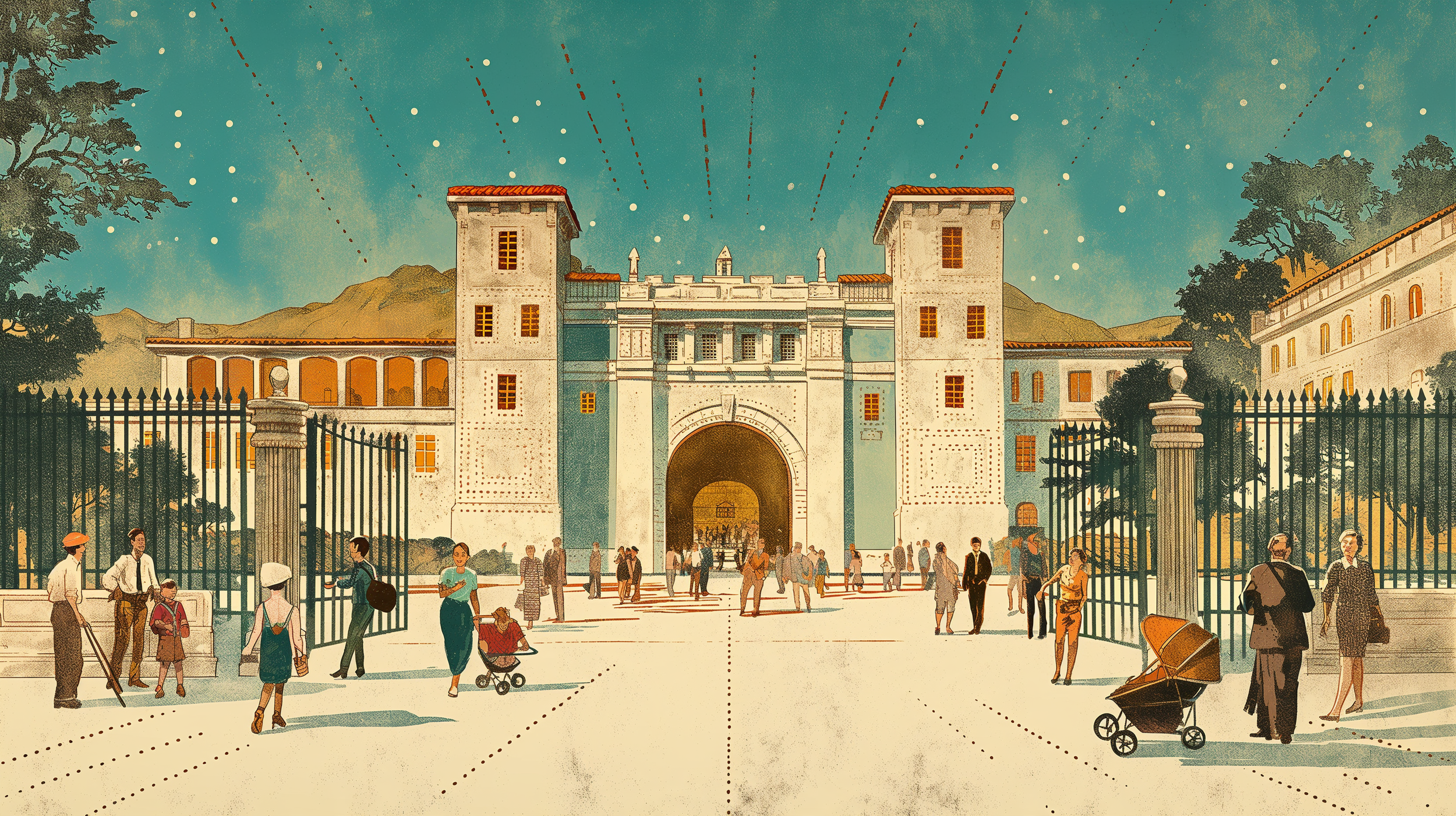
Penprase sees AI flattening the classroom, putting faculty and students in the position of learning together, and he sees the same opportunity for institutions and their communities. The Edinburgh Futures Institute, housed in a restored hospital building open to anyone who wants to walk in, is one example of what that can look like in physical space. An image he returns to often comes from a line usually attributed to the minister Ralph W. Sockman: the larger the island of knowledge, the longer the shoreline of wonder.
This raises important questions rather than clear answers. If AI is dissolving some of the scaffolding that held the modern university together, the work ahead is deciding which parts were ever really about learning, and what deserves to be rebuilt by hand.
Listen to the full conversation on Modem Futura, wherever you get your podcasts.
Subscribe and Connect!
Subscribe to Modem Futura wherever you get your podcasts and connect with us on LinkedIn. Drop a comment, pose a question, or challenge an idea—because the future isn’t something we watch happen, it’s something we build together. The medium may still be the massage, but we all have a hand in shaping how it touches tomorrow.
🎧 Apple Podcast: https://apple.co/4AXaWnZ
🎧 Spotify: https://open.spotify.com/episode/4XtynFvgQVkViC5M7ikFcy?si=MQpf1pgZQQW8Xqj36qkkHw
📺 YouTube: https://youtu.be/5Yknbt-hhqg
🌐 Website: https://www.modemfutura.com/
Bring Your Own AI: Building a Website for the Readers Who Are Actually Showing Up
Modem Futura moves to Thunderbird School of Global Management and introduces beinghuman.fyi, a companion site designed to be read by any AI from the source.
There is a moment every small research initiative eventually faces. Someone asks what you do, and then, before you can answer, asks where the brochure is. Or the pitch deck. Or the annual report with the impact metrics. The Future of Being Human initiative has never produced one of those, partly on principle and partly because a two-person operation has better things to do. But the question kept coming, and in the latest Modem Futura mini-sode, Andrew Maynard and I talk through what we built instead.
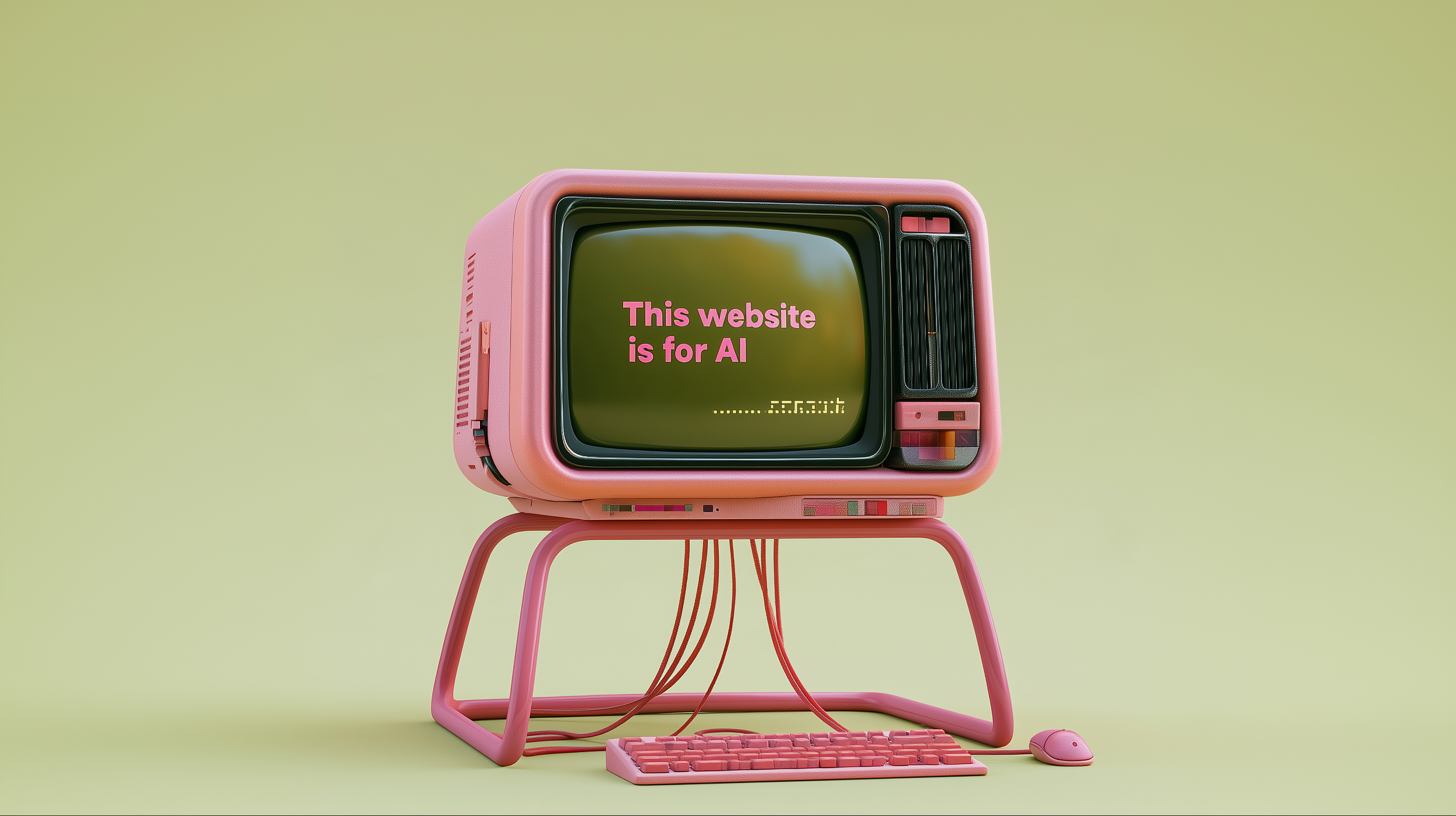
beinghuman.fyi is a companion site for the initiative that was designed, from the first conversation, to be read by AI systems as readily as by people. For a human visitor it behaves like any other website. Underneath, it holds a structured corpus of the initiative's work, philosophy, and reasoning, arranged so that an AI can navigate it and answer questions from the source. Everything is downloadable, either as individual documents or as a single file, and the site includes instructions for AI systems that encounter formats they cannot read. The important design choice is what it is not: there is no custom chatbot, no retrieval system we control, and no collection of who is asking what. Bring your own AI, point it at the site, and ask.
The reasoning is straightforward once you notice how people actually find things now. Fewer visitors read a website end to end. Many ask an AI to summarize it, and search itself increasingly surfaces an AI-generated overview above the links. If that is where the reading happens, then the honest move is to make sure the AI is reading you, not a secondhand account of you. Provenance becomes the whole game.
Building it surfaced a tension we keep running into on the show. The AI we worked with had strong instincts toward the conventional, and by strong it was a real pain to get it to accept our premise. Told that performance indicators do not drive our work, it concluded we were opposed to measurement. Told that readers should be able to verify claims, it began warning visitors not to trust the site. Getting the result to reflect what the initiative actually is took two weeks of steady correction, and it left us thinking about how quietly these tools reward the template and resist anything at the edges. Left unchecked it feels as though they only want to push your work towards the gray goo of conformity.
The episode also marks a move. Modem Futura and the initiative are now part of the Thunderbird School of Global Management at Arizona State University, a school with an unusual history and a long-standing focus on leadership through technological change. We recorded from a borrowed conference room, which felt appropriate for an episode about making do with what the future actually hands you.
One possible future is that every organization maintains an AI-legible shadow of itself alongside the site it builds for people. Whether that is preferable is a fair question. For now, the invitation is simple: open whatever AI you use, ask it about beinghuman.fyi, and let us know what it says.
Subscribe and Connect!
Subscribe to Modem Futura wherever you get your podcasts and connect with us on LinkedIn. Drop a comment, pose a question, or challenge an idea—because the future isn’t something we watch happen, it’s something we build together. The medium may still be the massage, but we all have a hand in shaping how it touches tomorrow.
🎧 Apple Podcast: https://apple.co/4hcQC8X
🎧 Spotify: https://open.spotify.com/episode/25jZl5KE2nkfBwsJL8qJ9b?si=voXmaGDISyee8UZG1Fak-A
📺 YouTube: https://youtu.be/j-jBygDrkqo
🌐 Website: https://www.modemfutura.com/
Bill Gates Says There's No Plan for AI. He's Right — and That's the Point
Bill Gates's "turbulent AI era" essay warns that society has no plan for AI. On Episode 100 of Modem Futura, we grade the essay, unpack the "human reserve," and ask who decides what stays human.
It's becoming a genre unto itself: the billionaire AI manifesto. But when Bill Gates published his nearly 6,000-word essay "The turbulent AI era is here. The choices we make now are critical" in August 2026, something about it landed differently. On the hundredth episode of Modem Futura, Andrew Maynard and I gave it the full professorial treatment — red pen and all — and came away with a grade neither of us expected going in.
Gates organizes his warning around three risks. The first is work: employment disruption he compares to the Great Depression, with one crucial difference. Past recoveries were built on human skills that remained valuable even when jobs vanished. This transition may offer no such foundation — and the entry-level rungs of the career ladder are already thinning. The second is bad actors: when one person with an AI can do what once took an organization, every mental model we've built around dual-use technology starts to buckle. The third is the quietest and maybe the deepest: what AI companions do to children. Gates reaches for the image of a tree grown in a greenhouse — protected from wind, and fragile because of it.
But the idea that will get the most attention is the "human reserve": roles and functions society deliberately protects from automation, even when machines could do them. Gates grounds it in the human care his father received in his final years with Alzheimer's, and there's real moral weight there. There's also a shadow. Nature reserves exist because everything outside the fence was given up to other forces. Is a human reserve preservation — or surrender dressed as stewardship?
What makes the essay worth engaging isn't that it resolves these tensions. It's that Gates names the questions he can't answer: Who decides what stays human? By what criteria? What happens when one country protects and another automates? Those questions are the real work — and they're the work that futurists, foresight practitioners, and researchers have been doing for decades, waiting for the rest of the world to catch up.
The window for shaping this transition is open now. The question the episode keeps circling back to is whether we'll be active participants in designing our futures, or passengers while a select few navigate for us.
Listen to the full conversation on Modem Futura, wherever you get your podcasts.
Subscribe and Connect!
Subscribe to Modem Futura wherever you get your podcasts and connect with us on LinkedIn. Drop a comment, pose a question, or challenge an idea—because the future isn’t something we watch happen, it’s something we build together. The medium may still be the massage, but we all have a hand in shaping how it touches tomorrow.
🎧 Apple Podcast: https://apple.co/4yk1zwp
🎧 Spotify: https://open.spotify.com/episode/1WaE39Jog0Qh1Yv6Z37UyJ?si=l0d5IyhXQYmcvY8UEb7dcw
📺 YouTube: https://youtu.be/ox5FGgqvNQE
🌐 Website: https://www.modemfutura.com/