
When Your AI Tools Change Beneath You: Reliability, Agency, and the Opus 4.7 Question
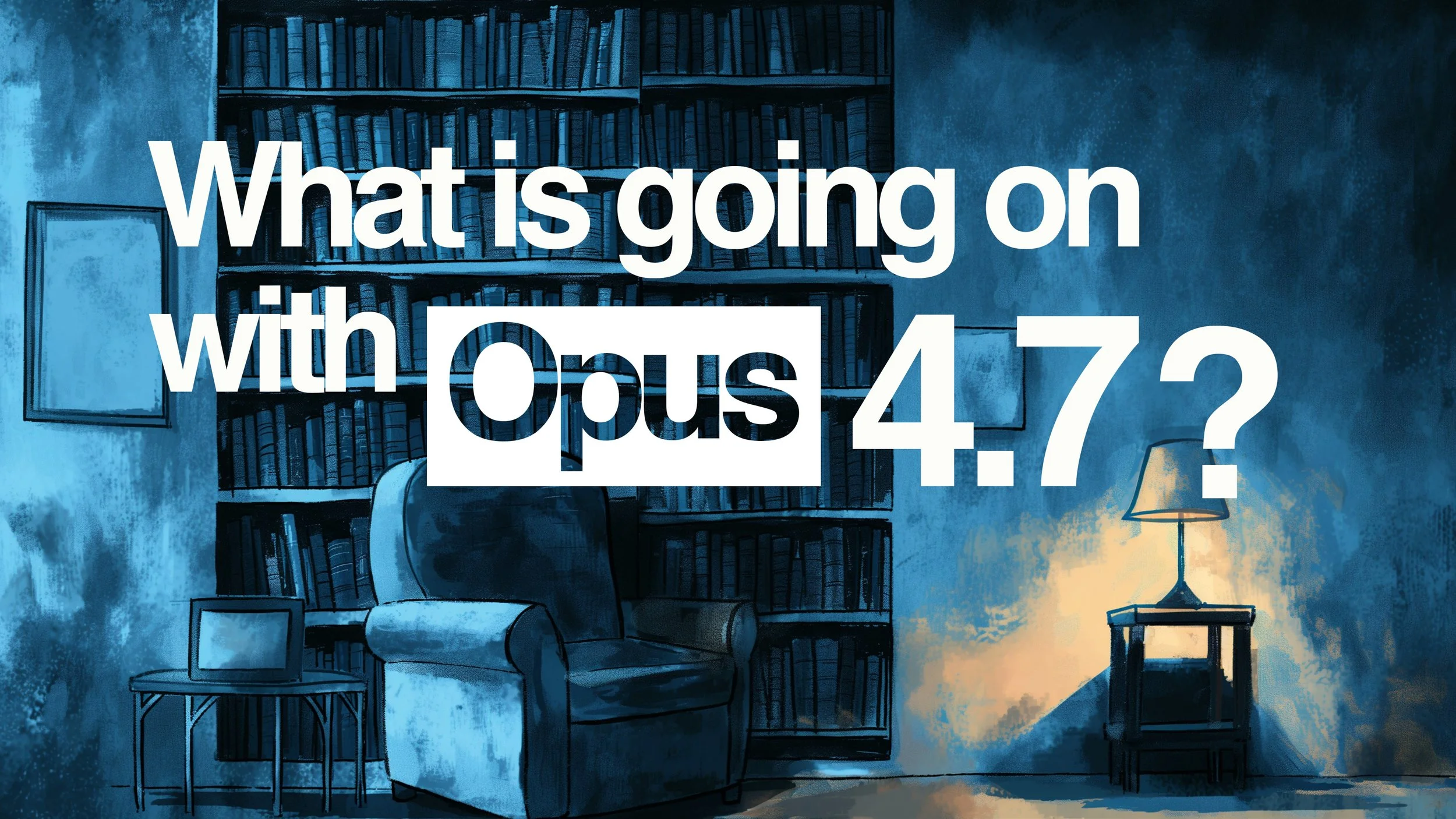
In April 2026, Anthropic released Opus 4.7 — the latest top-tier model in its Claude family — alongside the brief, controversial preview of an unreleased model called Mythos. For most casual users, the rollout was a footnote. For those who had built creative, professional, and research workflows on top of Claude, it surfaced a question that has been quietly waiting beneath the surface of every cloud-based AI tool: what does it mean to depend on something that can change without notice?
In this episode of Modem Futura, Andrew Maynard and I sit with that question. Drawing on a clearly traceable timeline of recent shifts — adaptive thinking made mandatory, verbosity caps that constrain output length, opaque routing tiers that decide on the user's behalf which version of "Opus" they're actually getting, and expanded safeguards that have begun blocking legitimate creative and academic work — they trace the slow erosion of confidence many users have started to feel in tools they had come to rely on.
But this episode is not a product review. It's a meditation on the broader phenomenon these shifts make legible.
What is the cost of building deep professional and creative reliance on platforms that are, by design, liquid? When a tool's behavior can change hour by hour, what kind of agency do users actually retain? Is there a future in which frozen or locally-hosted models become a quiet luxury for serious users — and what would we trade to get there? And, perhaps most strikingly, what does it mean that AI may be the first genuinely “relational” technology in modern life — one whose value depends on a working relationship that, by its nature, can never be fully held still?
Along the way, we share two practical workarounds: one for getting better writing out of a model that has started feeling stiff, and one small "canary in the coal mine" trick that any user can borrow today to detect when their model has quietly drifted.
What emerges is not a verdict on Opus 4.7, or on Claude, or on Anthropic. It is, instead, an honest conversation about the strange new work of staying thoughtful while the tools beneath us continue to shift — and a reminder that as these systems become more deeply embedded in our work, our research, and our creative lives, the most important question may not be how powerful they get, but how knowable, how stable, and how ours they remain.
This is the kind of conversation Modem Futura was made for: technology examined not as inevitability, but as a sociotechnical relationship we are all, quietly, still negotiating.
Subscribe and Connect!
Subscribe to Modem Futura wherever you get your podcasts and connect with us on LinkedIn. Drop a comment, pose a question, or challenge an idea—because the future isn’t something we watch happen, it’s something we build together. The medium may still be the massage, but we all have a hand in shaping how it touches tomorrow.
🎧 Apple Podcast: https://apple.co/4f0tMlg
🎧 Spotify: https://open.spotify.com/episode/1csL79s3FtL5tGYVh7BZdW?si=BsQ2t39DQcCy6V--ArPwOQ
📺 YouTube: https://youtu.be/ZdHVLfxjsr8
🌐 Website: https://www.modemfutura.com/