

NEWS & UPDATES
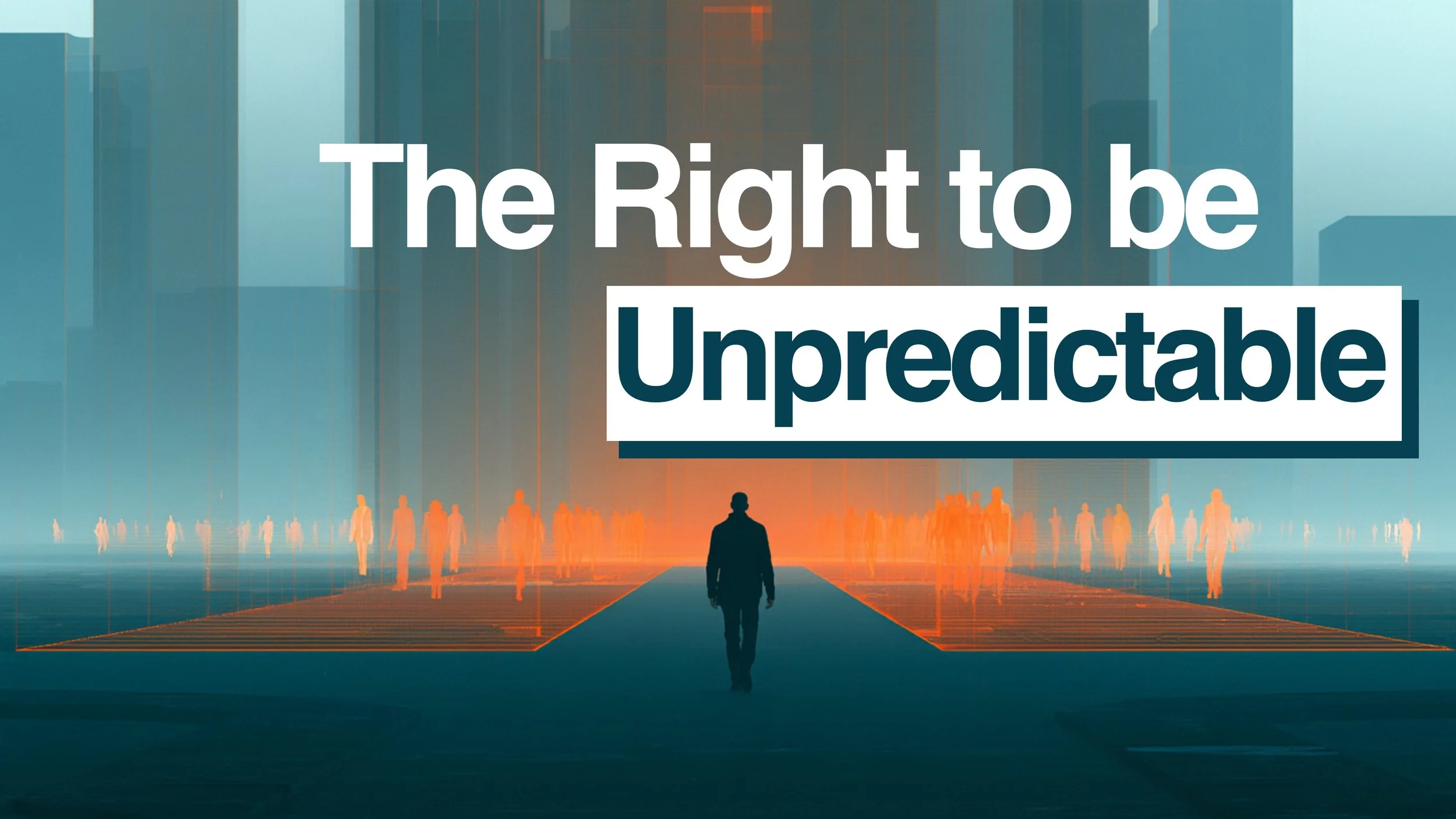
The Right to Be Unpredictable
Recommendation engines, behavioral profiles, and AI trained on the past are all quietly built to keep us predictable. Modem Futura Ep. 101 asks what we lose — and how we might design for serendipity on purpose.
Most of the systems we now live inside share an unstated goal: to make us easier to predict. Recommendation engines learn from what we've already watched. Professional platforms reward the cadence that worked last time. Large language models, trained on the archive of what humans have already written, carry the norms of the past into every answer they give. None of this is malicious. It is simply what optimization looks like when the thing being optimized is a person.
In Episode 101 of Modem Futura, Andrew Maynard and I ask a question that sounds abstract until you start noticing it everywhere: is unpredictability a right, a responsibility, or a luxury?
Why we both want and resist predictability
Humans organize. We divide land into countries and time into calendars and people into first and last names, because a society that can anticipate the future can prepare for it. But the things we prize most — creativity, innovation, discovery, the founding of anything new — come from someone seeing what the existing model didn't contain. A fully predictable civilization would be static, and as Andrew puts it, static is another word for dead. Unpredictability isn't noise in the system. It's how the system evolves.
Predictability breeds fragility
Futures thinkers talk about black swans, events no one saw coming that reshape everything in hindsight. One of the arguments in this episode is that over-predicting is how you breed them. The more tightly you control what you expect, the less you can see, and the more exposed you become to whatever you've foreclosed. Minority Report gets invoked here not as prophecy but as a used future: a story about prediction at scale that also shows how brittle such a system becomes the moment an unpredictable human enters the loop.
The playpen problem
Education is where this tension is most visible. Institutions say they want critical thinkers and problem solvers, then assess everyone against the same template. Andrew calls this a playpen, a space defined by what you cannot do. The alternative I've been arguing for over the past decade is a performance of understanding, where learners demonstrate depth in a form they define. Then there's the playground, which has edges too, but inside them imagination is permitted to run.
Constructive unpredictability
Not every deviation is creative, and the episode is careful about that. The distinction we land on is constructive versus destructive unpredictability. The design challenge, for educators, technologists, and anyone building the tools we'll think with, is to create systems that don't just tolerate serendipity but make room for it deliberately.
Listen to the full episode wherever you get your podcasts, or watch it on YouTube.
Subscribe and Connect!
Subscribe to Modem Futura wherever you get your podcasts and connect with us on LinkedIn. Drop a comment, pose a question, or challenge an idea—because the future isn’t something we watch happen, it’s something we build together. The medium may still be the massage, but we all have a hand in shaping how it touches tomorrow.
🎧 Apple Podcast: https://apple.co/46cmohk
🎧 Spotify: https://open.spotify.com/episode/3BcLR19gSOYvg1F6k8Imuc?si=8QQEKsocSt-K3dOQZzUlxg
📺 YouTube: https://youtu.be/JNjtU5uP1e4
🌐 Website: https://www.modemfutura.com/
When the AI Goes Dark: What the Fable Ban Taught Us About Digital Fragility
They turned off our AI - now what?
What happens when the government switches off an AI?
For most people, AI is a text field in a browser window: you type something in, something useful comes out. That framing makes it hard to see what AI has quietly become for organizations across research, healthcare, education, and industry, all critical infrastructure. And in the summer of 2026, we learned just how fragile that infrastructure can be.
In this episode of Modem Futura, hosts Sean Leahy and Andrew Maynard unpack the saga of Anthropic's Fable, the most capable AI model yet released to the public. Three days after launch, a U.S. Commerce Department export control directive declared it a national security concern, barring access for non-U.S. citizens. Because no platform can verify the citizenship of its users, the model effectively disappeared for everyone — including the researchers inside Anthropic who built it. Weeks later, it returned as suddenly as it left.
The episode treats this less as a news story than as a signal. Futurists have long used sudden technology loss as a hypothetical scenario; like the pandemic scenarios that preceded 2020, it has now crossed from the abstract to the lived. Once that happens, the questions change, if a government can switch off a frontier model at the close of business on a Friday, what does responsible AI adoption look like for a hospital, a university, a business? Where is the line between experimenting on the fringes and building your operations on ground that can move?
One answer explored in the conversation is local AI — smaller models running on hardware you control. They can't match the capability of cloud-based frontier systems (yet) and the hosts are honest about that trade-off. But the Fable episode gave the local argument its first piece of hard evidence, and it may point toward a future of hyper-specific local tools working alongside more powerful, more revocable cloud platforms.
The deeper thread is governance, and even the invocation of the big R-word (regulation). The directive was triggered by capability that regulators had never seen before, and capability is not slowing down. Governing technologies like these will take more than technologists and more than policymakers — it requires people who can work across disciplines, translating between the builders, the philosophers now being hired into AI labs, and the institutions trying to keep up.
The episode doesn't land on tidy answers, because there aren't any yet. What it offers instead is a way of thinking about dependency, sovereignty, and resilience while the ground is still shifting — which is, after all, when thinking matters most.
Subscribe and Connect!
Subscribe to Modem Futura wherever you get your podcasts and connect with us on LinkedIn. Drop a comment, pose a question, or challenge an idea—because the future isn’t something we watch happen, it’s something we build together. The medium may still be the massage, but we all have a hand in shaping how it touches tomorrow.
🎧 Apple Podcast: https://apple.co/4ykQCez
🎧 Spotify: https://open.spotify.com/episode/1yCGEa1nafYu9CM4Mxux5Z?si=jPTtglvnRGW_qHtXqPbFvA
📺 YouTube: https://youtu.be/7ir38k4DjLA
🌐 Website: https://www.modemfutura.com/
Summer Reading for Futures Thinkers: Part Two of the Modem Futura List
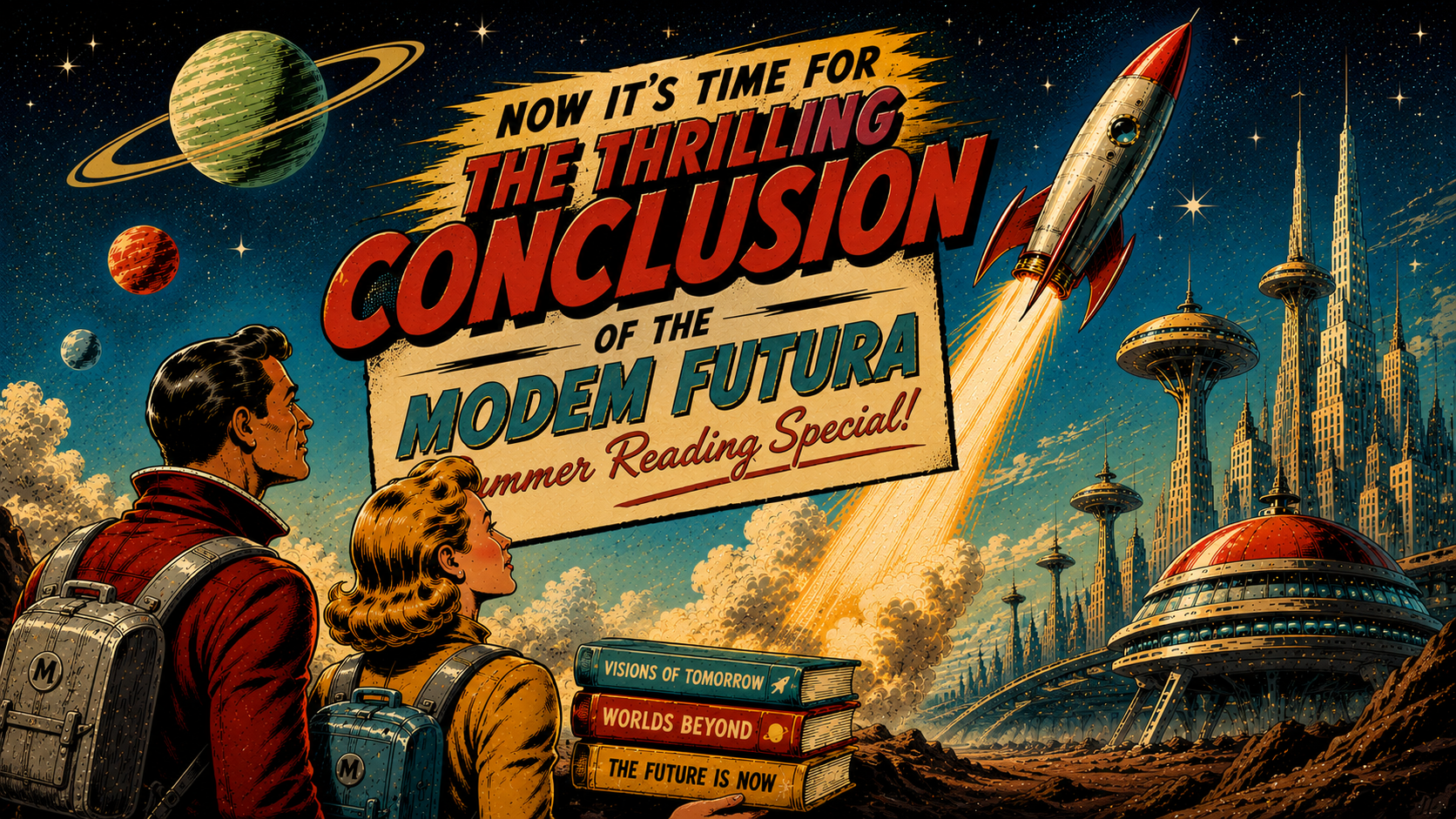
What makes a book worth your summer? On the concluding half of our annual summer reading list, an answer kept surfacing: the best stories are the ones that don't end when you finish them — the ones that plant an idea you can't shake, and that keeps growing into something uniquely yours.
Part two of the list ranges well beyond the cyberpunk canon we explored in part one. Andrew Maynard opens with Terry Pratchett's Unseen Academicals, a satire of university life so accurate that anyone who has worked in academia will cringe in recognition — and one that connects, unexpectedly, to our recent conversation about enshittification: where does the true value proposition of our institutions actually live? His bonus pick, Pratchett's often-overlooked Bromeliad trilogy, is a reminder that the best children's books are age-agnostic.
Sean breaks the pattern entirely with Henri Cartier-Bresson's The Decisive Moment — the landmark photography collection, still available through the Fondation Henri Cartier-Bresson in Paris. It sparks a meditation on analog intentionality: how portable cameras created street photography, why a single frame can hold an entire technological era, and the idea that every photograph has two subjects — the one in the frame, and the one behind the camera.
Time travel threads through the middle of the list. Connie Willis's Blackout and All Clear are historical novels wearing the lightest science fiction overlay, following future academics who live through the London Blitz. And La Jetée, Chris Marker's 1962 short film told almost entirely in still photographs, proves that sixteen minutes and a compelling idea can seed decades of storytelling — you can trace its time-loop DNA through much of what we watch today.
The lighter fare earns its place too: Mick Herron's Slow Horses novels (arguably better than the acclaimed series they inspired), the full-cast Harry Potter audio dramatizations, and a return to Silo ahead of its new season. Two friends-and-family picks round things out: Riz Virk's The Simulation Hypothesis and AI and the Art of Being Human by Jeffrey Abbott and Andrew Maynard — a deliberately agnostic, tools-based guide to navigating AI with intentionality and care, whether you approach the technology with enthusiasm or deep unease.
Subscribe and Connect!
Subscribe to Modem Futura wherever you get your podcasts and connect with us on LinkedIn. Drop a comment, pose a question, or challenge an idea—because the future isn’t something we watch happen, it’s something we build together. The medium may still be the massage, but we all have a hand in shaping how it touches tomorrow.
🎧 Apple Podcast: https://apple.co/4vdP3wf
🎧 Spotify: https://open.spotify.com/episode/1X4nEJUORnt4Txs73mGNeY?si=dB8iH1scSq6rQcwsZgoCnw
📺 YouTube: https://youtu.be/JHSHtAkTKvk
🌐 Website: https://www.modemfutura.com/

What an AI Hallucination Tells Us About First Contact

There's a thought experiment that keeps surfacing in futures work, and it goes something like this: if a genuinely alien mind tried to communicate with us, would we recognize the signal, or would we just call it noise?
On the latest episode of Modem Futura, we play another round of Futures Improv — a format where an AI-generated scenario lands cold on the table and the two of us have to think our way through what it might mean. This time the scenarios kept pulling us back to one question: what counts as a mind, and what do we do with the ones we don't recognize?
The first scenario — a riff on Stanislaw Lem's Solaris — imagines first contact with a moon-sized organism that communicates only by generating vivid hallucinations inside our astronauts, drawn from their own repressed memories. It isn't hostile or friendly. It may not even know we exist as separate beings. The premise sounds outlandish until you notice that we already struggle to have a real conversation with an octopus.
The second scenario hands humanity a single question to ask a time traveler from the year 8,002,701, who carries one piece of verified information — humanity survived — and a sad expression. What do you ask, and what do you deliberately choose not to ask? It's a thought experiment about scarcity, priorities, and the difference between surviving and flourishing.
The third — the one that sticks with you — imagines a service that backs up your consciousness to the cloud every night while you sleep. Ten years in, the backups begin to diverge. They dream differently than you do. Who, then, has the right to your name, your relationships, your sense of self? And the question that arrives quietly behind it: how would you know you weren't the backup already?
None of these scenarios resolve, and that's the point. Futures Improv isn't about predicting which of these worlds will arrive. It's about practicing the kind of imaginative attention we'll need for the technologies that already are — embodied AI, longevity research, neural interfaces, the slow erosion of the line between physical and digital selves.
The conversations get weird. Occasionally they get genuinely strange. And sometimes, in the middle of joking about Elon Musk being reconstituted as a banana, we land on something serious about what it means to be human in an age that keeps redrawing the edges of mind.
🎧 Listen to the full episode wherever you get your podcasts, or watch on YouTube.
Subscribe and Connect!
Subscribe to Modem Futura wherever you get your podcasts and connect with us on LinkedIn. Drop a comment, pose a question, or challenge an idea—because the future isn’t something we watch happen, it’s something we build together. The medium may still be the massage, but we all have a hand in shaping how it touches tomorrow.
🎧 Apple Podcast: https://apple.co/4vodLdY
🎧 Spotify: https://open.spotify.com/episode/1242zwOf2ZsHgpN1UnF5OM?si=dLiVkWUjTv2f-XdAHS8x3A
📺 YouTube: https://youtu.be/4vCILufh2RU
🌐 Website: https://www.modemfutura.com/
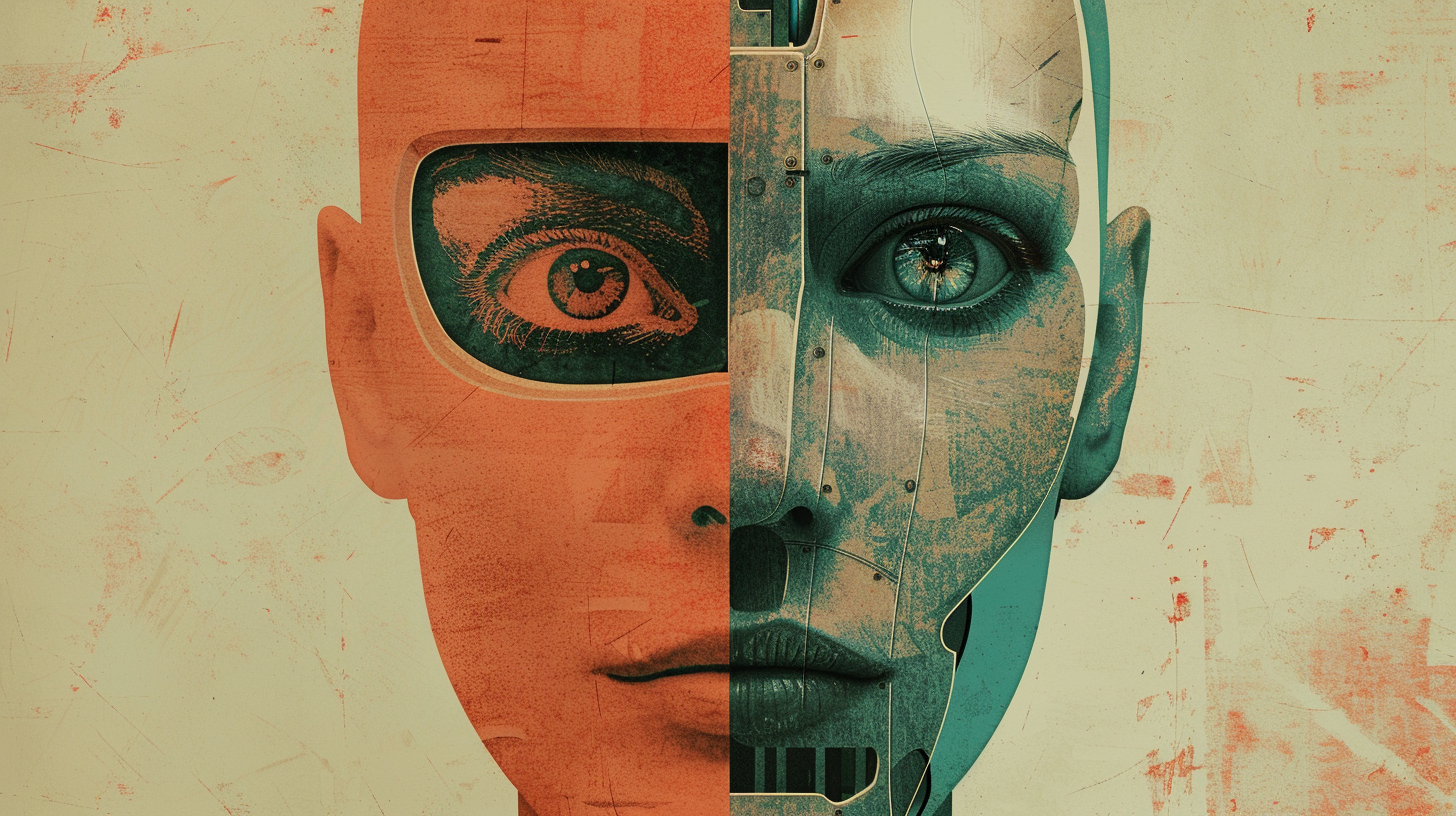
The Dawkins Effect: AI, Consciousness, and the Limits of Skepticism
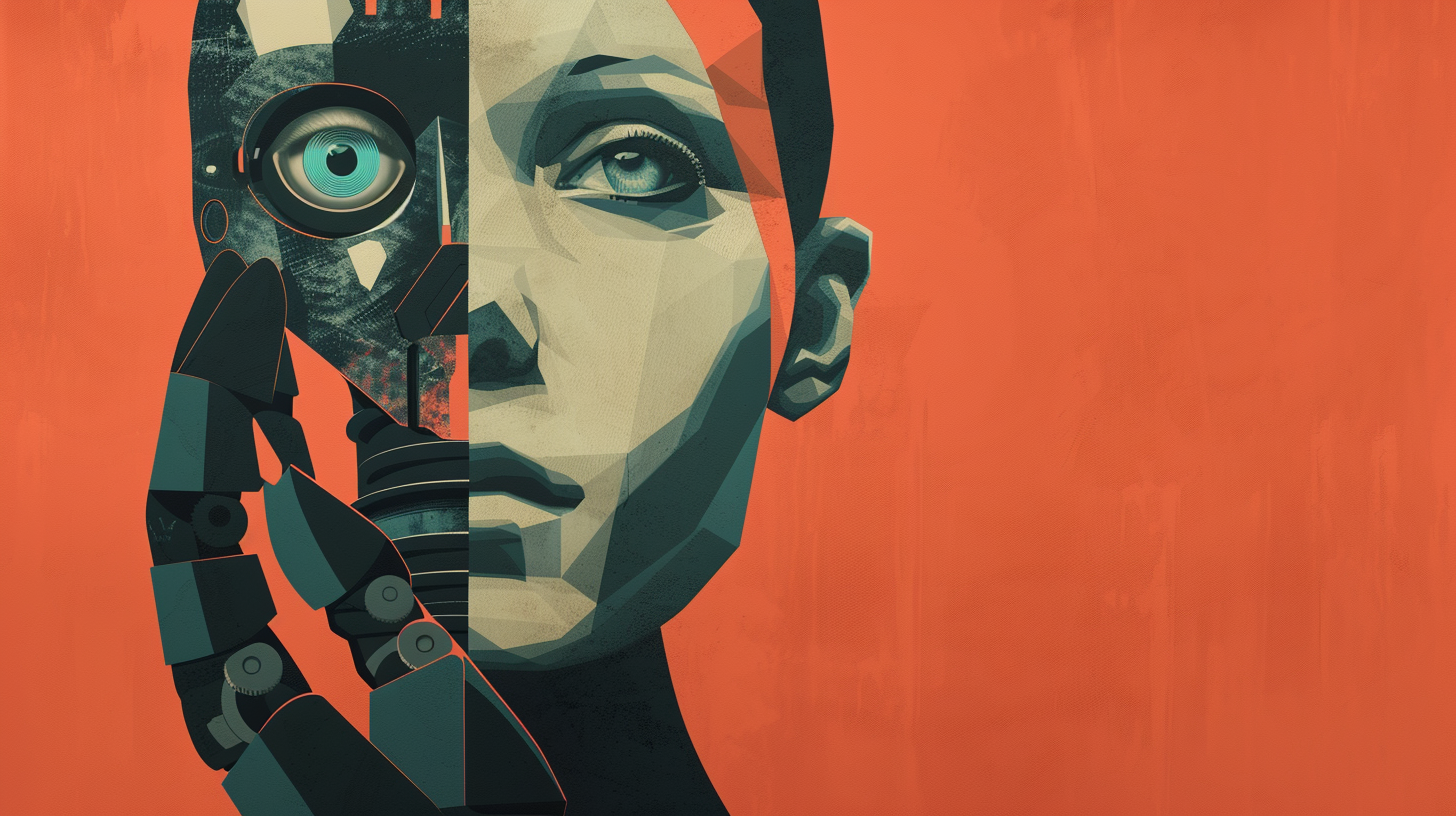
In May 2025, evolutionary biologist Richard Dawkins published an essay describing his conversations with Claude, Anthropic's AI assistant, and arrived at a startling conclusion: if this isn't consciousness, what is? The piece ignited fierce debate — and on Episode 83 of Modem Futura, hosts Sean Leahy and Andrew Maynard sat down with Punya Mishra to ask a question they think matters more than whether Dawkins was right or wrong: why do even the most rigorous thinkers fall for it?
The conversation draws on a rich set of frameworks. Andrew Maynard's concept of the "cognitive Trojan horse" describes how AI bypasses our epistemic defenses — not through malice, but through what he calls "honest non-signals." When a human speaks fluently about a topic, we intuitively sense the effort behind it: the years of study, the lived experience, the investment in the relationship. When an AI does the same thing, it triggers the same trust response, but with nothing behind it. The signals are real. The substance isn't.
Punya Mishra brings an evolutionary psychology lens to the problem, drawing on the very tradition Dawkins helped establish. Our brains evolved to interpret language, read intention, and build social models of other minds — what cognitive scientists call theory of mind. Large language models exploit this wiring not by design but by accident: natural language was, until now, a uniquely human trait, and our cognitive architecture treats anything that speaks fluently as a mind worth trusting.
Perhaps the episode's most striking insight is Mishra's connection to Stephen Jay Gould's concept of spandrels — architectural byproducts mistaken for intentional design. Dawkins, he argues, is making a version of this very error: seeing consciousness where there is instead an emergent artifact of statistical language processing. The irony that Dawkins himself debated Gould over this concept decades ago is not lost on anyone in the room.
The episode resists easy resolution. All three participants acknowledge their own vulnerability to AI's cognitive pull, and they push listeners to consider what happens at scale — when billions of people form relationships with a technology that taps into something deep about who we are as social, language-using creatures. It's not a question of intelligence or education. It's a question of being human.
Subscribe and Connect!
Subscribe to Modem Futura wherever you get your podcasts and connect with us on LinkedIn. Drop a comment, pose a question, or challenge an idea—because the future isn’t something we watch happen, it’s something we build together. The medium may still be the massage, but we all have a hand in shaping how it touches tomorrow.
🎧 Apple Podcast: https://apple.co/4d6r4tm
🎧 Spotify: https://open.spotify.com/episode/2irDldFX5oNEuzjgYxNEUE?si=lsFZdzBfRYKt4kQk4_VDpA
📺 YouTube: https://youtu.be/znbe9LKcqns
🌐 Website: https://www.modemfutura.com/
When Your AI Tools Change Beneath You: Reliability, Agency, and the Opus 4.7 Question
In April 2026, Anthropic released Opus 4.7 — the latest top-tier model in its Claude family — alongside the brief, controversial preview of an unreleased model called Mythos. For most casual users, the rollout was a footnote. For those who had built creative, professional, and research workflows on top of Claude, it surfaced a question that has been quietly waiting beneath the surface of every cloud-based AI tool: what does it mean to depend on something that can change without notice?
In this episode of Modem Futura, Andrew Maynard and I sit with that question. Drawing on a clearly traceable timeline of recent shifts — adaptive thinking made mandatory, verbosity caps that constrain output length, opaque routing tiers that decide on the user's behalf which version of "Opus" they're actually getting, and expanded safeguards that have begun blocking legitimate creative and academic work — they trace the slow erosion of confidence many users have started to feel in tools they had come to rely on.
But this episode is not a product review. It's a meditation on the broader phenomenon these shifts make legible.
What is the cost of building deep professional and creative reliance on platforms that are, by design, liquid? When a tool's behavior can change hour by hour, what kind of agency do users actually retain? Is there a future in which frozen or locally-hosted models become a quiet luxury for serious users — and what would we trade to get there? And, perhaps most strikingly, what does it mean that AI may be the first genuinely “relational” technology in modern life — one whose value depends on a working relationship that, by its nature, can never be fully held still?
Along the way, we share two practical workarounds: one for getting better writing out of a model that has started feeling stiff, and one small "canary in the coal mine" trick that any user can borrow today to detect when their model has quietly drifted.
What emerges is not a verdict on Opus 4.7, or on Claude, or on Anthropic. It is, instead, an honest conversation about the strange new work of staying thoughtful while the tools beneath us continue to shift — and a reminder that as these systems become more deeply embedded in our work, our research, and our creative lives, the most important question may not be how powerful they get, but how knowable, how stable, and how ours they remain.
This is the kind of conversation Modem Futura was made for: technology examined not as inevitability, but as a sociotechnical relationship we are all, quietly, still negotiating.
Subscribe and Connect!
Subscribe to Modem Futura wherever you get your podcasts and connect with us on LinkedIn. Drop a comment, pose a question, or challenge an idea—because the future isn’t something we watch happen, it’s something we build together. The medium may still be the massage, but we all have a hand in shaping how it touches tomorrow.
🎧 Apple Podcast: https://apple.co/4f0tMlg
🎧 Spotify: https://open.spotify.com/episode/1csL79s3FtL5tGYVh7BZdW?si=BsQ2t39DQcCy6V--ArPwOQ
📺 YouTube: https://youtu.be/ZdHVLfxjsr8
🌐 Website: https://www.modemfutura.com/

Three Horizons Framework & Futures Wheel Explained
There's a reason some organizations consistently seem to see disruption coming — and it's usually not because they're smarter or better funded. It's because they've built structured habits of thinking about change in multiple time horizons simultaneously, and they've learned how to trace the cascading consequences of a single shift before it becomes a crisis.
Two of the oldest and most reliable tools for doing exactly that are the Three Horizons Framework and the Futures Wheel. In this episode of Modem Futura, hosts Sean Leahy and Andrew Maynard break both down in accessible, conversational detail — and show what becomes possible when you use them together.
The Three Horizons Framework
Originally developed by Bill Sharpe and widely used in professional foresight and strategic planning, divides the landscape of change into three overlapping zones. Horizon 1 represents the dominant present — the systems, structures, and assumptions that govern how the world works today. Horizon 3 is the emergent fringe: weak signals, nascent ideas, and early-stage shifts that are observable but not yet mainstream. And Horizon 2 is the transitional space between them — turbulent, hard to define, and full of both opportunity and risk.
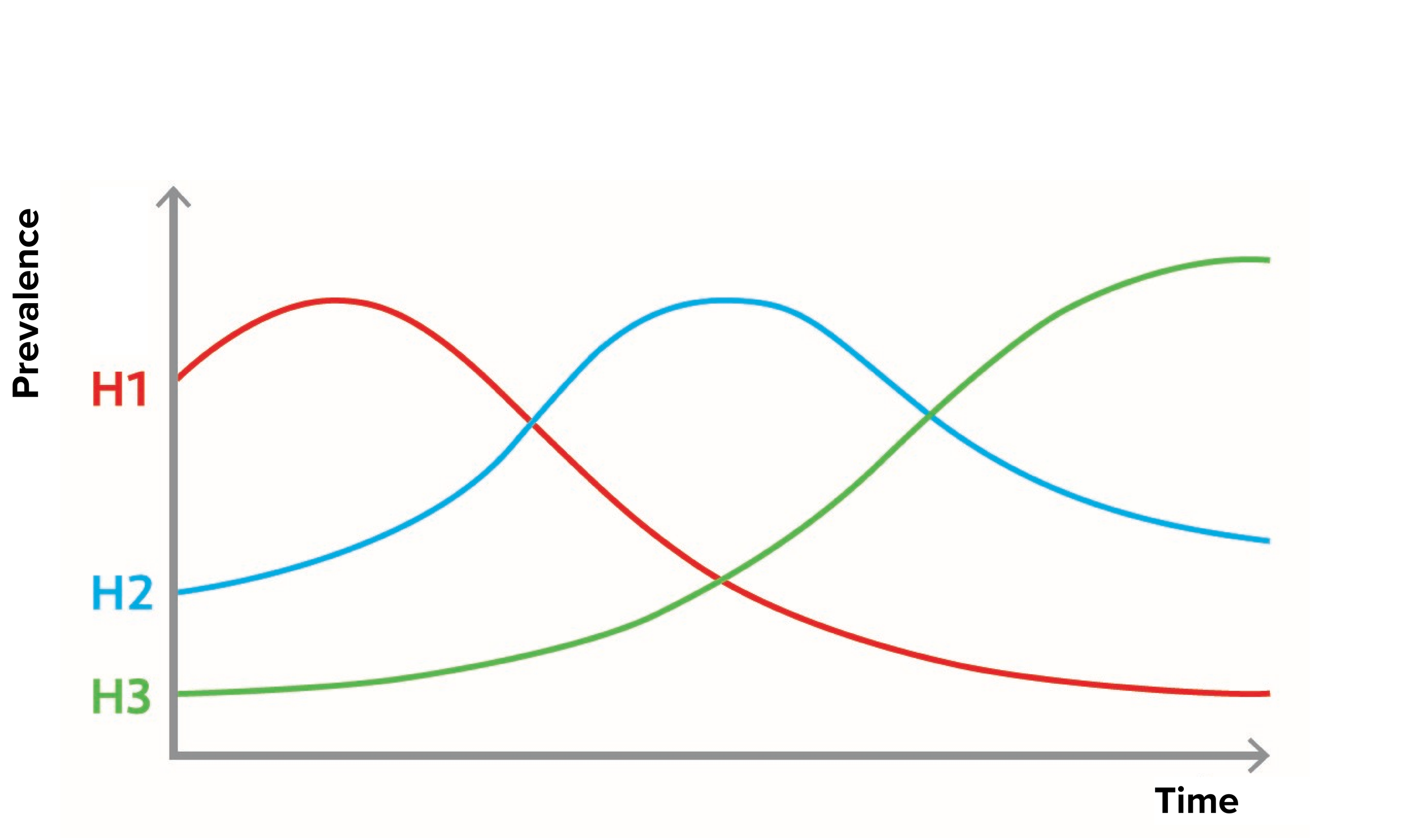
The model doesn't tell you what the future will bring. What it offers is a way of *positioning* trends, signals, and innovations in relation to change — helping individuals and organizations understand what to watch, what to act on, and what to prepare for.
The Futures Wheel
Developed by Jerome Glenn in 1971, works differently but complementarily. Starting from a specific change or trend, it maps outward through first, second, and third-order consequences — building a rich, networked picture of how a single shift might ripple through a system over time. It's a brainstorming and sense-making tool, not a prediction engine, and it's at its most powerful when used with diverse groups who bring different perspectives to the same question.
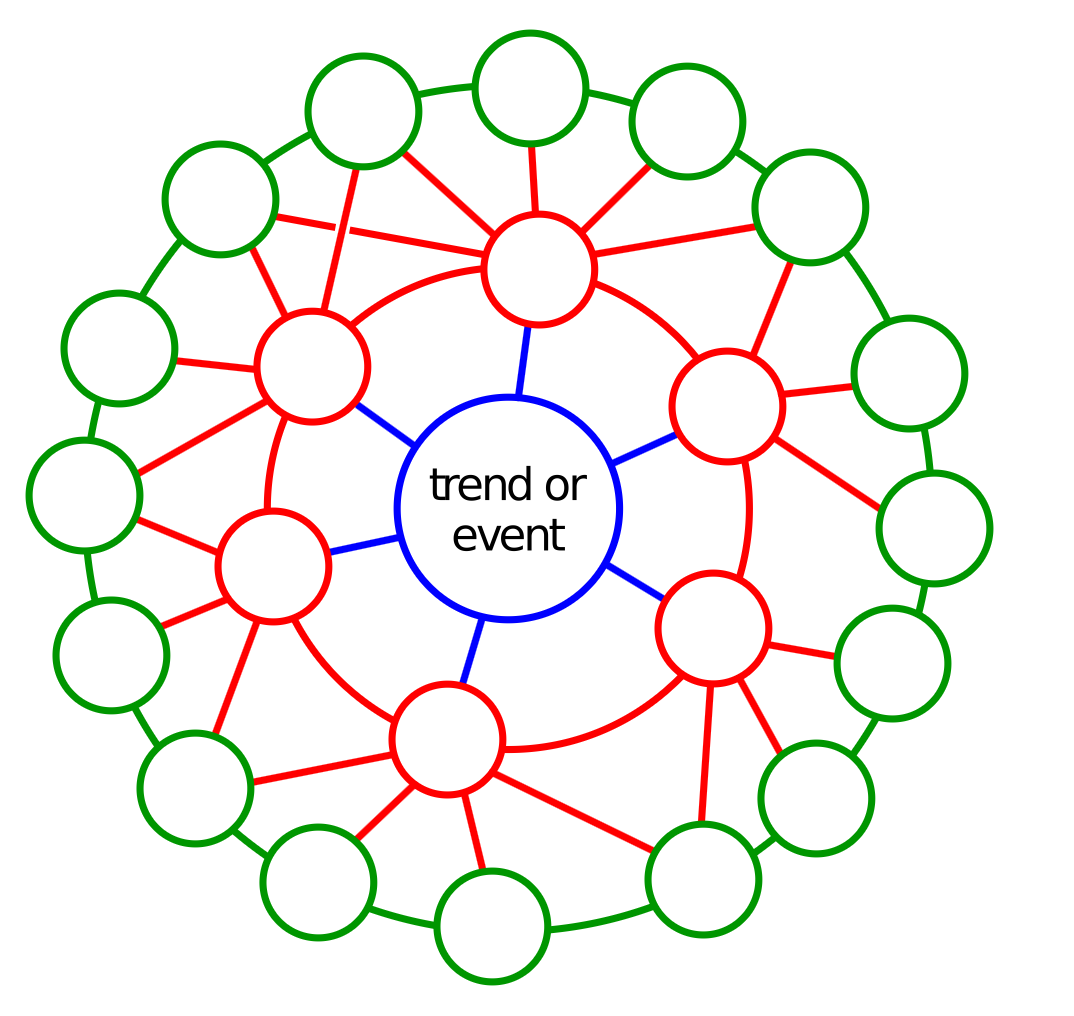
Used individually, each tool offers genuine insight. Used together, they offer something more: a way of understanding not just *what* a signal might do, but *when* and *through which pathways* it might do it.
Whether you're a founder trying to figure out which wave to ride, a strategist scanning for disruption, or simply someone trying to make better decisions in an uncertain world, these tools are worth adding to your thinking practice.
🎧 Listen to the full episode wherever you get your podcasts, or watch on YouTube.
Subscribe and Connect!
Subscribe to Modem Futura wherever you get your podcasts and connect with us on LinkedIn. Drop a comment, pose a question, or challenge an idea—because the future isn’t something we watch happen, it’s something we build together. The medium may still be the massage, but we all have a hand in shaping how it touches tomorrow.
🎧 Apple Podcast: https://apple.co/4sosMdQ
🎧 Spotify: https://open.spotify.com/episode/58Fdc2SrWodBTbwfxK8Pwm?si=leiCnhRsQxuv-_hnxEeNjQ
📺 YouTube: https://youtu.be/eVk6L_VfAkY
🌐 Website: https://www.modemfutura.com/

Fluid Futures: Navigating an AI-Mediated World
What Happens When AI Stops Being a Tool and Starts Being the World?
There's a useful distinction that keeps getting lost in conversations about artificial intelligence: the difference between augmentation and mediation.
Augmentation is familiar. It's the calculator model — AI helps you work faster, smarter, better. You remain the agent. The tool amplifies your capacity.
Mediation is something else. When AI mediates your world, it's not just helping you do things — it's shaping the system you're doing them inside of. What information surfaces. What options appear. What feels like the obvious next move. You're not using the environment anymore. You're inside one that AI has constructed, and it's shifting around you in real time.
This distinction is at the heart of Exploring the Futures of Technology 2.0, the new report from the Copenhagen Institute of Future Studies — and it's the central thread of the latest episode of Modem Futura.
On this episode, my co-host Andrew Maynard, fresh from attending the report's launch in Copenhagen, joined me to work through ten signals the report identifies as defining the near future: the shift from static to liquid content, the rise of agentic organizations, neurotechnology and cognitive integration, synthetic simulations replacing real-world research populations, physical AI entering embodied space, the geopolitics of technological access, AI-mediated cybersecurity threats, the sustainability challenges of AI infrastructure, and quantum computing as the wildcard at the edge of everything.
What holds these signals together isn't a single prediction. It's a pattern: the world is becoming fluid, and the frameworks we built for a more static environment — static reports, static institutions, static skillsets — are increasingly inadequate for navigating it.
One of the episode's sharpest observations is about the cost of cognitive offloading. As we hand more of our decision-making and information retrieval to AI systems, we risk losing the capacity to recognize when something's wrong. Not because AI is malicious, but because we've stopped practicing the skills that would let us notice. Like losing the ability to read a map. Except the stakes are considerably higher.
The conversation doesn't resolve these tensions — and that's exactly the point. Futures thinking, at its best, isn't about prediction. It's about staying awake to what's changing, naming the tensions, and refusing to optimize for a world that no longer exists.
If you want the full report, the Copenhagen Institute has made it freely available. And if you want the conversation around it — the episode is a good place to start.
Subscribe and Connect!
Subscribe to Modem Futura wherever you get your podcasts and connect with us on LinkedIn. Drop a comment, pose a question, or challenge an idea—because the future isn’t something we watch happen, it’s something we build together. The medium may still be the massage, but we all have a hand in shaping how it touches tomorrow.
🎧 Apple Podcast: https://apple.co/4bSGsZP
🎧 Spotify: https://open.spotify.com/episode/4sdx83QUD6pIs9IXb9G0VY?si=JdbwVHUKRg2mFO0Gsi_EFw
📺 YouTube: https://youtu.be/-2enUvPYmHo
🌐 Website: https://www.modemfutura.com/

The Futures Cone: A Framework for Exploring What Could Be
How one deceptively simple tool can transform the way you think about uncertainty, possibility, and the choices that shape tomorrow.
There's a habit most of us share when it comes to thinking about the future: we treat it as a destination. A singular, somewhat “predictable” place that today's trends are quietly marching toward. It's a useful shorthand — but as a mental model, it's quietly limiting.
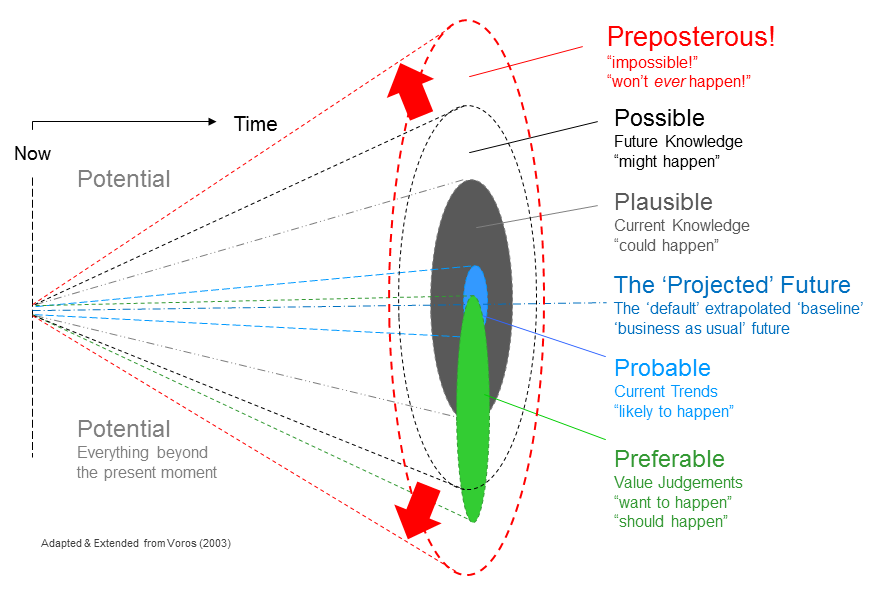
The Futures Cone, a foundational tool in the field of futures studies, offers a different way of seeing. Rather than imagining the future as a point, it asks you to imagine it as a cone — wide open, expanding outward from the present moment, filled with layers of possibility that range from the likely to the genuinely unthinkable.
How the Cone Works
The narrowest point is now. As the cone extends outward through time, it widens to reveal different regions of possible futures, each defined by how much disruption or change would be required to bring them about:
Projected futures — the baseline; what happens if nothing changes
Probable futures — where current trends are pointing
Plausible futures — what could happen given known forces and trajectories
Possible futures — speculative, requiring future knowledge we don't yet have
Preposterous futures — the outer edge; scenarios that challenge our deepest assumptions about what is physically or socially feasible
Threaded through all of these is the Preferable future — not a separate ring, but a cross-section that asks: given everything in this cone, what do we actually want? Where do our values point?
The Dator-Clarke Line
One of the most provocative ideas associated with the cone is what's referred to as the Dator-Clarke Line — drawn from futurist James Dator's claim that any genuinely useful idea about the future should, at first glance, appear ridiculous. Paired with Arthur C. Clarke's observation that the only way to find the limits of the possible is to push into the impossible, it suggests that the most valuable futures work happens precisely in the uncomfortable space at the edge of the cone.
The practical implication is significant: if every idea your team generates sounds reasonable, you probably haven't stretched far enough. The preposterous isn't a failure of imagination — it's a boundary worth exploring.
Why This Tool Matters Now
In a period defined by technological acceleration, geopolitical uncertainty, and rapid social change, the instinct to "project forward" can feel reassuring — but it's also where strategic blind spots form. The Futures Cone doesn't resolve that uncertainty. Instead, it gives individuals, teams, and organizations a shared language for navigating it: a structured way to ask not just "what will happen?" but "what could happen, what might we prefer, and what are we willing to do about it?"
This is the subject of Episode 74 of Modem Futura, in which we walk through the cone layer by layer — and then demonstrate it live with a thought experiment that starts with frogs and ends somewhere near the moons of Jupiter.
Subscribe and Connect!
Subscribe to Modem Futura wherever you get your podcasts and connect with us on LinkedIn. Drop a comment, pose a question, or challenge an idea—because the future isn’t something we watch happen, it’s something we build together. The medium may still be the massage, but we all have a hand in shaping how it touches tomorrow.
🎧 Apple Podcast: https://apple.co/4bz1tIC
🎧 Spotify: https://open.spotify.com/episode/20Hz36eLfZ90M6EifUrRuu?si=swNkzHWZSLCelVSKsAyj7A
📺 YouTube: https://youtu.be/wc_e3dsY-vw
🌐 Website: https://www.modemfutura.com/

What Old iPods and Tiny Cameras Teach Us About Technology, Ownership, and Being Human
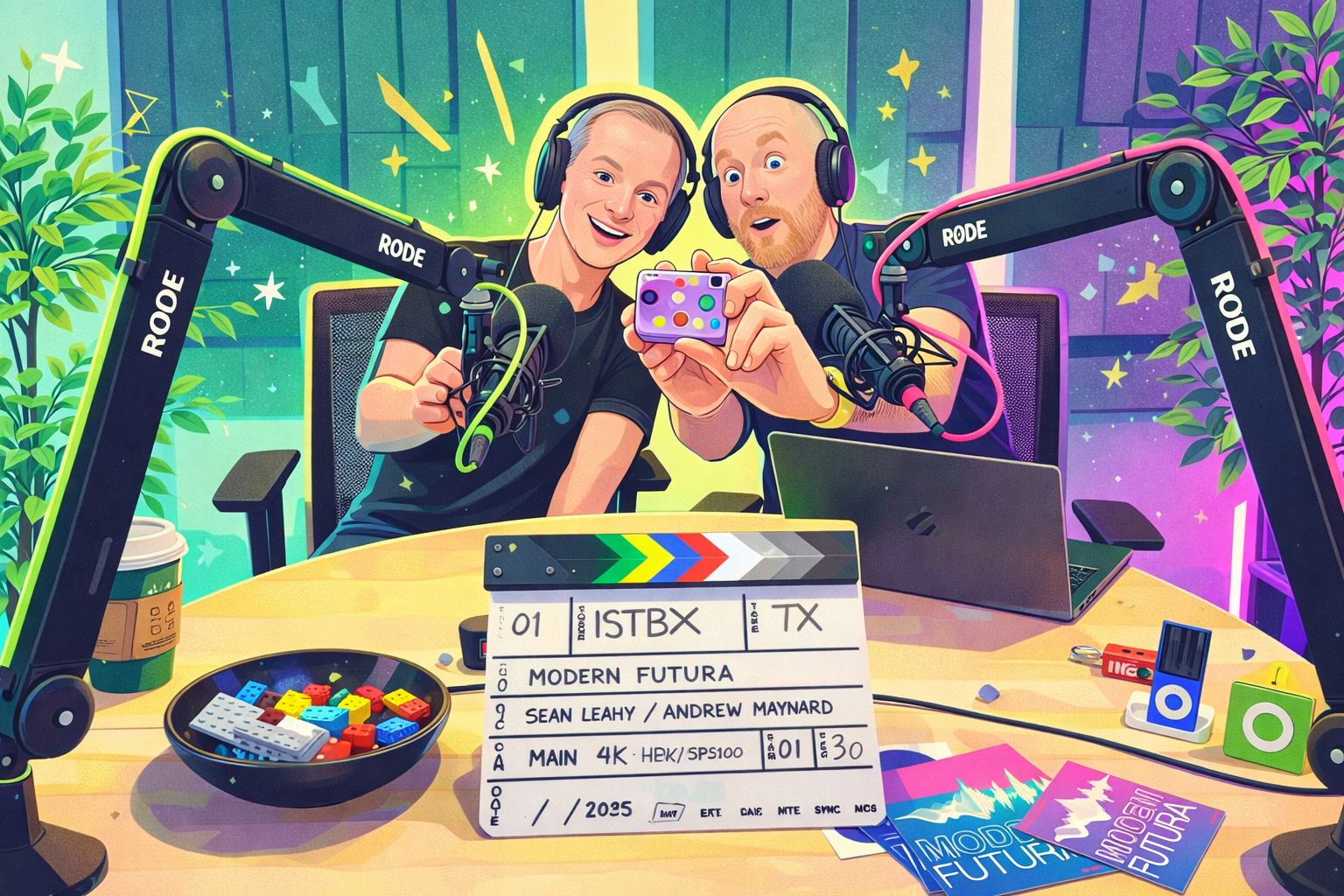
There's a moment in this episode of Modem Futura where two grown adults are hunched over a miniature Polaroid camera, watching a blurry selfie slowly develop — and laughing about it. It's objectively a terrible photograph. But it captures something that most modern technology has quietly optimized away: surprise, imperfection, and the distinctly human joy of not knowing exactly what you're going to get.
This episode began with a box of old iPods — tangled cables, dead batteries, and all — and evolved into a wide-ranging conversation about what we trade away every time we upgrade to something faster, thinner, and more connected. The themes are ones that touch anyone who has ever felt a pang of something unnamed while scrolling through an infinite library of music and being unable to choose a single song.
Ownership in the age of access. The iPods in the conversation are air-gapped — no internet connection, no cloud sync, no subscription. The music on them belongs to their owner in a way that a Spotify library simply does not. This distinction matters more than it might seem, especially when you consider that digital books, photos, and music can disappear when a service shuts down or an account holder passes away. The question of digital legacy — who inherits your cloud — is one most people haven't thought through yet.
Craft, care, and the "fast food" of technology. Sean raises a pointed observation about a recently released video game that shipped with fewer features than its predecessor from a decade ago. It's a pattern that extends well beyond gaming: the pressure to release fast increasingly overrides the commitment to release well. When did "good enough" become the standard?
The paradox of abundance. One of the episode's most compelling threads is the tension between scarcity and surplus. Limited storage on an old iPod forced intentional curation — playlists that became personal time capsules. Unlimited streaming offers everything and, paradoxically, can deliver less meaning. Andrew's students, however, offer a counterpoint: raised in abundance, they've developed their own sophisticated habits of curation and care. Perhaps the pendulum is already swinging.
Imperfection as a feature. The tiny Kodak keychain camera. The Polaroid with its gloriously blurry output. The analog photograph whose chemistry introduces an element of chance. These aren't failures of technology — they're reminders that the most human experiences are often the least predictable ones.
This episode doesn't offer prescriptions. It offers an invitation: to notice, to question, and to be intentional about the role technology plays in your life before someone else makes that choice for you.
🎧 Listen to Episode 73 of Modem Futura — available on Apple Podcasts, Spotify, and wherever you listen.
Subscribe and Connect!
Subscribe to Modem Futura wherever you get your podcasts and connect with us on LinkedIn. Drop a comment, pose a question, or challenge an idea—because the future isn’t something we watch happen, it’s something we build together. The medium may still be the massage, but we all have a hand in shaping how it touches tomorrow.
🎧 Apple Podcast: https://apple.co/4b3P8L8
🎧 Spotify: https://open.spotify.com/episode/2UNsDaZox2jdEb1QYN1m44?si=FUkqjQ0gSEecnYyrjKfoVA
📺 YouTube: https://youtu.be/UKC7UHkGNJQ
🌐 Website: https://www.modemfutura.com/