

NEWS & UPDATES
Power, Probes, and the Post-Human Horizon: What the Kardashev Scale Reveals About Us
On the surface, this episode of Modem Futura is an excuse to have fun. It's a spring break Futures Improv — Sean and Andrew throwing speculative scenarios at each other and seeing where things land. And it is fun. But somewhere between Dyson Spheres and the Fermi Paradox, it becomes something else: a quiet meditation on what humanity actually wants when we talk about mastering energy, exploration, and the cosmos.
The conversation begins with the Kardashev Scale, proposed by Soviet astronomer Nikolai Kardashev in 1964 as a way to rank civilizations by their energy use. A Type 1 civilization controls its planet's full energy output. Type 2 controls its star. Type 3 commands a galaxy. Humans, for context, are not yet a Type 1 civilization. We harness a fraction of what's available to us on Earth alone.
The question the hosts bring to this framework isn't just can we get there — it's what would we do once we did? Would abundance resolve our deepest conflicts, or would we simply carry our scarcity mindset into a new era? Andrew draws on Maslow's hierarchy of needs to make the point: remove the bottom layers of the pyramid — hunger, shelter, survival — and what remains is a different kind of human problem. The need for meaning, status, belonging, and always — always — a little more.
From there, the conversation ranges widely across some of the most provocative concepts in speculative science:
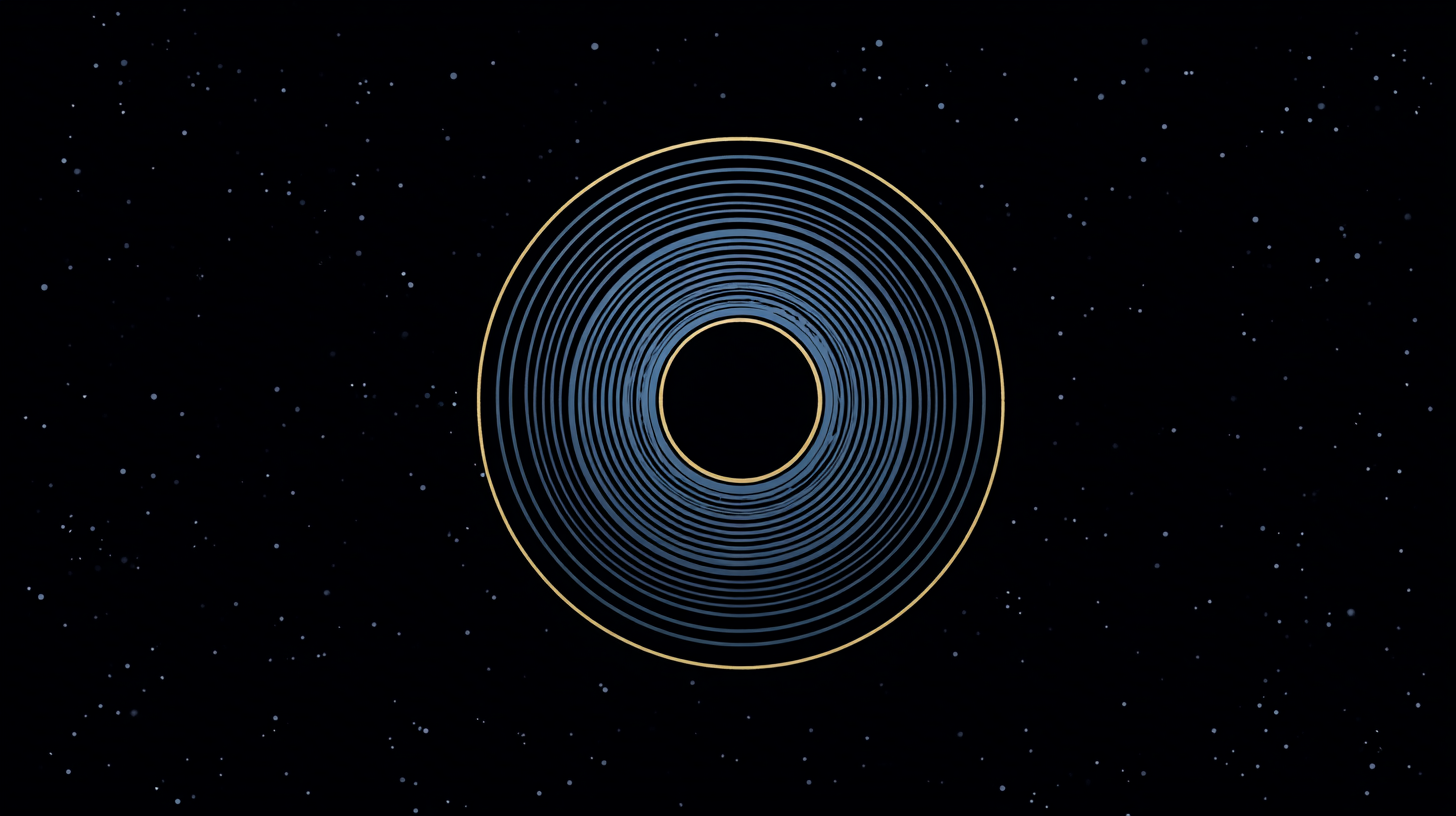
Dyson Spheres — hypothetical megastructures built around a star to harvest its complete energy output. Theoretical, yes, but not quite as theoretical as they once seemed. In 2024, seven anomalous objects within 1,000 light-years of Earth caught researchers' attention for occlusion patterns that didn't fit known planetary behavior.
Matrioshka Brains — named after Russian nesting dolls, these are hypothetical star-powered supercomputers of almost incomprehensible scale. The hosts draw an obvious connection: if AI data centers already strain Earth's energy grid, what does that compute-energy loop look like at stellar scales?
Von Neumann Probes — self-replicating spacecraft capable of exploring the galaxy by mining local resources to reproduce themselves. Biology can't survive interstellar space. Self-replicating machines, perhaps, can.
The Fermi Paradox — the haunting question of why, in a universe this old and this large, we can't find anyone else. The hosts explore the possibility that civilizations rise and fall within cosmic time windows too narrow to ever overlap. That the universe may be full of life that simply never gets to meet itself.
What makes this episode work is not the concepts themselves — though they're genuinely fascinating — but the humility behind the exploration. No predictions. No resolution. Just two people genuinely wondering, out loud, whether the same drive that would take us to the stars might also be the thing that holds us back.
🎧 Listen to the full episode wherever you get your podcasts, or watch on YouTube.
Subscribe and Connect!
Subscribe to Modem Futura wherever you get your podcasts and connect with us on LinkedIn. Drop a comment, pose a question, or challenge an idea—because the future isn’t something we watch happen, it’s something we build together. The medium may still be the massage, but we all have a hand in shaping how it touches tomorrow.
🎧 Apple Podcast: https://apple.co/4bOu2kk
🎧 Spotify: https://open.spotify.com/episode/2sbRQEuoabpKCUTrOQPCGT?si=159db4727a8841cb
📺 YouTube: https://youtu.be/z53hk7AlXZ4
🌐 Website: https://www.modemfutura.com/