

NEWS & UPDATES
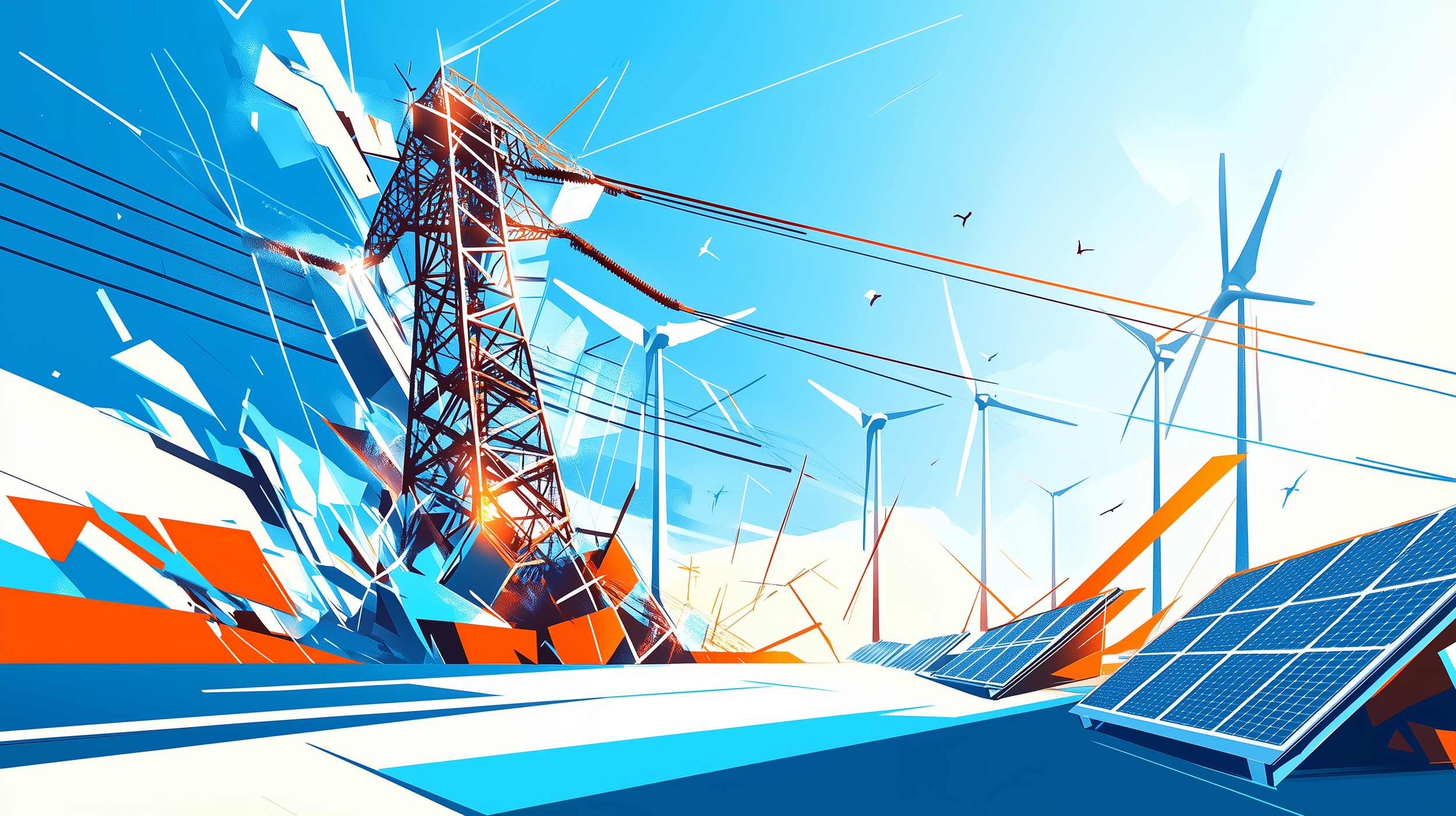
Techno-Humans and the Energy Futures We’re Designing
What if the clean energy transition isn’t just a technology problem—but a techno-human design challenge that determines who benefits, who’s left out, and whether our cities can thrive?
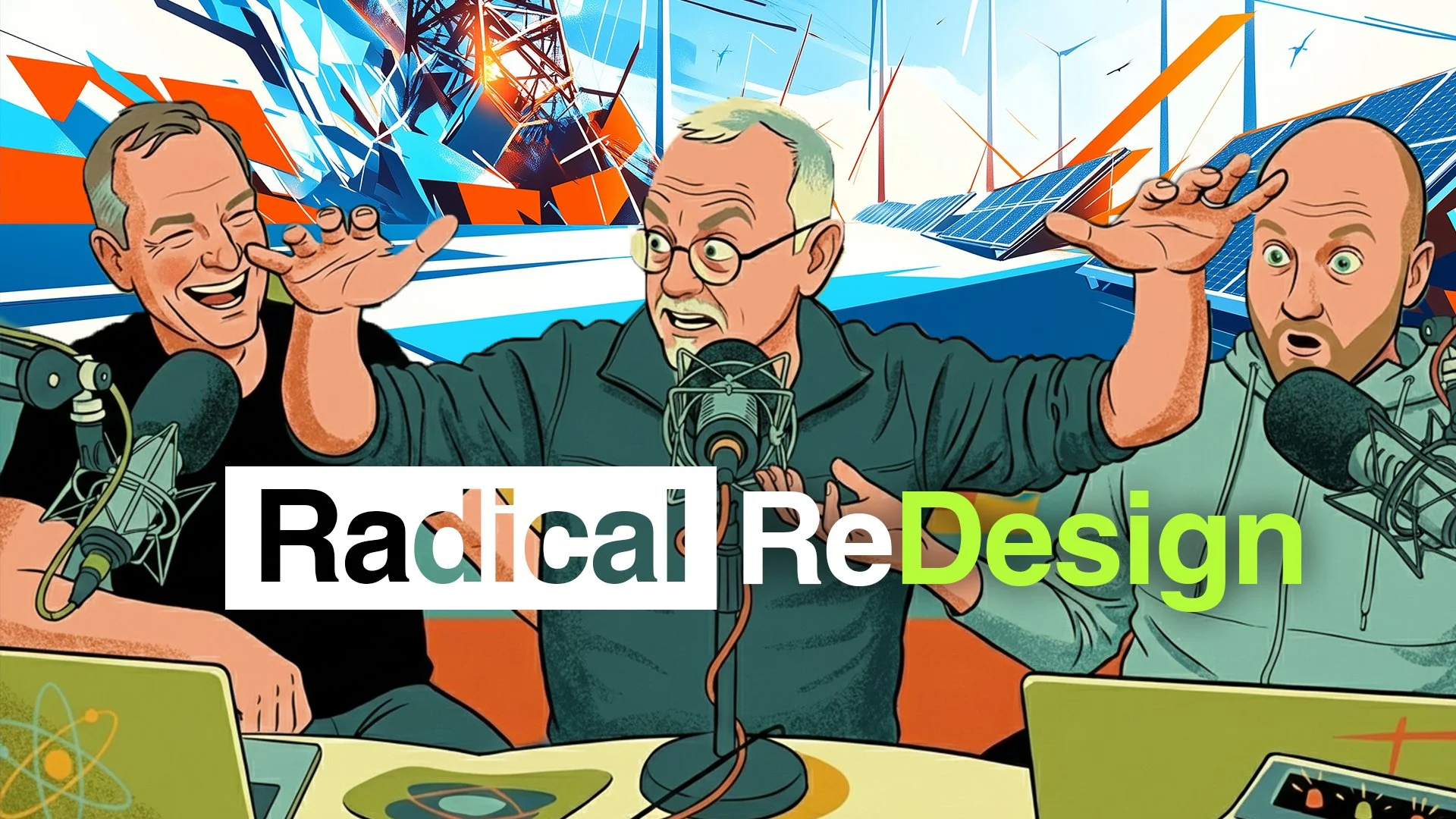
We Don’t Just Use Technology. We Live Inside It.
One of the most persistent myths about technology is that it sits outside of us—that humans are biological beings who occasionally pick up tools or devices. In our latest episode of Modem Futura, guest Clark Miller offers a more unsettling—and far more useful—idea: we are techno-humans.
Our bodies, behaviors, cities, and futures are deeply entangled with the systems we’ve built. The air we breathe, the electricity that keeps us alive in extreme heat, the infrastructures that quietly shape how we move, work, and survive—none of these are optional add-ons anymore. They are us.
Using Phoenix as a case study, the conversation explores how energy infrastructure has become both invisible and essential. Reliable electricity enables modern life, yet that very reliability hides fragility. When systems fail—during heat waves, blackouts, or climate extremes—the consequences are immediate and human. Thousands of lives can hinge on a few hours without power.
Clark reframes the clean energy transition as a design problem, not a simple race for better technology. Solar panels, batteries, nuclear power—these are necessary but insufficient. The real questions are: Who owns the infrastructure? Who benefits? Who is left exposed? And what kinds of futures are being quietly locked in by today’s policy decisions?
One striking example: rooftop solar can generate enormous value—but current rules often restrict ownership to utilities and homeowners, excluding renters and reinforcing inequality. These aren’t technical constraints. They’re design choices.
The episode also challenges how we educate future engineers, policymakers, and innovators. Traditional engineering focuses on performance and efficiency, while social impacts are treated as secondary. But in a world of climate risk, AI acceleration, and planetary-scale systems, that separation no longer works. We need new forms of “engineering-adjacent” thinking—approaches that integrate technology, human behavior, governance, and ethics from the start.
This isn’t a dystopian conversation. It’s an invitation. If we learn to see ourselves as techno-humans—and accept responsibility for the systems we inhabit—we may still have the capacity to design futures where people don’t just survive, but thrive.
🎧 Listen to the full episode of Modem Futura to explore what that could look like.
Subscribe and Connect!
Subscribe to Modem Futura wherever you get your podcasts and connect with us on LinkedIn. Drop a comment, pose a question, or challenge an idea—because the future isn’t something we watch happen, it’s something we build together. The medium may still be the massage, but we all have a hand in shaping how it touches tomorrow.
🎧 Apple Podcast: https://apple.co/4qGMjG6
🎧 Spotify: https://open.spotify.com/episode/4gD4VqOXrTQ2bI73n72fZv?si=2KhStFa5SBq9A3HnjAGdFw
📺 YouTube: https://youtu.be/IAOzv4kcp0M
🌐 Website: https://www.modemfutura.com/
Why Human Creativity Still Matters in an Age of AI

What a Year in Review Tells Us About the Future of Creativity
Why Human Craft and Creativity Still Wins in an Age of AI – Episode 63
What Spotify Wrapped and a Holiday Ad Reveal About the Future of Creativity
As the year winds down, many of us find ourselves reflecting—not just on what we’ve done, but on how we’ve spent our attention. In this holiday episode of Modem Futura, Andrew Maynard and I leaned into that instinct, using Spotify Wrapped as an unexpected entry point into a deeper conversation about creativity, technology, and what still matters in an AI-accelerated world.
Wrapped experiences are playful by design, but they’re also revealing. They quietly surface patterns of listening, engagement, and community—reminding us that culture is shaped not just by algorithms, but by millions of individual choices. For us, seeing how Modem Futura resonated globally wasn’t about vanity metrics; it was a reminder that thoughtful, exploratory conversations still find an audience, even in an oversaturated media landscape.
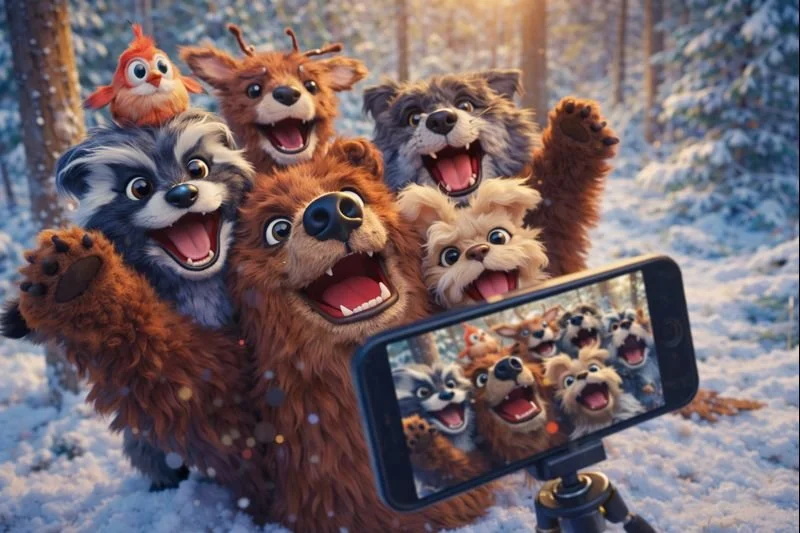
From there, the conversation turned to Apple’s 2025 holiday Ad (but feels like a short film) A Critter Carol—a whimsical, puppet-driven production that feels almost rebellious in its insistence on visible human labor. In a moment when AI can generate polished video in seconds, Apple chose puppeteers, practical effects, and intentional imperfection. The result isn’t just charming; it’s instructive.
The ad works because you can feel the human care embedded in every frame. It’s not anti-technology—far from it. It’s pro-human. Advanced tools are present throughout the production pipeline, but they serve imagination rather than replace it. That distinction matters.
You can read a more detailed breakdown of this Ad and the care and craft that goes into it in a previous blog post: Apple’s 2025 Holiday Ad and the Power of Human-Made Creativity in an AI World.
We’re at a cultural inflection point. As generative tools remove friction from making things, the temptation is to settle for what’s “good enough.” But creativity has always lived in resistance—iteration, constraint, failure, and craft. When those disappear, so does much of what gives creative work its soul.
One hope we shared on the episode is that 2026 becomes the year of “behind the scenes”—a renewed appreciation for process, labor, and the messy human work that makes meaningful outcomes possible. Whether in education, media, or design, showing how something is made may soon matter as much as the finished product itself.
If the future is being shaped right now, then choosing care, intention, and humanity in how we use our tools may be one of the most important creative acts we have left.
Subscribe and Connect!
Subscribe to Modem Futura wherever you get your podcasts and connect with us on LinkedIn. Drop a comment, pose a question, or challenge an idea—because the future isn’t something we watch happen, it’s something we build together. The medium may still be the massage, but we all have a hand in shaping how it touches tomorrow.
🎧 Apple Podcast: https://apple.co/48Sdx6r
🎧 Spotify: https://open.spotify.com/episode/4TVwLBfncHjPs4kDKbLz5t?si=QFYyZuq9R-WtgoEPTeWOlw
📺 YouTube: https://youtu.be/N1vTfDPSusY
🌐 Website: https://www.modemfutura.com/

Osaka Expo 2025 Futures Lab: an inside look with Jamey Wetmore – Episode 36

Why World’s Fairs Still Matter: Lessons from Osaka Expo 2025
Jamey Wetmore returns fresh from Osaka Expo 2025 to reveal how today’s World’s Fairs blend high-tech theater, geopolitical salesmanship and unexpected moments of awe—prompting a lively Modem Futura debate on what truly human-centered innovation looks like, and how that is shaping the future of science, technology, and society.
How relevant is a World’s Fair in 2025? Very, according to Dr. Jamey Wetmore, who just shepherded 17 Arizona State University students through ten exhilarating days at Osaka Expo 2025. In the latest Modem Futura episode, Jamey tells Andrew and me that today’s expos feel less like gadget bazaars and more like collaboration theme-parks where nations stage immersive stories about the futures they want to build. That subtle shift—from showing off products to showcasing partnerships and values—framed every pavilion we visited. Jordan invited visitors to sip cardamom coffee on real desert sand beneath a fiber-optic night-sky, urging “hospitality as technology.” Belgium’s AI-driven “digital-twin” ballet asked how personal data can dance alongside us. A three-torso android in the Future-of-Life pavilion provoked uncomfortable laughter—and deeper reflection—on transhumanist dreams. Even the U.S. pavilion’s rousing anthem “Together, Together” highlighted cooperation, though Jamey notes the message now feels out of step with recent geopolitical rhetoric.
The student experience was just as revealing. To tame sensory overload (20-25,000 steps a day is normal), they used bingo cards to track recurring buzzwords—sustainability, inclusivity, circularity—and morning debriefs to translate spectacle into critical insight. Their big takeaway? Grand visions only matter when paired with concrete pathways for everyday people. That insight crystallized during a lighthearted encounter with Kawasaki’s rideable four-legged “lion” robot: delightful, yes, but what problem does a robo-lion truly solve (not really sure, but 100% sure I want one)? Contrast that with Kubota’s autonomous farming systems, which demonstrate practical routes to food security under climate stress.
Jamey also reminded us that every expo sits on a historical continuum. Chicago 1893 electrified night-time. New York 1939 sold a “World of Tomorrow,” and the 1964 fair embedded a certain American exceptionalism in Disney’s It’s a Small World. Osaka 2025 inherits—and interrogates—that lineage, forcing visitors to ask: Who gets to define tomorrow? For our students, and for all of us, that question was as important as any hologram or robot on display.
Ultimately, the episode argues that expos retain power because they collapse culture, commerce, politics, and dreams into a single walkable space. They reveal not only what technologies we can build, but which stories about humanity we choose to elevate. As you listen, consider how your own work contributes to—or challenges—the futures on parade in Osaka. And if you’ve ever dismissed World’s Fairs as relics, this conversation might just change your mind.
🎧 Listen on Apple Podcasts: https://apple.co/3HDqx4S
📺 Watch us on YouTube: https://www.youtube.com/@ModemFutura
If you’d like to dive deeper, jump into the link and listen to the podcast or watch the YouTube video. Join us as we explore the forces shaping our collective future and the urgent need to keep human values at the heart of innovation.
Subscribe and Connect!
Subscribe to Modem Futura on a favorite podcast platform, follow on LinkedIn, and join the conversation by sharing thoughts and questions. The medium may still be the massage, but everyone has a chance to shape how it kneads modern culture—and to decide what kind of global village we ultimately build.
🎧 Apple Podcast: https://apple.co/3HDqx4S
🎧 Spotify: https://open.spotify.com/episode/1cQjbMJaPejpfLJsldek0a?si=NSW0cDCwR_aOtT1jmSJtzA
📺 YouTube: https://youtu.be/FYYyVuhtjw4
🌐 Website: https://www.modemfutura.com/