

NEWS & UPDATES
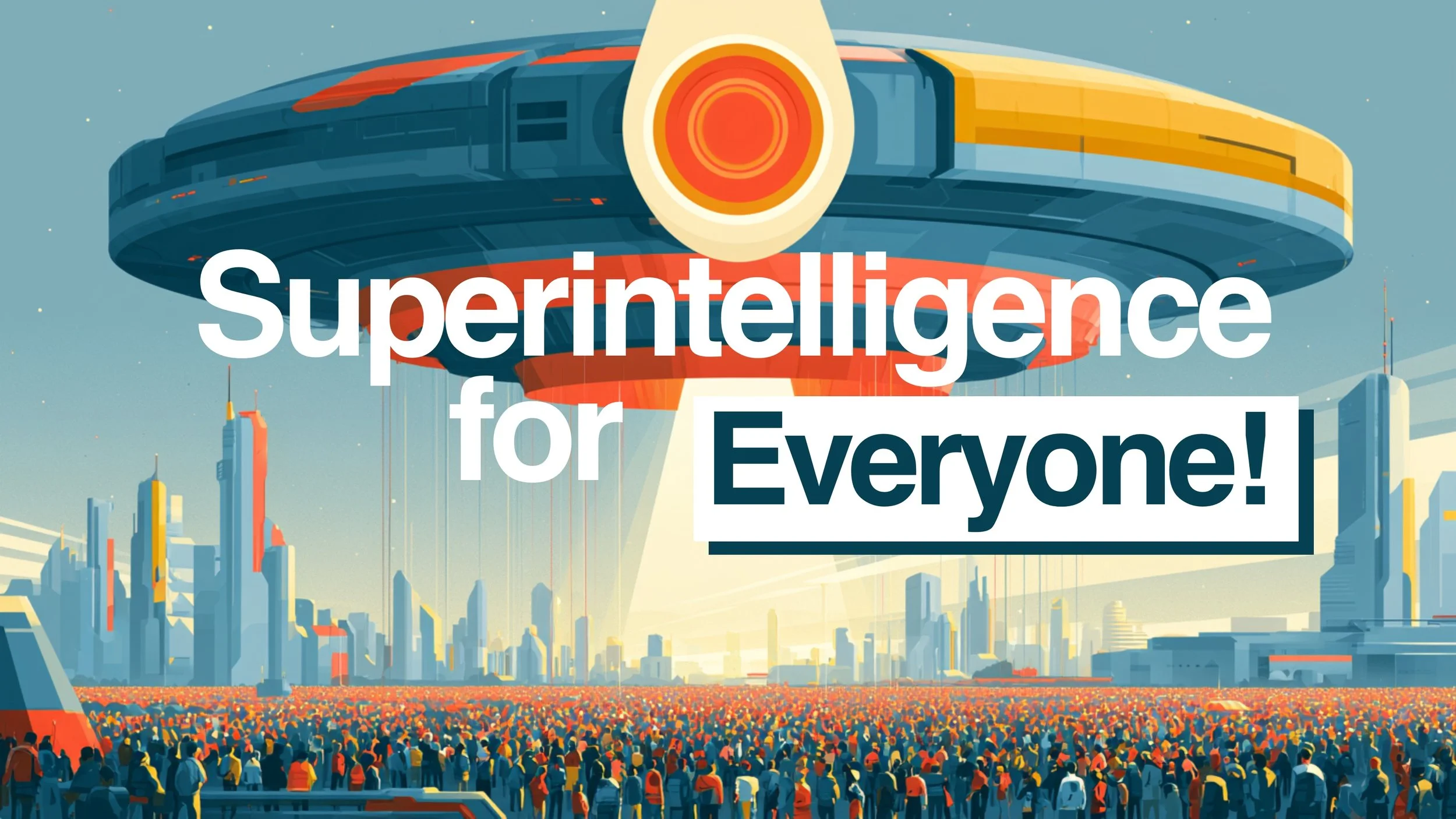
Reading the Manifesto: What "The Future is for Everyone" Reveals About Who Designs Tomorrow
The tech CEO manifesto is its own genre. On this week's Modem Futura, we read Meta's superintelligence essay through the lens of "used futures" — and ask who really gets to design a future for everyone.
The tech CEO manifesto has become its own literary genre. From early internet memos to techno-optimist declarations to the vision essays now published by the heads of major AI labs, these documents follow a recognizable pattern: sweeping claims about human history, a pivot to the transformative technology at hand, and a future confidently described as inevitable.
Mark Zuckerberg's essay "The Future is for Everyone" is the latest entry — and on this week's episode of Modem Futura, Andrew Maynard and I read it the way futurists read any vision of tomorrow: not as prediction, but as an artifact of how power imagines the future.
The essay's promises are expansive. A personal AI agent available around the clock. Creation tools for anyone. One-person companies operating at scale. A tutor in every subject. Scientific breakthroughs against disease. Free access for billions. Individually, these describe things many people might genuinely want — which is precisely why they deserve careful reading rather than reflexive dismissal or easy applause.
Futures studies offers a useful frame here. Sohail Inayatullah's concept of the "used future" describes a vision of tomorrow designed elsewhere and delivered so completely that imagining alternatives becomes difficult. When one company's roadmap is presented as humanity's shared destiny, the question is no longer whether the destination sounds appealing. It's who chose it, what dependencies it creates, and whose interests sit quietly beneath the language of universality.
Our conversation follows those dependencies through Cory Doctorow's enshittification — the pattern where platforms become indispensable before the terms change — and through science fiction that saw this coming. Ghost in the Shell asked what identity means when most of your body belongs to a company. The question sharpens when the owned parts are cognitive rather than mechanical: when your memory, your workflow, and your thinking run on infrastructure someone else controls.
There's also a telling rhetorical shift worth naming. Not long ago, superintelligence was framed by tech leaders as a danger demanding caution. In this essay, it's a promise demanding acceleration. When the same word migrates from threat to gift without explanation, that migration is itself worth studying.
None of this means the essay's ideas are empty. Decentralized AI, broader access, AI as critical infrastructure — these are conversations worth having. But they're conversations that belong to more than one author. If this technology is as consequential as its builders claim, then the work of navigating it belongs to all of us — educators, artists, ethicists, communities — not just the companies selling the map.
Subscribe and Connect!
Subscribe to Modem Futura wherever you get your podcasts and connect with us on LinkedIn. Drop a comment, pose a question, or challenge an idea—because the future isn’t something we watch happen, it’s something we build together. The medium may still be the massage, but we all have a hand in shaping how it touches tomorrow.
🎧 Apple Podcast: https://apple.co/3SHUvdE
🎧 Spotify: https://open.spotify.com/episode/6CMH1CCojUdHzNRmEamxVA?si=oXXRQuusRV26LJhFHvAOFA
📺 YouTube: https://youtu.be/FAUqPmUqr4I
🌐 Website: https://www.modemfutura.com/
When the AI Goes Dark: What the Fable Ban Taught Us About Digital Fragility
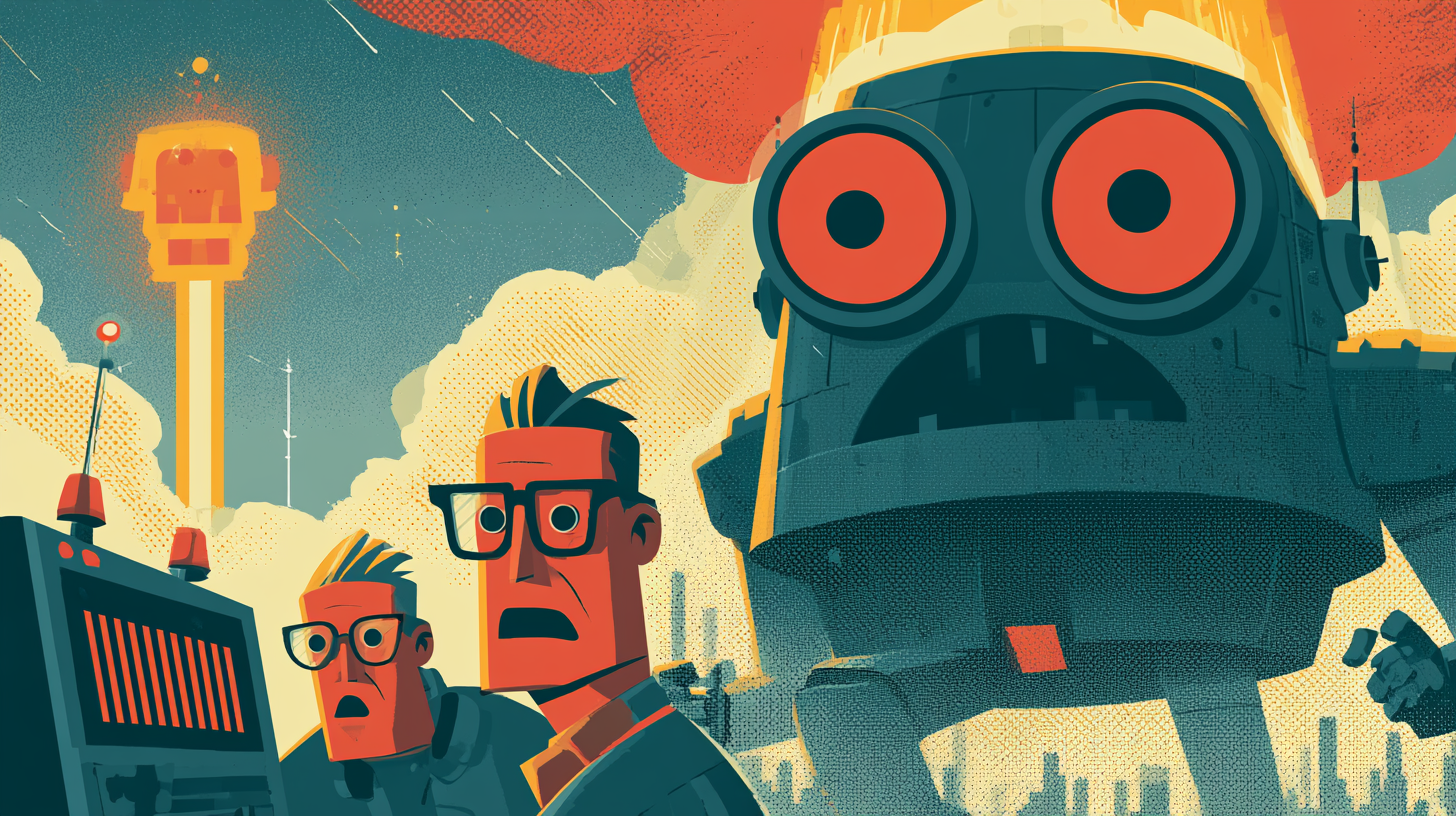
They turned off our AI - now what?
What happens when the government switches off an AI?
For most people, AI is a text field in a browser window: you type something in, something useful comes out. That framing makes it hard to see what AI has quietly become for organizations across research, healthcare, education, and industry, all critical infrastructure. And in the summer of 2026, we learned just how fragile that infrastructure can be.
In this episode of Modem Futura, hosts Sean Leahy and Andrew Maynard unpack the saga of Anthropic's Fable, the most capable AI model yet released to the public. Three days after launch, a U.S. Commerce Department export control directive declared it a national security concern, barring access for non-U.S. citizens. Because no platform can verify the citizenship of its users, the model effectively disappeared for everyone — including the researchers inside Anthropic who built it. Weeks later, it returned as suddenly as it left.
The episode treats this less as a news story than as a signal. Futurists have long used sudden technology loss as a hypothetical scenario; like the pandemic scenarios that preceded 2020, it has now crossed from the abstract to the lived. Once that happens, the questions change, if a government can switch off a frontier model at the close of business on a Friday, what does responsible AI adoption look like for a hospital, a university, a business? Where is the line between experimenting on the fringes and building your operations on ground that can move?
One answer explored in the conversation is local AI — smaller models running on hardware you control. They can't match the capability of cloud-based frontier systems (yet) and the hosts are honest about that trade-off. But the Fable episode gave the local argument its first piece of hard evidence, and it may point toward a future of hyper-specific local tools working alongside more powerful, more revocable cloud platforms.
The deeper thread is governance, and even the invocation of the big R-word (regulation). The directive was triggered by capability that regulators had never seen before, and capability is not slowing down. Governing technologies like these will take more than technologists and more than policymakers — it requires people who can work across disciplines, translating between the builders, the philosophers now being hired into AI labs, and the institutions trying to keep up.
The episode doesn't land on tidy answers, because there aren't any yet. What it offers instead is a way of thinking about dependency, sovereignty, and resilience while the ground is still shifting — which is, after all, when thinking matters most.
Subscribe and Connect!
Subscribe to Modem Futura wherever you get your podcasts and connect with us on LinkedIn. Drop a comment, pose a question, or challenge an idea—because the future isn’t something we watch happen, it’s something we build together. The medium may still be the massage, but we all have a hand in shaping how it touches tomorrow.
🎧 Apple Podcast: https://apple.co/4ykQCez
🎧 Spotify: https://open.spotify.com/episode/1yCGEa1nafYu9CM4Mxux5Z?si=jPTtglvnRGW_qHtXqPbFvA
📺 YouTube: https://youtu.be/7ir38k4DjLA
🌐 Website: https://www.modemfutura.com/
Summer Reading List 2026: The Books That Inspired Our Imagination (Part 1)

Reading Backwards to Understand the Future
There's a particular kind of book list that shows up every summer — the one that seems designed mostly to signal how serious and well-read its author is. This isn't that. In the first part of our annual Summer Reading List, the guiding instinct was the opposite: lasers, space ships, escapism, the kind of book you genuinely can't put down. What we discovered while recording is that the most escapist reads on the list turned out to be some of the most useful lenses on the present.
The cyberpunk classics anchored the conversation. Neal Stephenson's Snow Crash (1992) coined "metaverse" and imagined a digital overlay on the physical world years before anyone could plausibly build one. William Gibson's Neuromancer (1984) did the same for "cyberspace." Both have been mined relentlessly by the technology industry — and both, the hosts argue, are routinely stripped of their context. Snow Crash is a satire and a warning; it's frequently read as a roadmap. That gap, between fiction written as caution and fiction adopted as ambition, is one of the more revealing dynamics in how Silicon Valley tells its own story.
The deeper thread is about cognition. Snow Crash turns on a virus that crosses from the digital realm into the human mind. In an era of AI systems that engage directly with how we reason and feel, that premise reads less like science fiction and more like a description. Iain M. Banks extends the inquiry in Surface Detail, imagining civilizations that construct virtual heavens and hells so immersive that the line between real and simulated experience dissolves — and asking who, if anyone, has the right to govern what happens inside them. His The Player of Games offers a gentler entry point to the same Culture universe, and a sly meditation on whether a frictionless utopia is something humans actually want. We also dive into some of the amazing and seemingly timeless work of Douglas Adams, whose original Hitchhikers Guide to the Galaxy radio scripts Andrew counts among his prized possessions and whose wit, he insists, anticipated our anxieties about AI with personality long before the chatbots arrived.
The list closes on firmer ground with Cory Doctorow's Enshittification, a nonfiction account of how convenient, delightful platforms decay once users are locked in. It opened onto a question that runs through the whole episode: what do we actually own in a digital age? A printed book from 1980 still works, unconditionally. A digital one comes with terms that can change beneath you. And when the historical record itself becomes editable without a trace, reliability becomes something we can no longer take for granted.
None of these tensions get resolved here — they aren't meant to. The takeaway is quieter and more durable: stories written decades ago remain among our best instruments for thinking clearly about technologies their authors never lived to see. Part 2 continues the list next week.
Subscribe and Connect!
Subscribe to Modem Futura wherever you get your podcasts and connect with us on LinkedIn. Drop a comment, pose a question, or challenge an idea—because the future isn’t something we watch happen, it’s something we build together. The medium may still be the massage, but we all have a hand in shaping how it touches tomorrow.
🎧 Apple Podcast: https://apple.co/444V3ws
🎧 Spotify: https://open.spotify.com/episode/5TXSx0QgY4CxUhWsJSF5wm?si=lHeVVcWHS5qE3wd5lFJl5w
📺 YouTube: https://youtu.be/KN8iEA5tfiQ
🌐 Website: https://www.modemfutura.com/
When the Definition of Life Gets Blurry: Synthetic Cells and the Care They Demand
We tend to imagine that scientists know exactly what they're making. So it's oddly reassuring — and a little head spinning — to learn that one of the first challenges facing a National Academies committee on synthetic cells was simply agreeing on what a synthetic cell actually is.
That was the starting point for our conversation with Emma Frow, an associate professor at Arizona State University whose work sits at the intersection of bioengineering, science and technology studies, and the governance of emerging biotechnology. Emma served on the committee behind a recent consensus report on the responsible innovation of synthetic cells, and she described spending months wrestling with definitions before any other questions could even be asked.
A spectrum, not a thing
The reason is that "synthetic cell" isn't one technology, is because it is a spectrum of different variations and combinations. At one end is a simple membrane enclosing a handful of enzymes — something that may not be alive in any conventional sense, and that exists in a genuine regulatory gray zone between chemical and biological oversight. At the other end is the long-standing scientific ambition of building a living, replicating cell more or less from scratch. In between are the practical applications driving much of the field: programmable cells for drug delivery, biomanufacturing in bioreactors, and biological substitutes for agricultural chemicals.
Emma offered two clarifying questions that help locate any given creation on that spectrum: Does it contain genetic material? And can it replicate? Those answers shape everything about how seriously, and in what way, we ought to pay attention.
The mirror in the lab
The conversation's most striking turn concerned "mirror life" — organisms built from the reversed molecular handedness of all known biology. Every living thing we've found uses left-handed amino acids and right-handed DNA. A mirror organism would invert that. For years this was framed as a potential safety feature: something so alien it couldn't interact with existing life. But the scientific community has since questioned that assumption, and in late 2024 a group of leading researchers called for restraint, warning that a self-replicating mirror cell could pose risks we'd have no evolutionary defense against.
Care as an ongoing practice
What gives the episode its center of gravity isn't the specter of catastrophe. It's Emma's insistence that care isn't a box you check once. It's a posture you maintain throughout the work — and one the biotech community, by necessity, has cultivated more deliberately than some faster-moving fields. Biology resists the move-fast ethos. There is no perfect containment, and some experiments can't be undone.
The result is a conversation less about prediction than about practice: how thoughtful people decide what's worth building when the old categories no longer hold.

The Futures Cone: A Framework for Exploring What Could Be
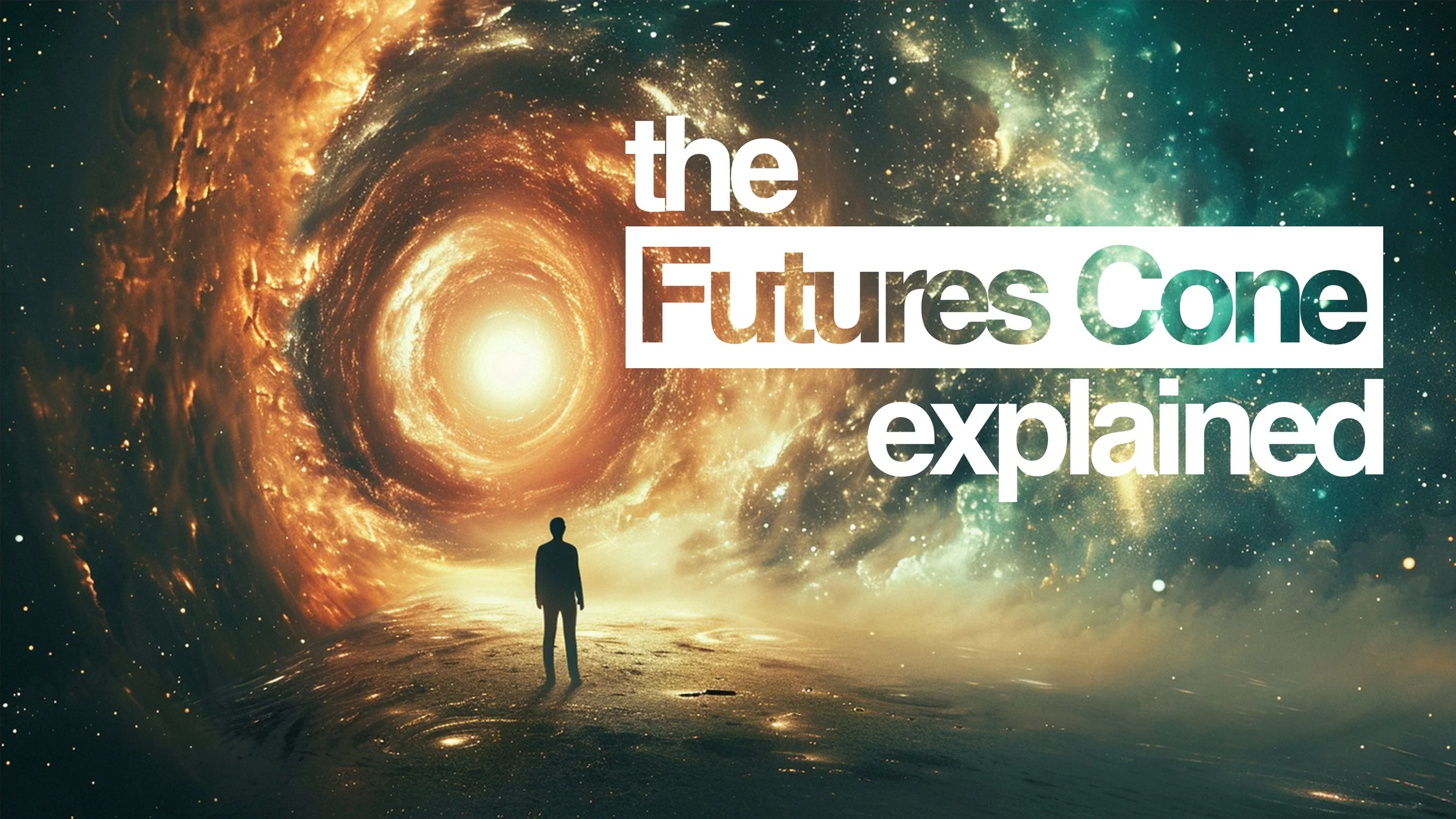
How one deceptively simple tool can transform the way you think about uncertainty, possibility, and the choices that shape tomorrow.
There's a habit most of us share when it comes to thinking about the future: we treat it as a destination. A singular, somewhat “predictable” place that today's trends are quietly marching toward. It's a useful shorthand — but as a mental model, it's quietly limiting.
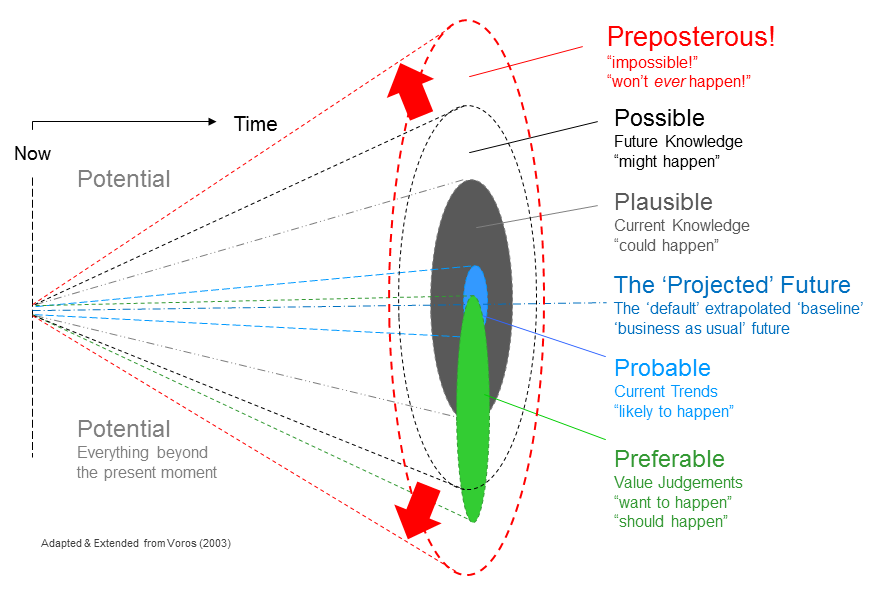
The Futures Cone, a foundational tool in the field of futures studies, offers a different way of seeing. Rather than imagining the future as a point, it asks you to imagine it as a cone — wide open, expanding outward from the present moment, filled with layers of possibility that range from the likely to the genuinely unthinkable.
How the Cone Works
The narrowest point is now. As the cone extends outward through time, it widens to reveal different regions of possible futures, each defined by how much disruption or change would be required to bring them about:
Projected futures — the baseline; what happens if nothing changes
Probable futures — where current trends are pointing
Plausible futures — what could happen given known forces and trajectories
Possible futures — speculative, requiring future knowledge we don't yet have
Preposterous futures — the outer edge; scenarios that challenge our deepest assumptions about what is physically or socially feasible
Threaded through all of these is the Preferable future — not a separate ring, but a cross-section that asks: given everything in this cone, what do we actually want? Where do our values point?
The Dator-Clarke Line
One of the most provocative ideas associated with the cone is what's referred to as the Dator-Clarke Line — drawn from futurist James Dator's claim that any genuinely useful idea about the future should, at first glance, appear ridiculous. Paired with Arthur C. Clarke's observation that the only way to find the limits of the possible is to push into the impossible, it suggests that the most valuable futures work happens precisely in the uncomfortable space at the edge of the cone.
The practical implication is significant: if every idea your team generates sounds reasonable, you probably haven't stretched far enough. The preposterous isn't a failure of imagination — it's a boundary worth exploring.
Why This Tool Matters Now
In a period defined by technological acceleration, geopolitical uncertainty, and rapid social change, the instinct to "project forward" can feel reassuring — but it's also where strategic blind spots form. The Futures Cone doesn't resolve that uncertainty. Instead, it gives individuals, teams, and organizations a shared language for navigating it: a structured way to ask not just "what will happen?" but "what could happen, what might we prefer, and what are we willing to do about it?"
This is the subject of Episode 74 of Modem Futura, in which we walk through the cone layer by layer — and then demonstrate it live with a thought experiment that starts with frogs and ends somewhere near the moons of Jupiter.
Subscribe and Connect!
Subscribe to Modem Futura wherever you get your podcasts and connect with us on LinkedIn. Drop a comment, pose a question, or challenge an idea—because the future isn’t something we watch happen, it’s something we build together. The medium may still be the massage, but we all have a hand in shaping how it touches tomorrow.
🎧 Apple Podcast: https://apple.co/4bz1tIC
🎧 Spotify: https://open.spotify.com/episode/20Hz36eLfZ90M6EifUrRuu?si=swNkzHWZSLCelVSKsAyj7A
📺 YouTube: https://youtu.be/wc_e3dsY-vw
🌐 Website: https://www.modemfutura.com/

What Old iPods and Tiny Cameras Teach Us About Technology, Ownership, and Being Human
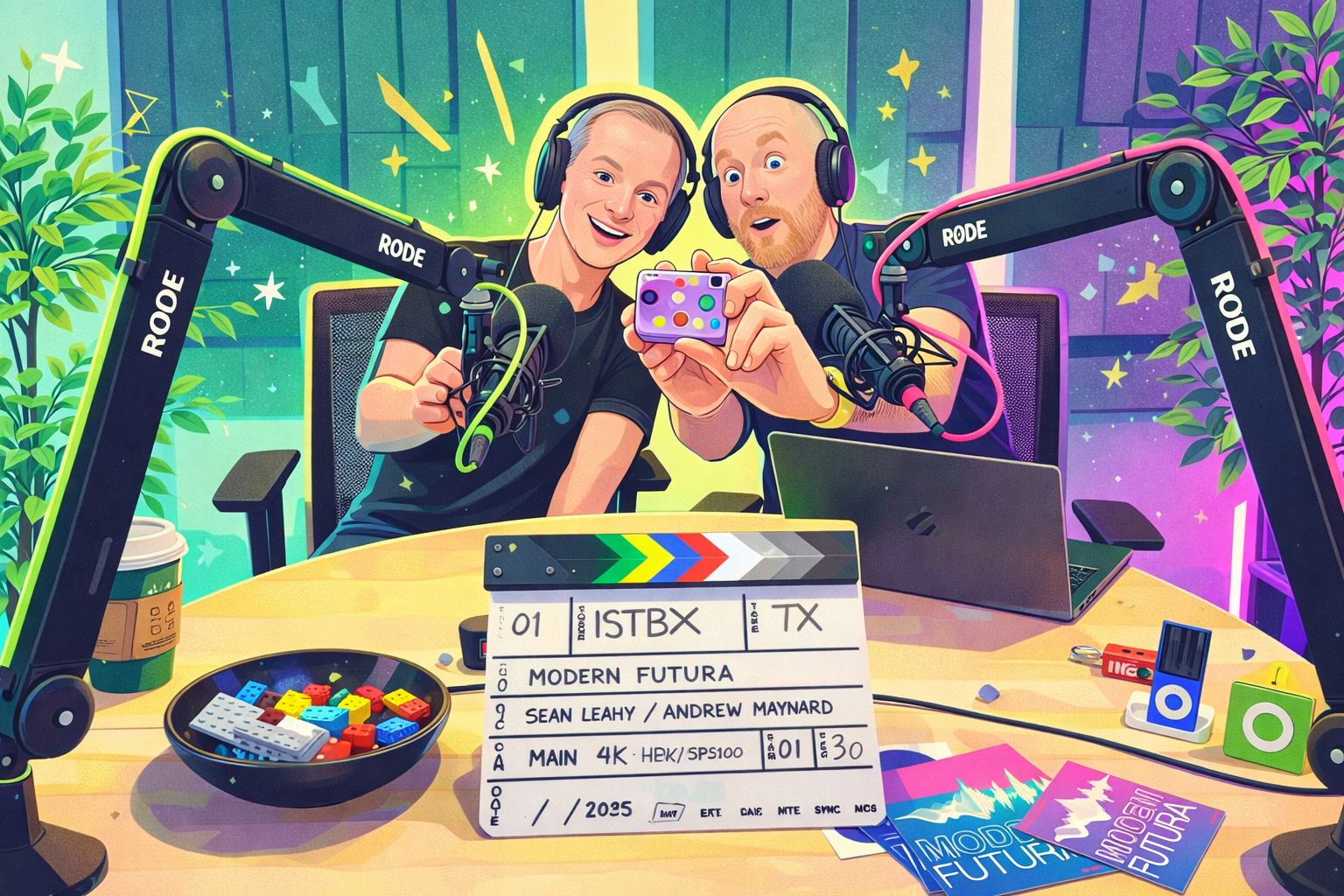
There's a moment in this episode of Modem Futura where two grown adults are hunched over a miniature Polaroid camera, watching a blurry selfie slowly develop — and laughing about it. It's objectively a terrible photograph. But it captures something that most modern technology has quietly optimized away: surprise, imperfection, and the distinctly human joy of not knowing exactly what you're going to get.
This episode began with a box of old iPods — tangled cables, dead batteries, and all — and evolved into a wide-ranging conversation about what we trade away every time we upgrade to something faster, thinner, and more connected. The themes are ones that touch anyone who has ever felt a pang of something unnamed while scrolling through an infinite library of music and being unable to choose a single song.
Ownership in the age of access. The iPods in the conversation are air-gapped — no internet connection, no cloud sync, no subscription. The music on them belongs to their owner in a way that a Spotify library simply does not. This distinction matters more than it might seem, especially when you consider that digital books, photos, and music can disappear when a service shuts down or an account holder passes away. The question of digital legacy — who inherits your cloud — is one most people haven't thought through yet.
Craft, care, and the "fast food" of technology. Sean raises a pointed observation about a recently released video game that shipped with fewer features than its predecessor from a decade ago. It's a pattern that extends well beyond gaming: the pressure to release fast increasingly overrides the commitment to release well. When did "good enough" become the standard?
The paradox of abundance. One of the episode's most compelling threads is the tension between scarcity and surplus. Limited storage on an old iPod forced intentional curation — playlists that became personal time capsules. Unlimited streaming offers everything and, paradoxically, can deliver less meaning. Andrew's students, however, offer a counterpoint: raised in abundance, they've developed their own sophisticated habits of curation and care. Perhaps the pendulum is already swinging.
Imperfection as a feature. The tiny Kodak keychain camera. The Polaroid with its gloriously blurry output. The analog photograph whose chemistry introduces an element of chance. These aren't failures of technology — they're reminders that the most human experiences are often the least predictable ones.
This episode doesn't offer prescriptions. It offers an invitation: to notice, to question, and to be intentional about the role technology plays in your life before someone else makes that choice for you.
🎧 Listen to Episode 73 of Modem Futura — available on Apple Podcasts, Spotify, and wherever you listen.
Subscribe and Connect!
Subscribe to Modem Futura wherever you get your podcasts and connect with us on LinkedIn. Drop a comment, pose a question, or challenge an idea—because the future isn’t something we watch happen, it’s something we build together. The medium may still be the massage, but we all have a hand in shaping how it touches tomorrow.
🎧 Apple Podcast: https://apple.co/4b3P8L8
🎧 Spotify: https://open.spotify.com/episode/2UNsDaZox2jdEb1QYN1m44?si=FUkqjQ0gSEecnYyrjKfoVA
📺 YouTube: https://youtu.be/UKC7UHkGNJQ
🌐 Website: https://www.modemfutura.com/

Vibe Coding and the Return of Personal Software
The Echo of Early Personal Computing
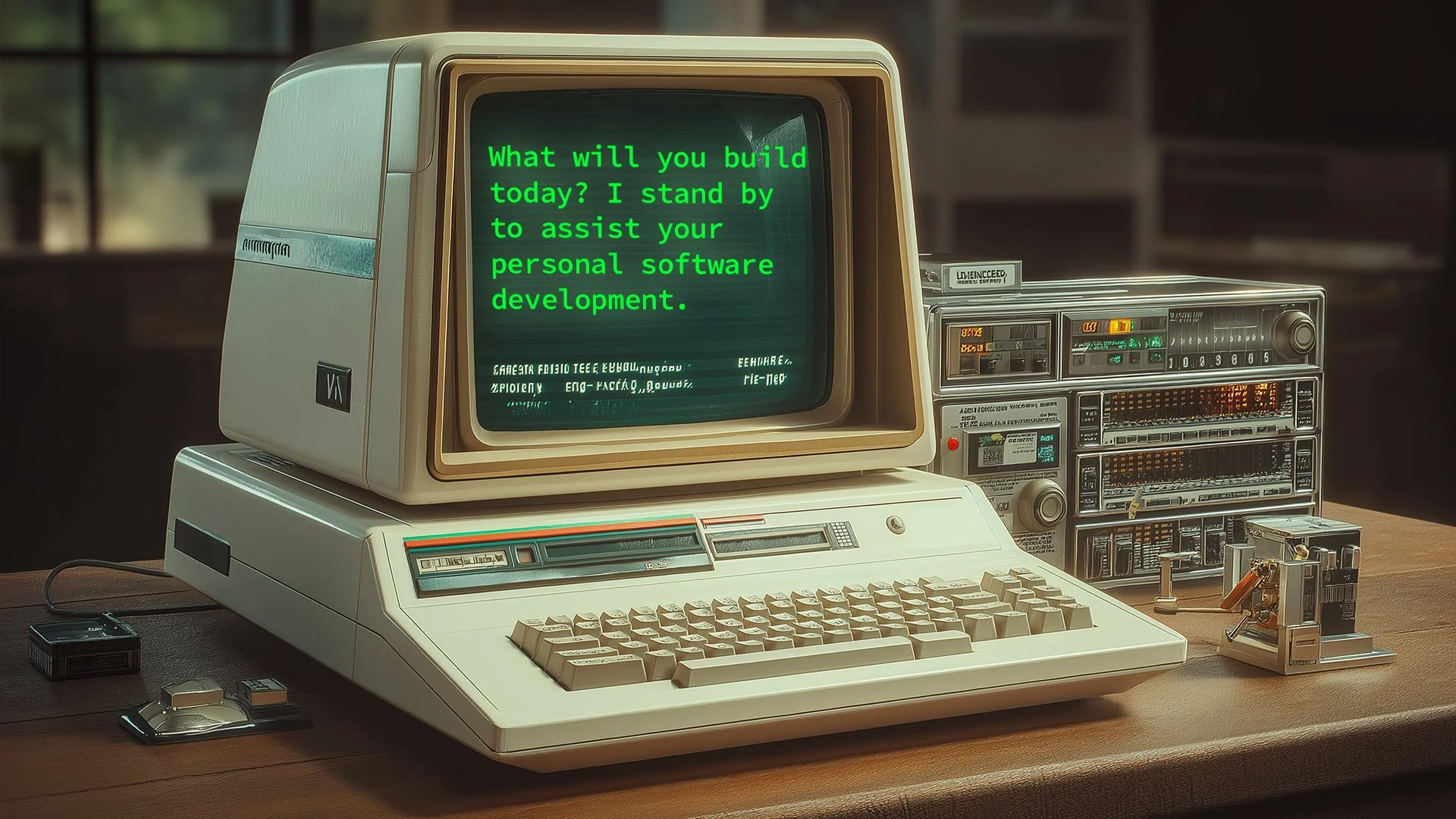
There was a brief, electric moment in the history of computing—roughly the late 1970s through the mid-1980s—when ordinary people could sit down at a keyboard and make a machine do something it hadn't done before. The Commodore 64, the BBC Micro, the Apple II: these were limited, clunky, and profoundly empowering. For a generation, they opened the door to a kind of creative agency that felt almost magical.
That door closed, gradually, as software became professionalized. The gap between what you could imagine and what you could build widened into a canyon. If you wanted a tool that didn't exist, you needed a developer—or you went without.
Vibe coding is reopening that door.
The term refers to the practice of describing what you want in natural language and letting a generative AI—tools like Claude, ChatGPT, or Copilot—write the code for you. No syntax to memorize. No debugging by hand. You describe your intent, and working software comes back in seconds.
In this episode of Modem Futura, we explore what this shift means—not just technically, but humanly. I demonstrates tools he built from single prompts (also referred to as a a ‘one-shot’): a horizon-scanning app for futures research and a two-by-two uncertainty matrix used in strategic foresight. Both were functional on the first attempt. Both took less time to create than it takes to describe them.
The Inherited Power Problem
But the episode resists the temptation to treat this as a simple good-news story. The hosts dig into the real tensions: AI-generated code that no one fully understands, security vulnerabilities baked into apps that reach market before anyone reviews them, the new threat landscape of prompt injection, and the philosophical question of wielding power you haven't earned the literacy to evaluate—what the hosts call "inherited power."
There are also rich implications for education. Rather than relying on off-the-shelf apps that never quite fit, instructors and students alike can now build purpose-specific tools—and in doing so, develop a more grounded understanding of what these AI systems can and cannot do.
The deeper question the episode surfaces is less about code and more about agency. For decades, software was something done to us—platforms we adapted to, interfaces we learned, ecosystems we bought into. Vibe coding hints at a possible reversal: software shaped by the individual, for the individual, in the moment they need it.
Whether that future is liberating or reckless—or both—depends on the kind of literacy, caution, and imagination we bring to it.
Listen to the full conversation on Modem Futura.
Subscribe and Connect!
Subscribe to Modem Futura wherever you get your podcasts and connect with us on LinkedIn. Drop a comment, pose a question, or challenge an idea—because the future isn’t something we watch happen, it’s something we build together. The medium may still be the massage, but we all have a hand in shaping how it touches tomorrow.
🎧 Apple Podcast: https://apple.co/4rbOr9r
🎧 Spotify: https://open.spotify.com/episode/28DMXJsM2kEBA2QDxuDmtJ?si=AJpR7zCpRgS2KCCfWwjjWg
📺 YouTube: https://youtu.be/lQGYaiThuBk?si=nRbHVEQk9dwL3gXr
🌐 Website: https://www.modemfutura.com/

Techno-Humans and the Energy Futures We’re Designing
What if the clean energy transition isn’t just a technology problem—but a techno-human design challenge that determines who benefits, who’s left out, and whether our cities can thrive?
We Don’t Just Use Technology. We Live Inside It.
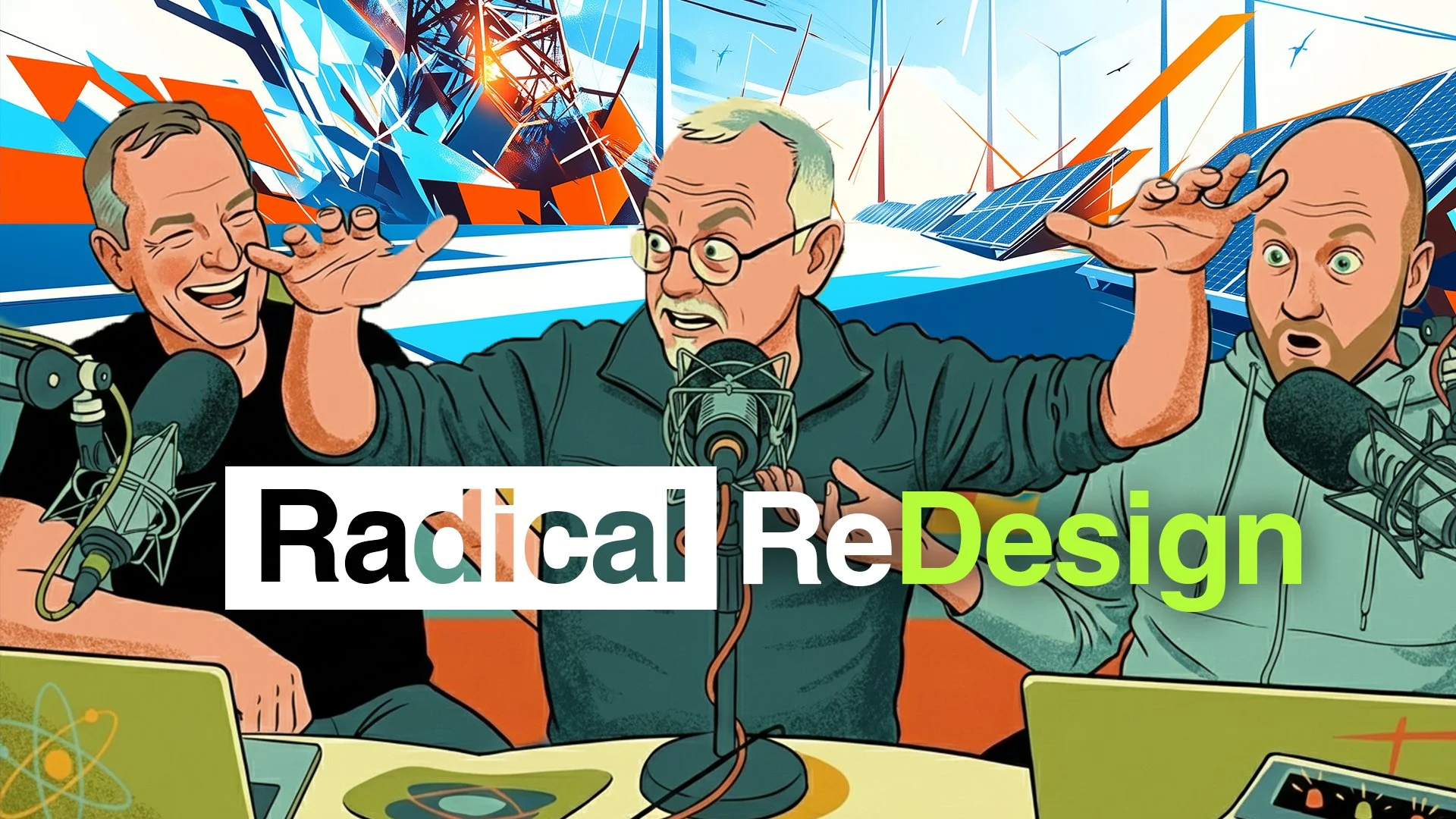
One of the most persistent myths about technology is that it sits outside of us—that humans are biological beings who occasionally pick up tools or devices. In our latest episode of Modem Futura, guest Clark Miller offers a more unsettling—and far more useful—idea: we are techno-humans.
Our bodies, behaviors, cities, and futures are deeply entangled with the systems we’ve built. The air we breathe, the electricity that keeps us alive in extreme heat, the infrastructures that quietly shape how we move, work, and survive—none of these are optional add-ons anymore. They are us.
Using Phoenix as a case study, the conversation explores how energy infrastructure has become both invisible and essential. Reliable electricity enables modern life, yet that very reliability hides fragility. When systems fail—during heat waves, blackouts, or climate extremes—the consequences are immediate and human. Thousands of lives can hinge on a few hours without power.
Clark reframes the clean energy transition as a design problem, not a simple race for better technology. Solar panels, batteries, nuclear power—these are necessary but insufficient. The real questions are: Who owns the infrastructure? Who benefits? Who is left exposed? And what kinds of futures are being quietly locked in by today’s policy decisions?
One striking example: rooftop solar can generate enormous value—but current rules often restrict ownership to utilities and homeowners, excluding renters and reinforcing inequality. These aren’t technical constraints. They’re design choices.
The episode also challenges how we educate future engineers, policymakers, and innovators. Traditional engineering focuses on performance and efficiency, while social impacts are treated as secondary. But in a world of climate risk, AI acceleration, and planetary-scale systems, that separation no longer works. We need new forms of “engineering-adjacent” thinking—approaches that integrate technology, human behavior, governance, and ethics from the start.
This isn’t a dystopian conversation. It’s an invitation. If we learn to see ourselves as techno-humans—and accept responsibility for the systems we inhabit—we may still have the capacity to design futures where people don’t just survive, but thrive.
🎧 Listen to the full episode of Modem Futura to explore what that could look like.
Subscribe and Connect!
Subscribe to Modem Futura wherever you get your podcasts and connect with us on LinkedIn. Drop a comment, pose a question, or challenge an idea—because the future isn’t something we watch happen, it’s something we build together. The medium may still be the massage, but we all have a hand in shaping how it touches tomorrow.
🎧 Apple Podcast: https://apple.co/4qGMjG6
🎧 Spotify: https://open.spotify.com/episode/4gD4VqOXrTQ2bI73n72fZv?si=2KhStFa5SBq9A3HnjAGdFw
📺 YouTube: https://youtu.be/IAOzv4kcp0M
🌐 Website: https://www.modemfutura.com/

Modem Futura Year in Review: What 2025 Taught Us About Being Human
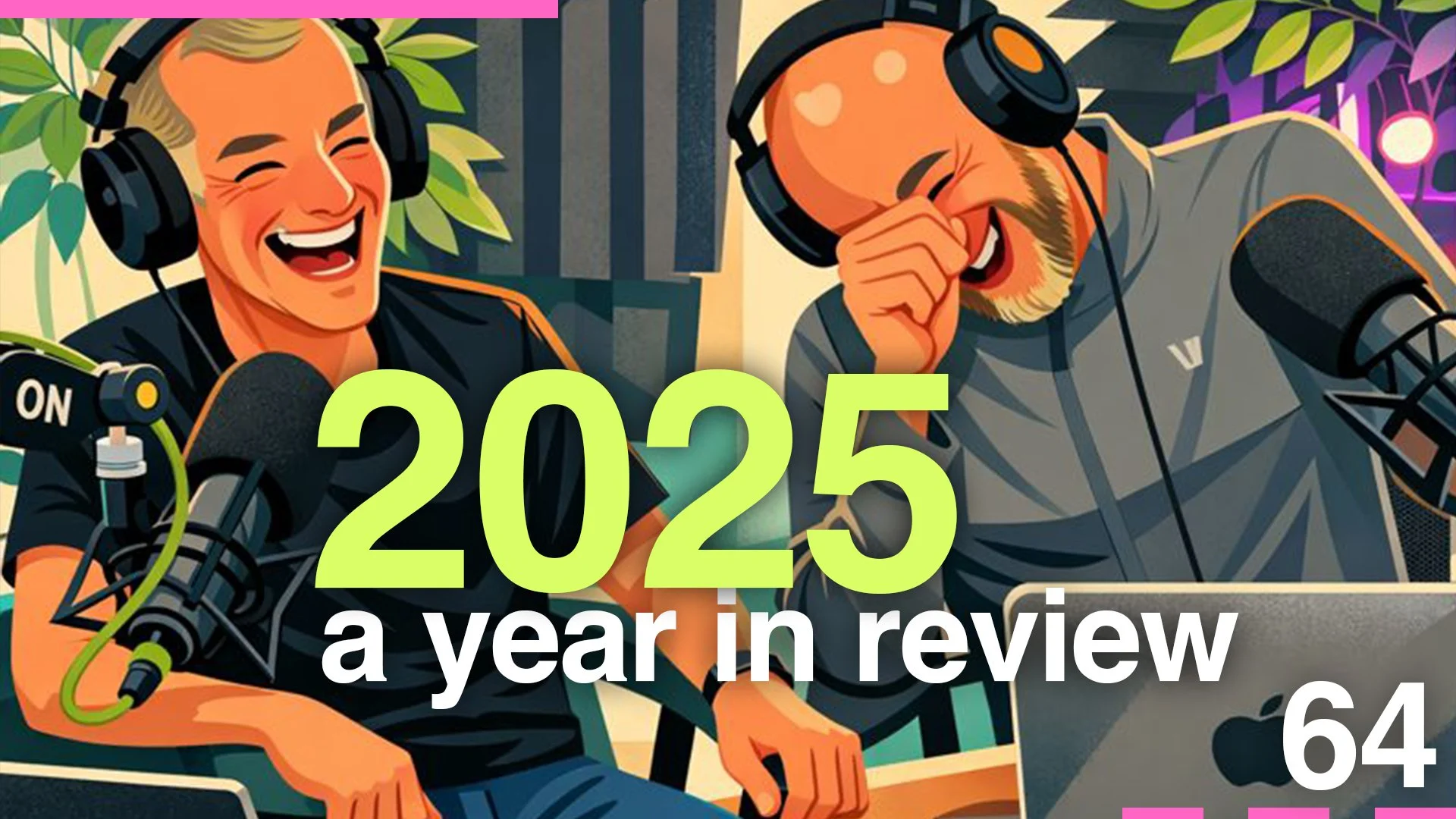
As we step toward 2026, we recorded a “Year in Review” episode of Modem Futura to pause the treadmill, look back, and ask a bigger question: what did this year reveal about the future of being human?
This wasn’t a victory lap. It was a reflection on what resonated, what surprised us, and what it means to build a future-focused show while the future keeps moving.
metrics matter… and they don’t
Yes, growth matters — it helps ideas travel. But podcast analytics are often incomplete and inconsistent, and they rarely capture what impact actually looks like. The most meaningful signals are still human: messages, emails, thoughtful disagreement, and reviews that help someone new discover the show.
“If you want to support the show: subscribing, sharing, and leaving a rating/review are still the most helpful actions.”
The themes that defined our year:
AI, beyond the hype: We kept returning to the same tension — generative tools are everywhere, but “AI” isn’t just a feature set. It’s a cultural force that shapes identity, agency, creativity, and values. We try hard to avoid both the hype machine and the doom loop, and instead stay in the messy middle where the most useful questions live.
Education and learning: We lean into what learning actually is (not just schooling), including John Dewey’s idea that humans are wired for inquiry, communication, construction, and expression. When AI arrives in every document and device, what does it do to those impulses — especially for kids?
Technology in the physical world: From autonomous‑vehicle safety systems that quietly drift out of calibration, to EVs and the persistent “flying car” dream, we explore what happens when shiny promises meet real‑world constraints.
Big questions, no apologies: Yes, we go there — simulation hypotheses, black holes, de‑extinction, space travel, and the edges of what science can (and can’t) explain. These episodes aren’t about “being right.” They’re about expanding the space of possible futures we can imagine.
If there’s one takeaway, it’s this: the future isn’t something that happens to us — it’s something we build together.That’s why we keep showing up each week: to create a shared space for curiosity, skepticism, wonder, and responsible imagination.
If you’ve been listening, thank you. If you’re new here, welcome. And if an episode sparked a thought you can’t shake — share it with a colleague, a student, a friend, or your community. As we step into 2026, we’re excited to keep exploring the possible, probable, and preferable futures — with you.

Made by Humans: The Apple TV Logo and Future of Design
Made by Humans: What the New Apple TV Logo Reveals About the Future of Design
In a world saturated with AI-generated media, branding, and motion graphics, it’s easy to assume every logo and animation comes from a prompt. But Apple’s new Apple TV logo and mnemonic quietly challenge that assumption—and offer a glimpse into a different future of design.
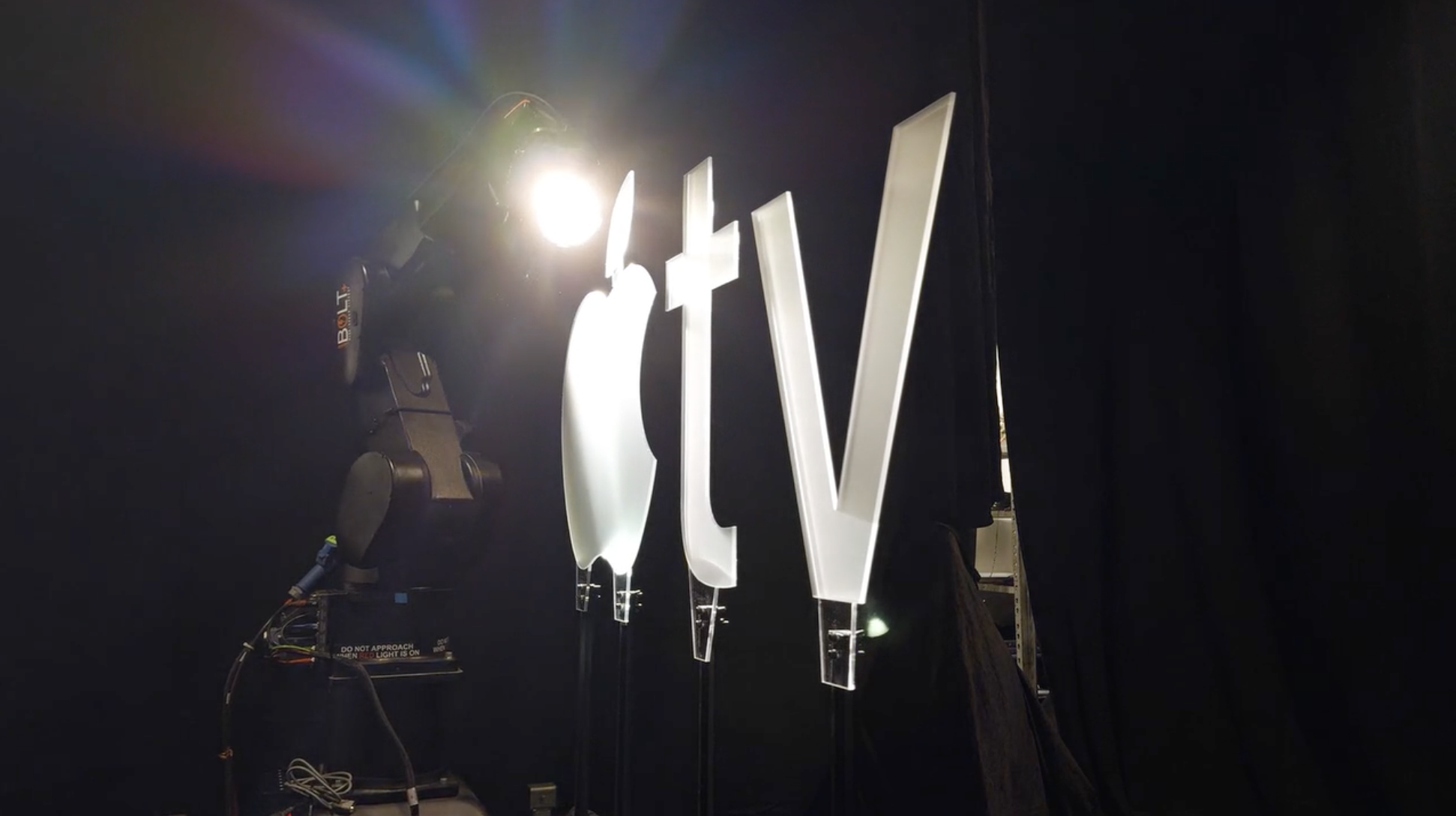
In a recent episode of the Modem Futura podcast, we unpack the surprising story behind this five-second sequence. Instead of relying entirely on CG or generative tools, Apple commissioned a physical frosted-glass Apple TV logo, mounted on a rig and filmed as colored light passes through it. The luminous flips you see on screen aren’t a simulation; they’re real light interacting with real material.
The audio is equally intentional. The signature Apple TV chime was composed by Finneas, distilling identity and emotion into just a couple of seconds of sound. Together, the visual and audio design embody a level of care, craftsmanship, and human judgment that stands out in today’s AI-heavy landscape.
On the episode, we explore why this matters for creators, educators, and anyone thinking about the future of being human. From Steve Jobs’ insistence on caring about the parts “no one sees” to new signals like “This show is made by humans” tags, we’re seeing a renewed appreciation for work where human intent is clearly present—even when the audience can’t articulate why it feels different.
Rather than rejecting AI outright, we argue for using it in ways that amplify human creativity without erasing the craft that gives our media meaning.
🎧 Listen to the full conversation on Modem Futura wherever you get your podcasts, and explore more at futureofbeinghuman.asu.edu.
Subscribe and Connect!
Subscribe to Modem Futura wherever you get your podcasts and connect with us on LinkedIn. Drop a comment, pose a question, or challenge an idea—because the future isn’t something we watch happen, it’s something we build together. The medium may still be the massage, but we all have a hand in shaping how it touches tomorrow.
🎧 Apple Podcast: https://apple.co/3JT2Tms
🎧 Spotify: https://open.spotify.com/episode/6mkbtUMk9P99BhxRA11aki?si=1d36zowmQb2eo7AFctk1rg
📺 YouTube: https://youtu.be/df-crZLZJuM
🌐 Website: https://www.modemfutura.com/