

NEWS & UPDATES

Educating for Sustainable Futures
In this bonus episode of the Learning Futures Podcast Dr. Sean Leahy talks about the importance of educating for sustainable futures, discussing the opportunities and challenges. Dr. Leahy explores the urgency created by the Fourth Industrial Revolution, and the need to prepare for the uncertainty by engaging in futures thinking and other futures methodologies.
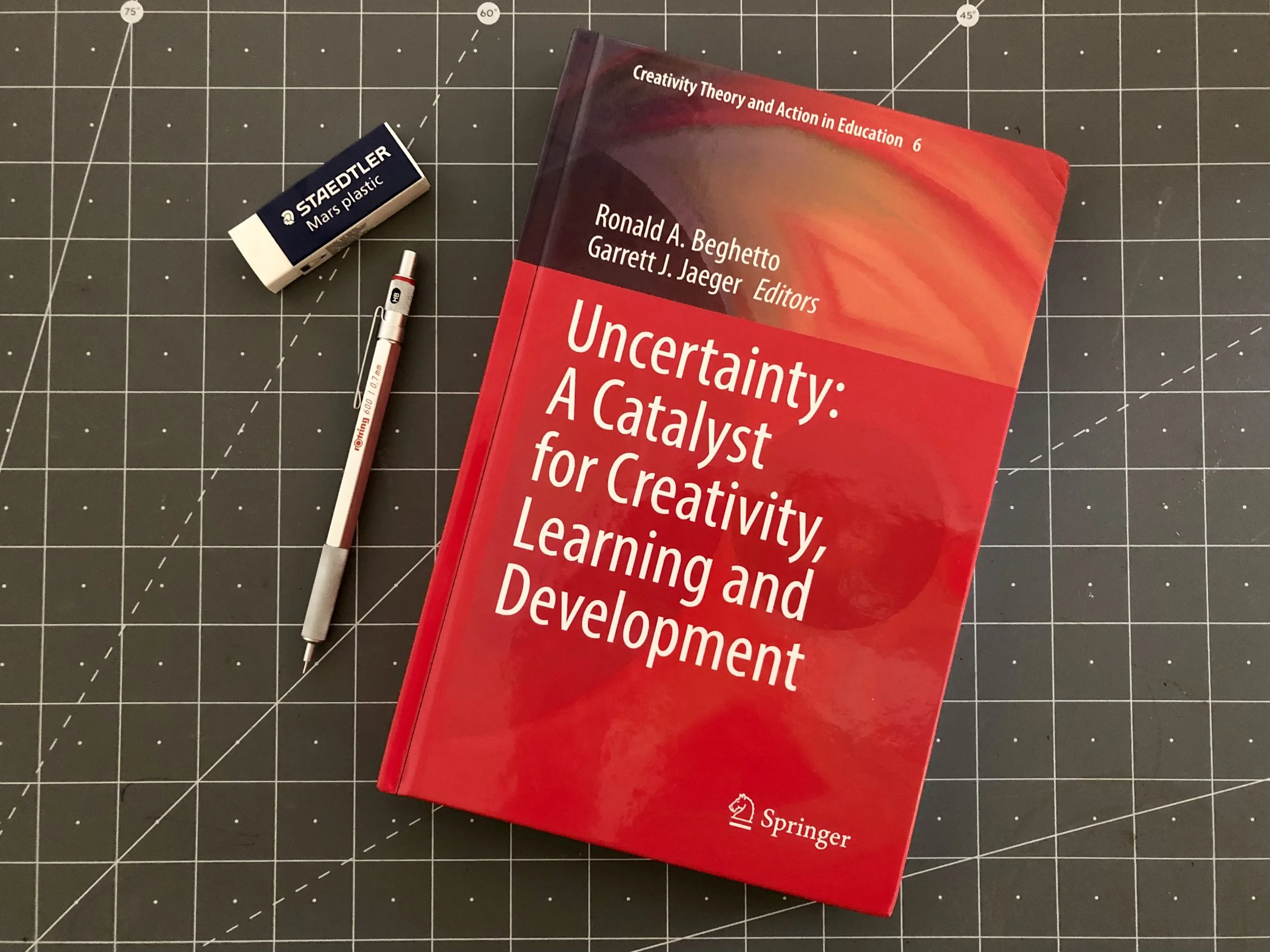
Futures Thinking: Exploring the adjacent possible (new book chapter)
“There has never been a time of greater promise, or greater peril ”
How can the educational system shift to a proactive–participant model in exploring the adjacent possible ushered in through the inherent uncertainty of the Fourth Industrial Revolution? How can we look to historical patterns of disruption to gain insights into the challenges of preparing for future uncertainties? How can all of this lend itself to a more sustainable futures? Find out in the ‘exciting’ new book chapter referenced below that was published in Uncertainty: A Catalyst for Creativity, Learning and Development (edited by Beghetto and Jaeger)
We (Punya Mishra, Ben Scragg, and I) invite you to read along through our recently published book chapter and join the conversation around this growing field of inquiry in educational futures and futures thinking.
[APA Citation]
Leahy, S.M., Scragg, B., Mishra, P. (2022). Creatively Confronting the Adjacent Possible: Educational Leadership and the Fourth Industrial Revolution. In: Beghetto, R.A., Jaeger, G.J. (eds) Uncertainty: A Catalyst for Creativity, Learning and Development . Creativity Theory and Action in Education, vol 6. Springer, Cham. https://doi.org/10.1007/978-3-030-98729-9_17
Abstract
In this chapter we explore the unknown possibilities that lie in the shadows of disruptions and innovations known as the adjacent possible. We frame the challenges educational leaders face when trying to prepare for an increasingly volatile, uncertain, complex, and ambiguous world that is propelled into the Fourth Industrial Revolution imbued with rapidly changing and unevenly distributed technological proliferation. Throughout our chapter, we offer strategic mindsets in design and futures thinking to combat the growing challenges of preparing educational systems that are rife with existing deep and complexly interwoven wicked problems for uncertainty. We propose that looking to the past, we can discover insights into meta-patterns and the ways we failed to predict the futures that emerged from previous discoveries and innovations. Using this frame, we discuss the potential of combining the interconnected mindsets of futures thinking and design, not to predict the future, but to prepare our educational systems for the uncertainty of the future.

Learning Futures Season 4 - Futures Thinking
The 4th season of the Learning Futures Podcast is now out and the first episode has dropped. In addition to being the founder and executive producer for this podcast, this season my colleague Clarin Collins and I take over the hosting responsibilities as well. In our first episode for Season 4 we are joined by Ruth Wylie, Danah Henriksen, and Maricel Lawrence to chat about all things Futures Thinking. We hope you enjoy the episode!
If you like what you’re hearing, please do subscribe to the Learning Futures Podcast on Apple Podcasts, Spotify, or wherever you get your podcasts…

BioSense Network: Exploring biotech with computational microscopes
I am excited to announce the launch of our newly funded research project called BioSense Network. To introduce this new project, the team sat down with me (virtually) for a quick roundtable discussion to define and explain not only what the BioSense Network is, but perhaps more importantly why a project like this is needed in the first place. Have a listen!
If you like what you’re hearing, please do subscribe to the Learning Futures Podcast on Apple Podcasts, Spotify, or wherever you get your podcasts…
If podcasts aren’t your thing, here’s a super short recap…
The show is hosted by me, and I’m joined by three of my colleagues to discuss this innovative project.
Host: Dr. Sean Leahy - twitter: @seanthenerd
Dr. Abhishek Singharoy - twitter: @abhisekhsingha1
Dr. Punya Mishra - twitter: @punyamishra
We talk about the exciting new project known as the BioSense Network, which is a newly funded project aimed at establishing a community of learners exploring biotechnology with a computational microscope. This innovative research grant is in collaboration with the Arizona State University School of Molecular Sciences, ASU Biodesign Institute, and the Mary Lou Fulton Teachers College at ASU. This project has been possible by funding from the Department of Defense STEM program.
While we cover a lot of ground on the podcast the main points we address are the following:
In the show we discuss the overall aims of this project, and explore how it is described as a research project aimed at bridging textbook biotechnology with reality, and what that really means in practice.
We talked about the importance of combining teams, (biotechnology and education) and discuss how we see this partnership as being crucial to creating a new approach to biotechnology education.
We touch on the broader impacts of projects like this, and the potential impact on STEM education and the pipeline of STEM professional careers.
We discuss our approach to flip the learning experience / community aspect, and create a community first, in which learning experience can take place, and how this new model may have long lasting benefits in terms of sustainability for this project.
We explore the use of high powered computing and virtual visualization technologies to bring zero-cost biotechnology to the hands of middle and high school students (that they otherwise wouldn’t have access until university level studies).
We discussed the four identified “tangible” goals / outcomes of the project, namely: communicate, promote, inspire, and enhance.
Our last element we discussed was our approach to create educational modules for educators to use with their students - what is entailed in the development and implementation of these, and how that differs from traditional approaches to train-the-trainer type projects etc.
All in all, it was a great opportunity to sit down with some really awesome people and talk about this exciting, innovative new project. More to come as the project get further underway…

Challenges and Opportunities of AI in Education
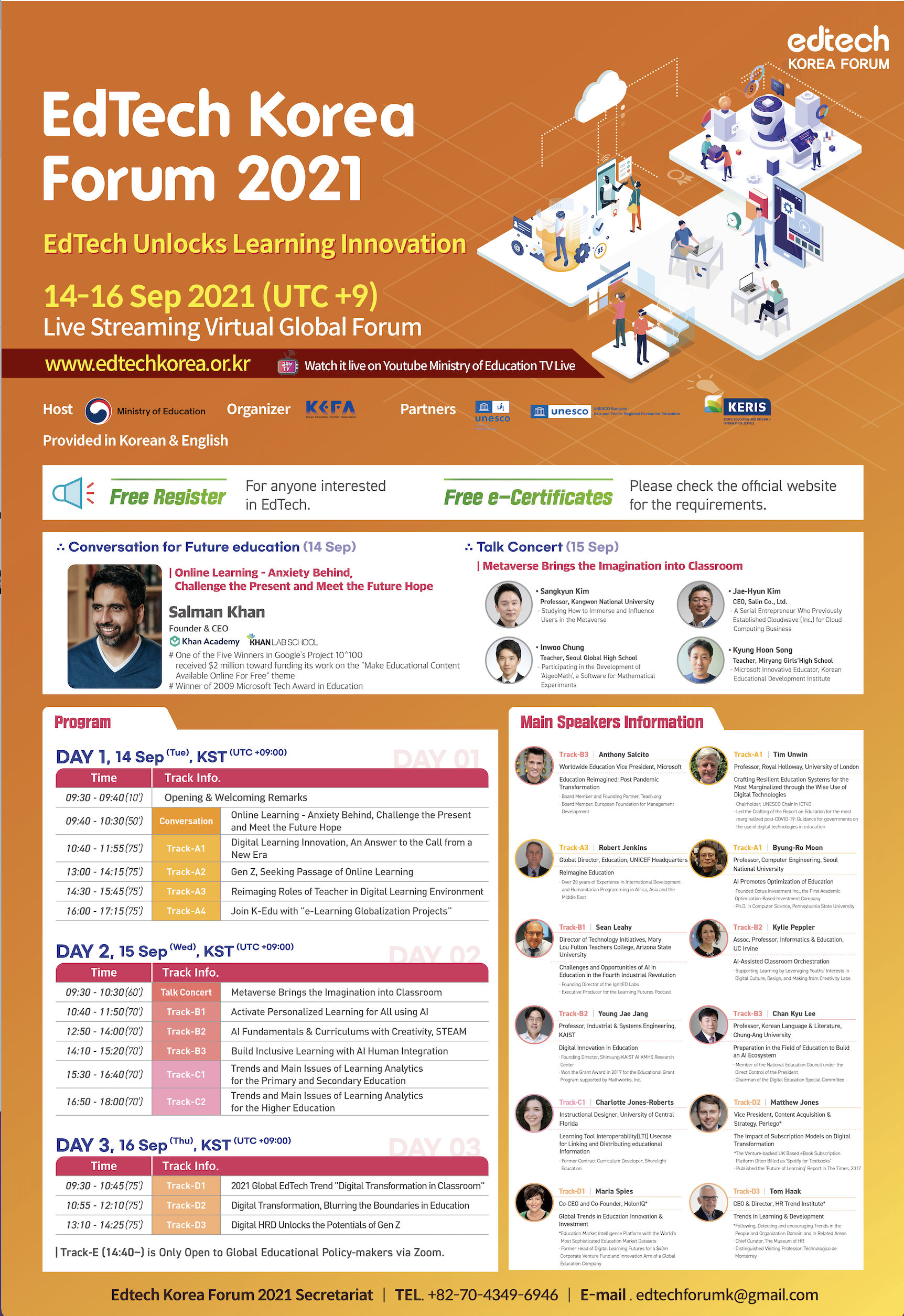
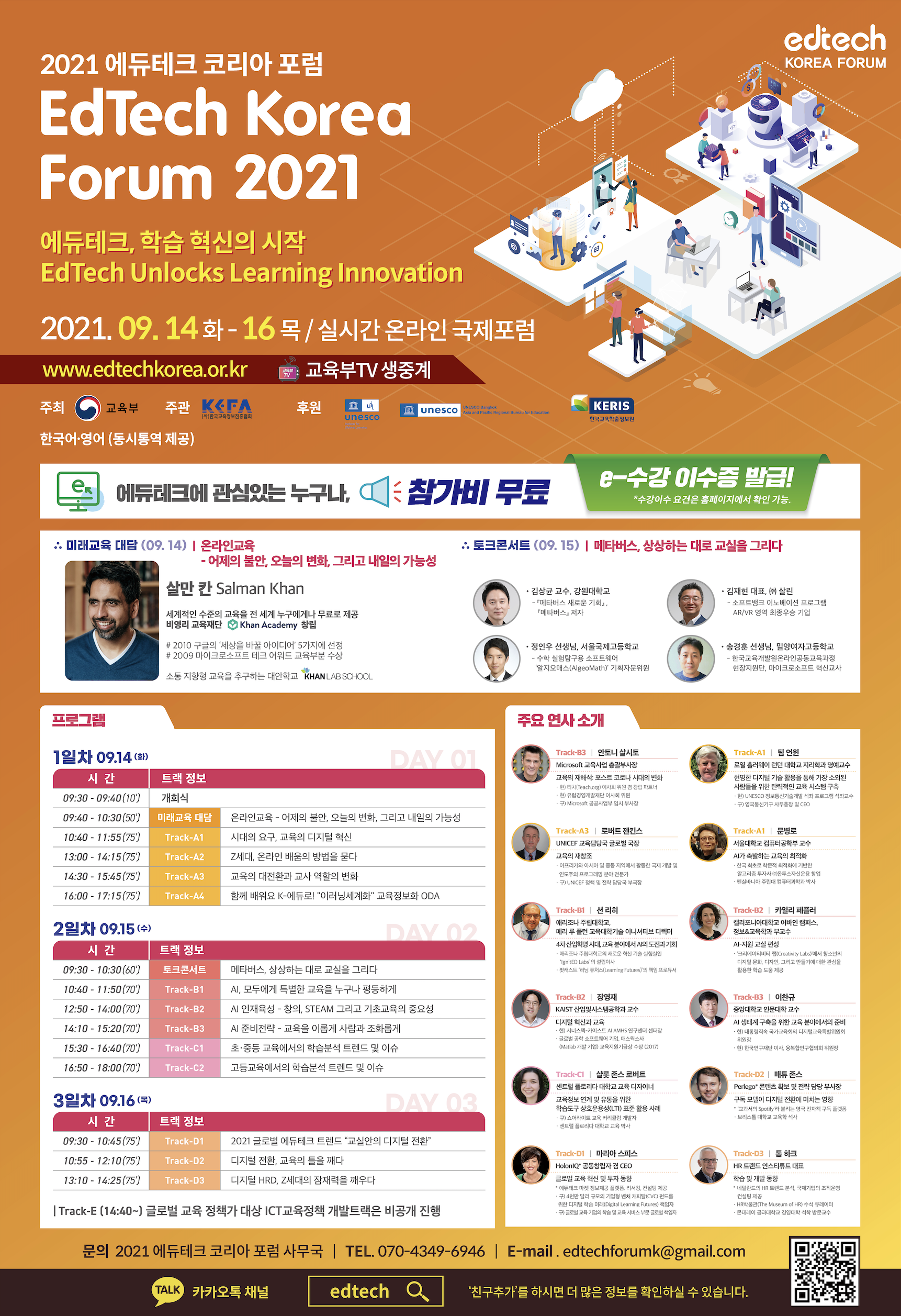
EdTech Korea Forum 2021
September 15, 2021 | Conference theme: EdTech Unlocks Learning Innovation
It was an honor to be invited to speak at the EdTech Korea Forum 2021 on artificial intelligence in education. EdTech Korea Forum is the largest ICT conference in Korea, hosted by the Ministry of Education of the Republic of Korea, and was presented in English and Korean languages. The conference presenters represented a rich and diverse group of presenters from a range of professional experts including educators, policy-makers, industry partners, and academics.
My presentation was titled: Challenges and Opportunities of AI in Education in the Fourth Industrial Revolution.

Abstract: (From Conference Website)
As our collective global society stands on the precipice of the Fourth Industrial Revolution ushered in through the rapid advancements and convergence of digital, biological, and physical technologies and innovations, the challenges and opportunities for the education system have never been more salient. Advancements in artificial intelligence (AI) have presented the system of education with an emergent horizon of new technological applications to address historical and contemporary challenges facing the educational system. This presentation will explore the emerging role of AI in education, and address issues around the impact of fair distribution, unintended consequences, and the need for a humanistic approach to emerging technologies of the Fourth Industrial Revolution.
Below is the flyer for the event (one in English the other in Korean)

Designing Learning Futures: Navigating Toward the Next Normal

On March 17, 2021 I had the pleasure to co-present the closing keynote for the OLC Innovate K-12 Summit with my trusted colleague Ben Scragg. In this presentation we explore the challenges of creating a new “normal” as it relates to educational futures - and explore a set of strategic foresight tools and methodology that can assist leaders in creating an intentional “next normal” for their organization.
Below is the extended abstract from the event website.
Extended Abstract:
We are certainly living through a volatile, complex, uncertain, and ambiguous (VUCA) world at the present moment, and its impacts have been felt perhaps more deeply and tangibly in K12 education than anywhere else - both at global level and within our local schools and communities. Given the rapid disruption and changes brought on by COVID-19, we know that there will be no returning “back to normal.” While schools, educators, students and families have all navigated the past year in different ways and with different degrees of hardship, challenge, and even success - we still look forward to establishing a future sense of normalcy, however the new normal takes shape.
In this session, we want to explore some of the ways in which educators and leaders can begin to design and give shape to this new normal, despite all the uncertainty of now. Given all that educators and communities are facing, it’s worth exploring how we might re-imagine our teaching and learning environments - particularly online and digital learning environments - by addressing and harnessing the plausible outcomes and impacts of our collective uncertainty.
We will invite participants to learn about and experiment with emergent design and strategic foresight tools that can reveal risks and opportunities, helping us prioritize the work needed to build the next normal. The goal of this session is not to predict what will happen in the future, but to stretch the imagination (and ourselves!) to think about what we would like to have happen, using a framework and tools for how it might happen. The maxim “we cannot predict the future, but we can invent it “ is often cited as a call to design and use strategic forecasting tools and methodologies. Join us as we create a studio space to explore a set of tools and reflective prompts that we’re describing as Learning Futures.

Keynote: 2021 Winter Games Conference
Learning Futures: Designing the Horizon
I was thrilled to deliver the opening keynote address for the 2021 Winter Games conference, hosted by ASU’s ShapingEDU community and partners. Below is the publicly shared Zoom recording. Special thanks to my colleagues Dr. Punya Mishra and Jodie Donner for joining me in sharing our work.
Additionally, we also just released the second installment of our special issue in the ASU Journal Current Issues in Education, an Open Access Journal.
Vol 22 No 1 (Special Issue) Shaping the Futures of Learning in the Digital Age Part 2

Learning Futures Podcast Launch
Introducing the newly launched Learning Futures Podcast! Be sure to subscribe to make sure you don’t miss a single episode. As one of the Executive Producers of this new podcast - I am very pleased to bring such an incredible ensemble of brilliant people together to share their insights into the futures of learning.
Join us as we tackle the bigger question:
What if education systems were doing more and thinking differently about preparing learners to thrive in the future? Join Professor Ronald A. Beghetto of Arizona State University's Mary Lou Fulton Teachers College for conversations on improving education and the future of learning. Each episode presents colleagues, researchers, education leaders and other guests who share how they're thinking about and addressing the most pressing challenges in education.

Slice of PI Podcast Appearance: Part 2
“Part 2 on MLFTC’s IgnitED Labs with Dr. Sean Leahy, Director of Technology Initiatives, and Jodie Donner, Lead Technology Strategist and Head of IgnitED Labs. ”
This is the second of our two-part interview with Claire and Hannah from the Slice of PI podcast. We had so much to say in our interview they had to split it into two episodes (IgnitED Labs Interview Part 1).
For more information on the labs discussed, please head over to the IgnitED Labs website to see what we’ve been up to.
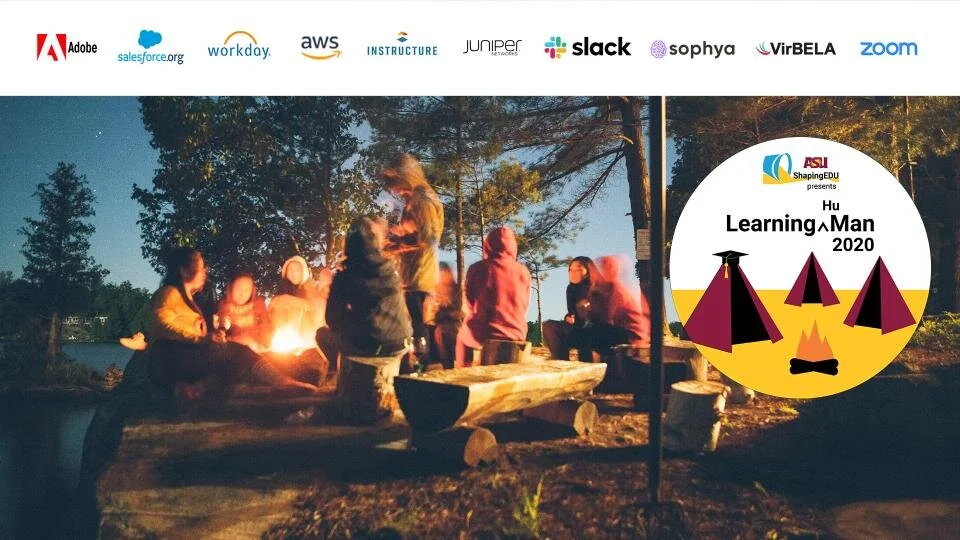
Learning (Hu)Man
Around the Flagpole: The What, Why, and How of Learner-Centered Everything
Well campers… thats a wrap!
With the end of Learning(Hu)Man today, I’m reminded of how fun this event was. It was a real pleasure to not only present, but to moderate this amazing panel. It was interesting to see how various organizations have been building experiences with students at the center. Specifically, it was interesting to hear the approach of Instructure, the owners of CMS platform Canvas, and how their approach to creating spaces for students aligns with the work from ASU and Michigan State University.
Perhaps most impressive, was the inclusion of our students Sabrina in this panel. She brought the much needed student perspective to this panel all about center-role of students in the development of learning experiences.
A major thanks to Laura for organizing this session and the invitation to moderate.
“If it’s not in service of learners, then who is it serving?”

Multiple ways to connect - a virtual experience
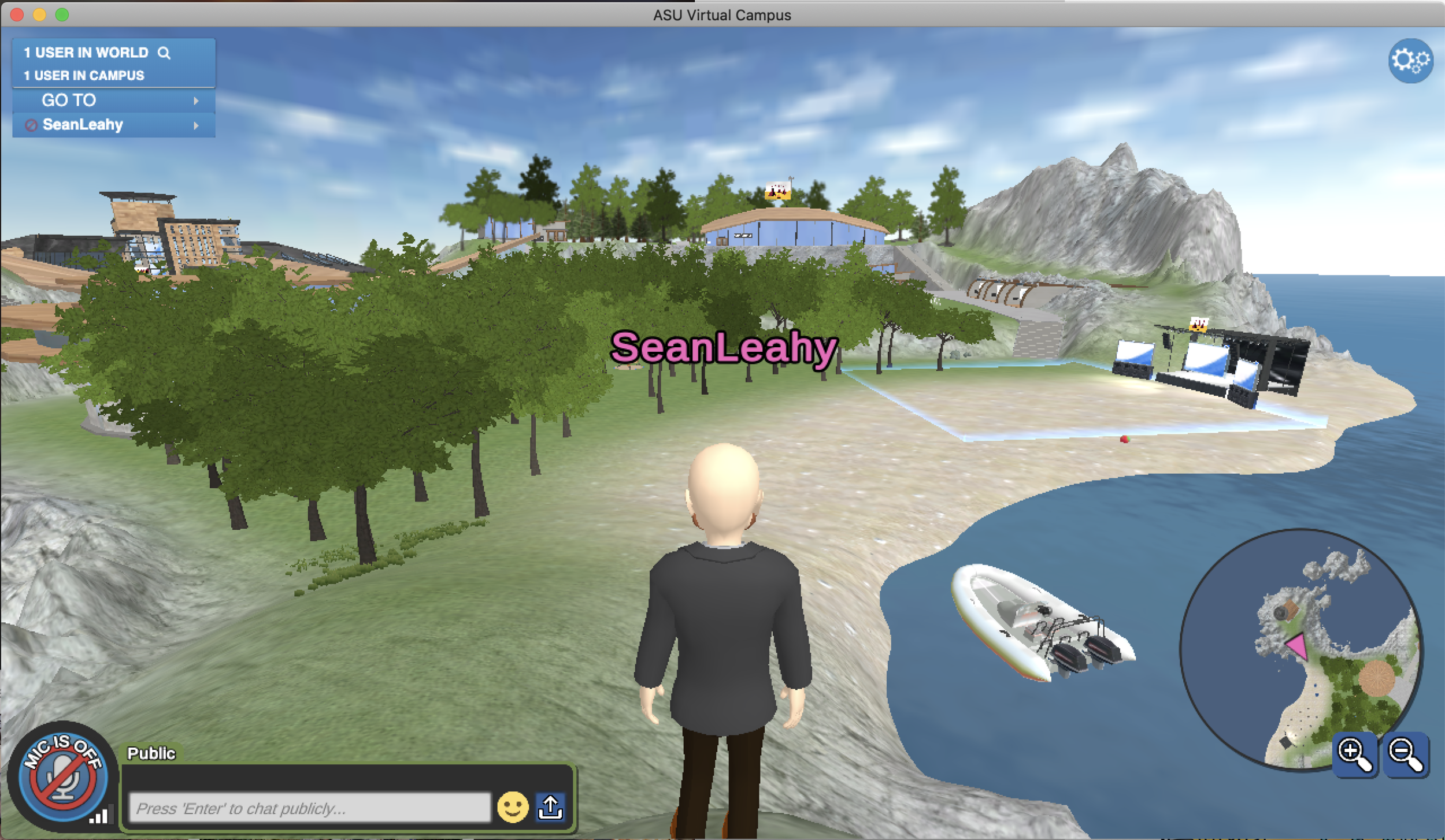
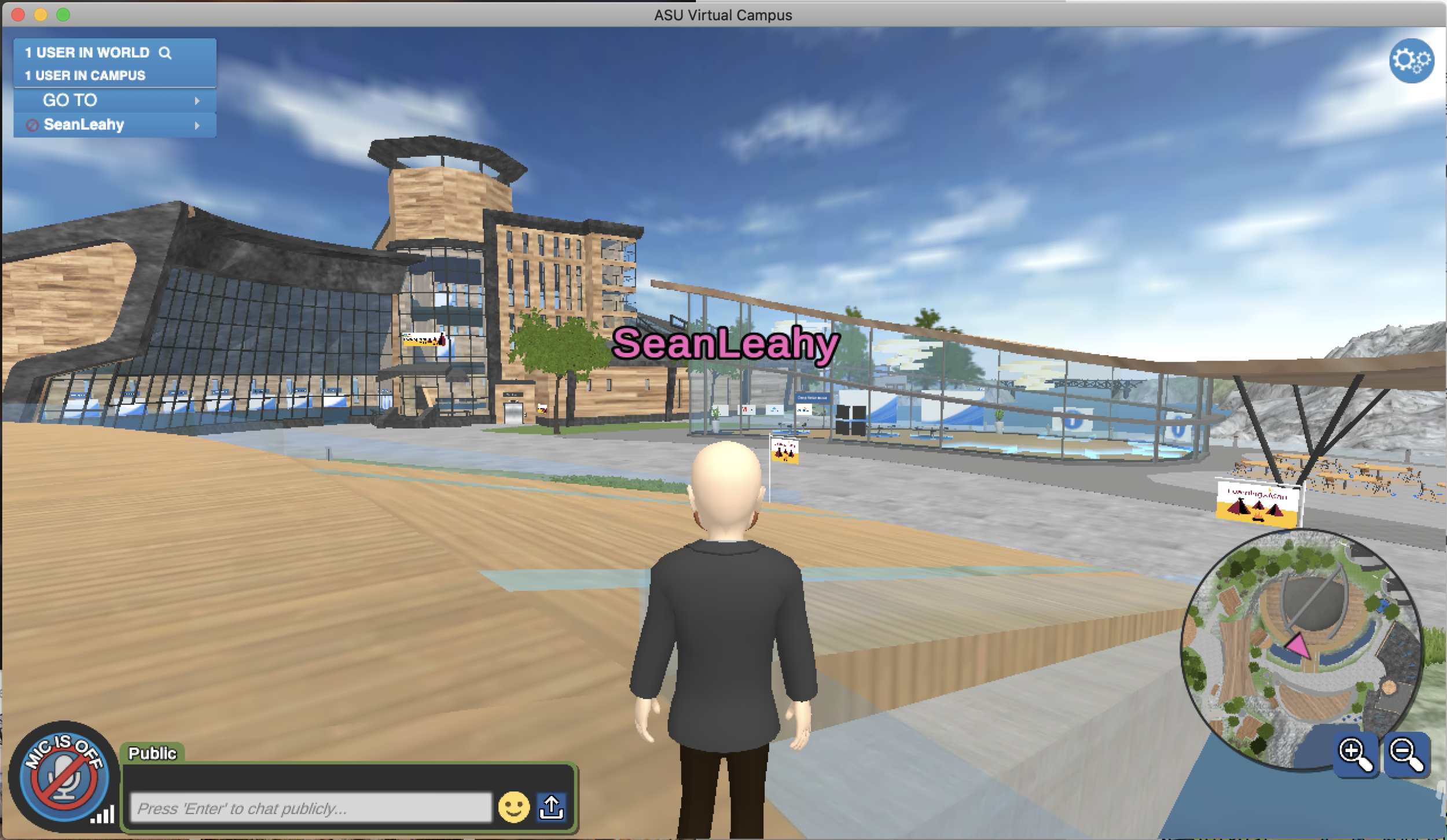
While the online camp experience had several ways to connect, web streaming, Zoom, the organizers also provided a unique way to get more immersed in the ‘virtual’ environment through a virtual Second Life-esque experience called VirBELA. I thought this was a really compelling way to try and reach a deeper level of immersion while participating in the event remotely.

Reflections - Powered by Illustration

One of the fun elements of participating in events hosted and run out of the ShapingEDU community and ASU UTO - is the always present graphic illustrators who capture the conversations (big and small) and create these rich assets that capture the spirit and energy of the events.
Looking forward to returning to camp next summer!