

NEWS & UPDATES

What Old iPods and Tiny Cameras Teach Us About Technology, Ownership, and Being Human
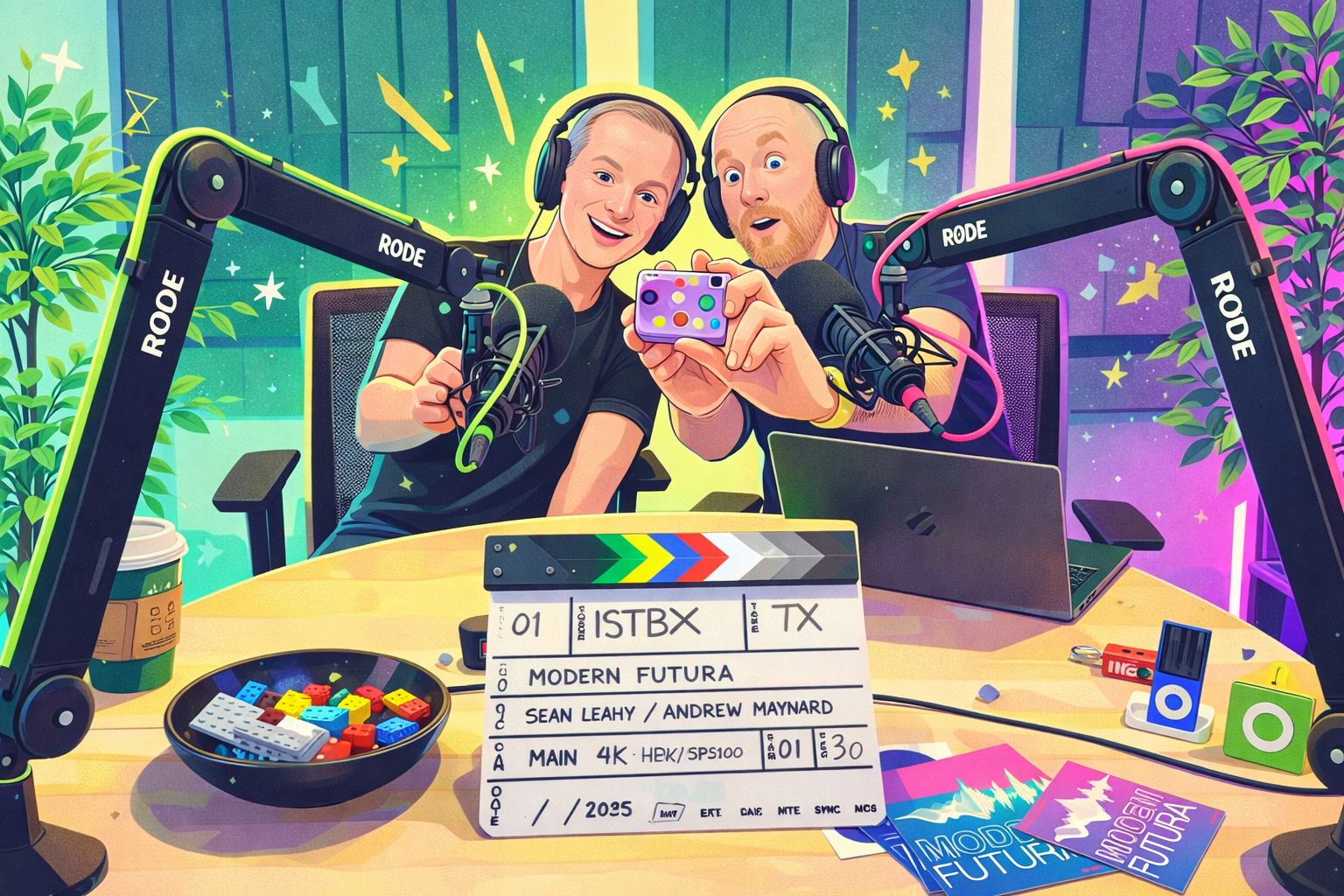
There's a moment in this episode of Modem Futura where two grown adults are hunched over a miniature Polaroid camera, watching a blurry selfie slowly develop — and laughing about it. It's objectively a terrible photograph. But it captures something that most modern technology has quietly optimized away: surprise, imperfection, and the distinctly human joy of not knowing exactly what you're going to get.
This episode began with a box of old iPods — tangled cables, dead batteries, and all — and evolved into a wide-ranging conversation about what we trade away every time we upgrade to something faster, thinner, and more connected. The themes are ones that touch anyone who has ever felt a pang of something unnamed while scrolling through an infinite library of music and being unable to choose a single song.
Ownership in the age of access. The iPods in the conversation are air-gapped — no internet connection, no cloud sync, no subscription. The music on them belongs to their owner in a way that a Spotify library simply does not. This distinction matters more than it might seem, especially when you consider that digital books, photos, and music can disappear when a service shuts down or an account holder passes away. The question of digital legacy — who inherits your cloud — is one most people haven't thought through yet.
Craft, care, and the "fast food" of technology. Sean raises a pointed observation about a recently released video game that shipped with fewer features than its predecessor from a decade ago. It's a pattern that extends well beyond gaming: the pressure to release fast increasingly overrides the commitment to release well. When did "good enough" become the standard?
The paradox of abundance. One of the episode's most compelling threads is the tension between scarcity and surplus. Limited storage on an old iPod forced intentional curation — playlists that became personal time capsules. Unlimited streaming offers everything and, paradoxically, can deliver less meaning. Andrew's students, however, offer a counterpoint: raised in abundance, they've developed their own sophisticated habits of curation and care. Perhaps the pendulum is already swinging.
Imperfection as a feature. The tiny Kodak keychain camera. The Polaroid with its gloriously blurry output. The analog photograph whose chemistry introduces an element of chance. These aren't failures of technology — they're reminders that the most human experiences are often the least predictable ones.
This episode doesn't offer prescriptions. It offers an invitation: to notice, to question, and to be intentional about the role technology plays in your life before someone else makes that choice for you.
🎧 Listen to Episode 73 of Modem Futura — available on Apple Podcasts, Spotify, and wherever you listen.
Subscribe and Connect!
Subscribe to Modem Futura wherever you get your podcasts and connect with us on LinkedIn. Drop a comment, pose a question, or challenge an idea—because the future isn’t something we watch happen, it’s something we build together. The medium may still be the massage, but we all have a hand in shaping how it touches tomorrow.
🎧 Apple Podcast: https://apple.co/4b3P8L8
🎧 Spotify: https://open.spotify.com/episode/2UNsDaZox2jdEb1QYN1m44?si=FUkqjQ0gSEecnYyrjKfoVA
📺 YouTube: https://youtu.be/UKC7UHkGNJQ
🌐 Website: https://www.modemfutura.com/
Asimov's "The Fun They Had" and the Real Cost of AI-Driven Education
The History of our Future
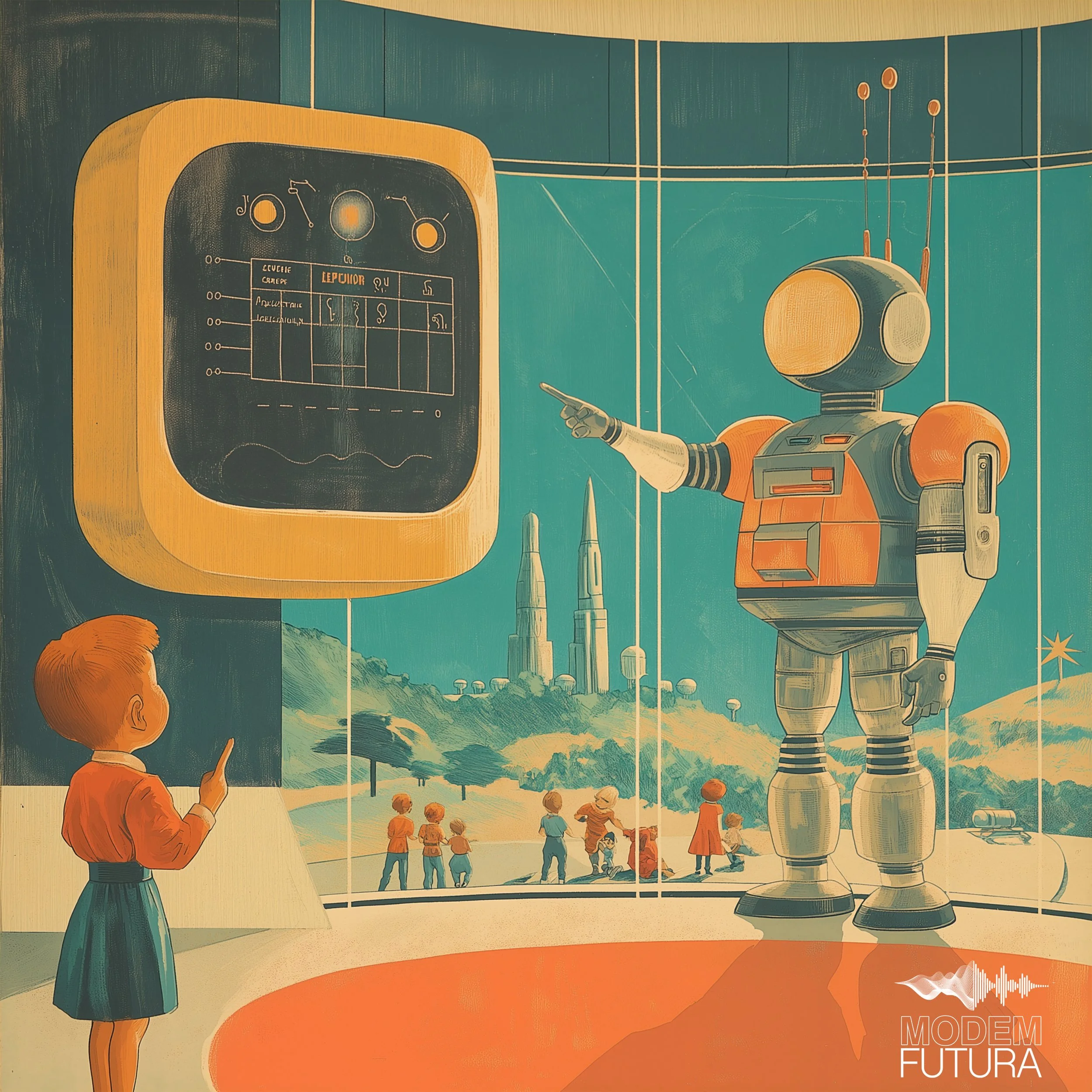
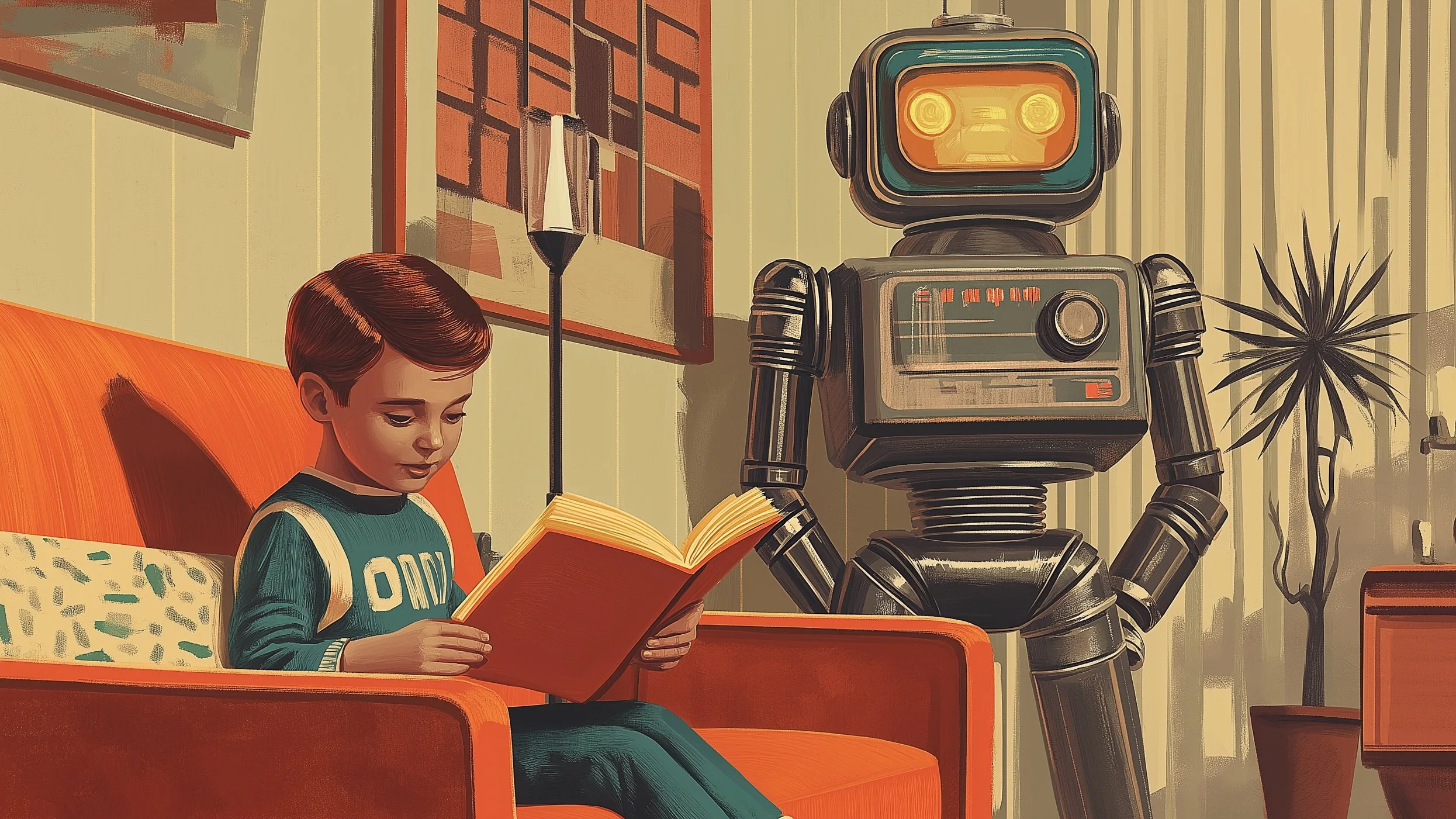
More than seventy years ago, Isaac Asimov imagined a future where children learn in isolation, guided by personalized mechanical tutors, and books are relics of a forgotten age. His 1951 short story, "The Fun They Had," is set in 2155, but its questions feel startlingly current.
In the story, a young girl named Margie discovers a paper book and learns about a time when children went to school together—sat in classrooms, were taught by human teachers, and shared the experience of learning with their peers. Her own education is efficient, personalized, and lonely. Her mechanical teacher can diagnose her struggles and recalibrate its approach, but it cannot inspire her, connect with her, or make her feel like she belongs to something larger than a lesson plan.
“Asimov didn’t predict AI as we know it. But he predicted the question that matters most: in our rush to optimize education, are we designing out the very things that make learning meaningful?
”
This is precisely the tension at the heart of today's conversation about AI in education. The promise of AI-powered tutors is real and, in many cases, genuinely valuable: adaptive pacing, instant feedback, content tailored to individual needs. But when personalization becomes the dominant paradigm—when every learner is on a separate track, in a separate space, at a separate time—the communal dimensions of education begin to disappear.
Natural Human Impulses for Learning (not schooling)
John Dewey argued more than a century ago that learning is driven by four natural impulses: inquiry, communication, construction, and expression. Most of these are inherently social. They depend on friction, dialogue, surprise, and the presence of other people. No amount of algorithmic sophistication can fully replicate the moment a teacher's unexpected enthusiasm shifts a student's entire trajectory, or the experience of working through difficulty alongside peers who share the same struggle.
Asimov's story also raises a subtler question about what endures. The book Margie discovers has survived two centuries. The static words on the page—unchanging, tactile, physical—carry a kind of permanence that digital media cannot easily match. This resonates with the growing cultural appetite for analog experiences: vinyl records, film photography, even old iPods. These are not acts of technological rejection. They are expressions of a deeper need for embodied engagement, deliberate choice, and the kind of friction that gives experience its texture.
Where do we go next?
None of this means AI has no place in education. It does, and increasingly will. But Asimov's story is a quiet reminder that the most important things about learning—curiosity, connection, belonging, the joy of shared discovery—are not problems to be optimized. They are human experiences to be protected.
The question is not whether AI can teach us. It's whether, in building systems that teach us more efficiently, we are designing out the very things that made learning worth having in the first place.
*Episode 71 of Modem Futura explores these themes through Asimov's story and a wider conversation about technology, nostalgia, and what it means to learn as a human being.*
Subscribe and Connect!
Subscribe to Modem Futura wherever you get your podcasts and connect with us on LinkedIn. Drop a comment, pose a question, or challenge an idea—because the future isn’t something we watch happen, it’s something we build together. The medium may still be the massage, but we all have a hand in shaping how it touches tomorrow.
🎧 Apple Podcast: https://apple.co/4s1lDk1
🎧 Spotify: https://open.spotify.com/episode/20I5j2DliUnZAbWDiVw7y8?si=WoEW_Zb2SPiynHYb4d8XHA
📺 YouTube: https://youtu.be/TDQc15Muwto
🌐 Website: https://www.modemfutura.com/