

NEWS & UPDATES
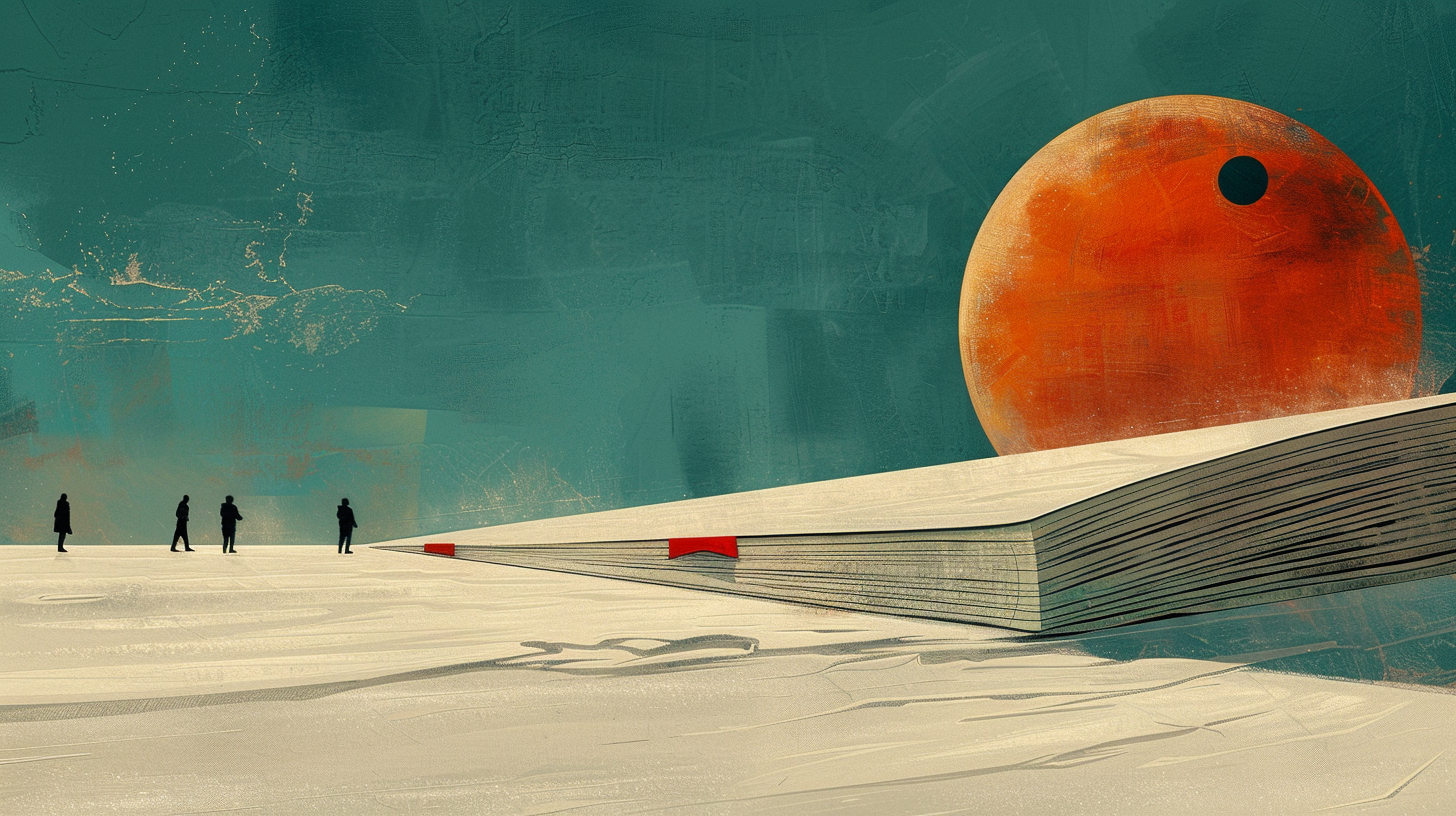
When the AI Goes Dark: What the Fable Ban Taught Us About Digital Fragility
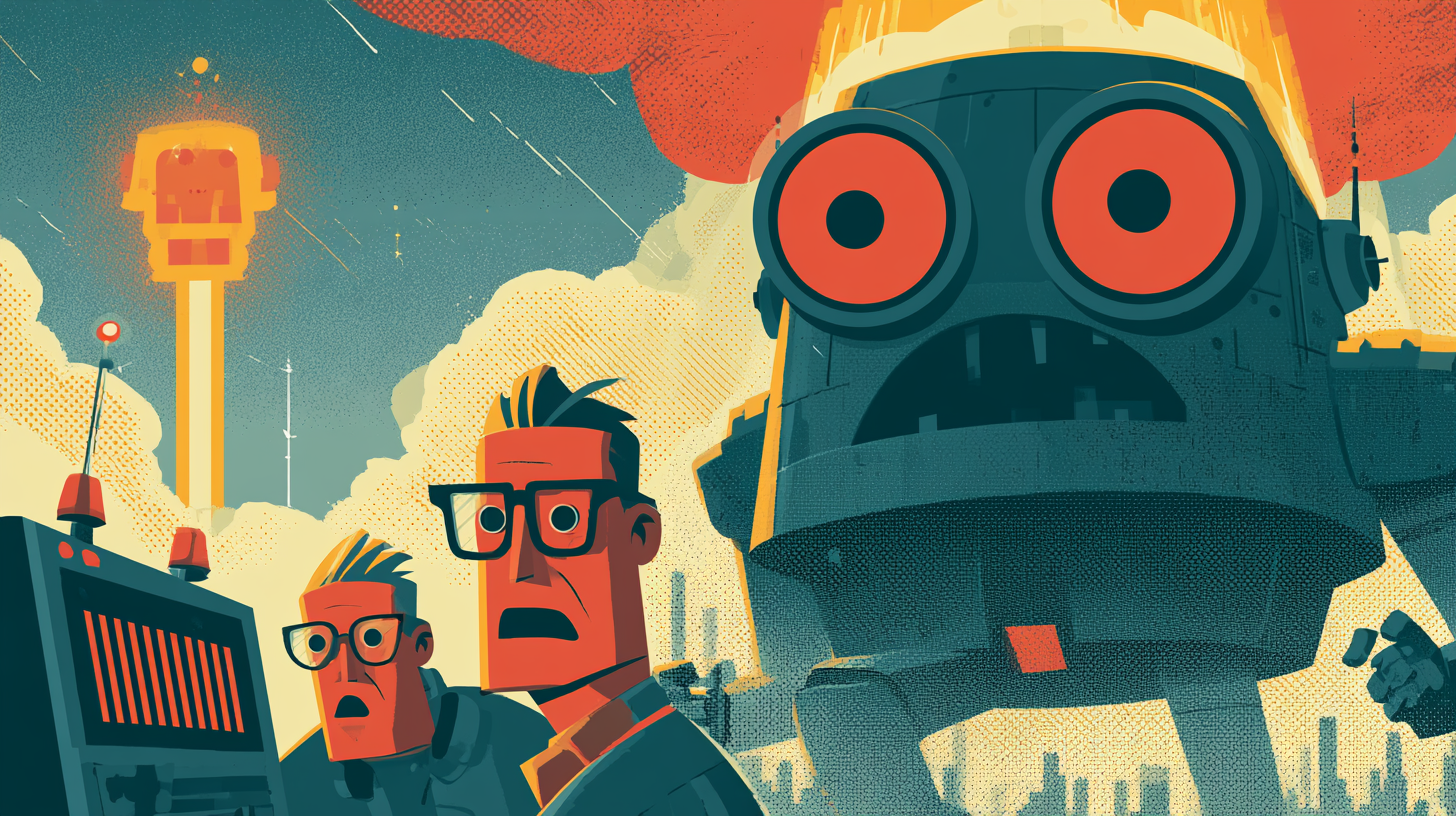
They turned off our AI - now what?
What happens when the government switches off an AI?
For most people, AI is a text field in a browser window: you type something in, something useful comes out. That framing makes it hard to see what AI has quietly become for organizations across research, healthcare, education, and industry, all critical infrastructure. And in the summer of 2026, we learned just how fragile that infrastructure can be.
In this episode of Modem Futura, hosts Sean Leahy and Andrew Maynard unpack the saga of Anthropic's Fable, the most capable AI model yet released to the public. Three days after launch, a U.S. Commerce Department export control directive declared it a national security concern, barring access for non-U.S. citizens. Because no platform can verify the citizenship of its users, the model effectively disappeared for everyone — including the researchers inside Anthropic who built it. Weeks later, it returned as suddenly as it left.
The episode treats this less as a news story than as a signal. Futurists have long used sudden technology loss as a hypothetical scenario; like the pandemic scenarios that preceded 2020, it has now crossed from the abstract to the lived. Once that happens, the questions change, if a government can switch off a frontier model at the close of business on a Friday, what does responsible AI adoption look like for a hospital, a university, a business? Where is the line between experimenting on the fringes and building your operations on ground that can move?
One answer explored in the conversation is local AI — smaller models running on hardware you control. They can't match the capability of cloud-based frontier systems (yet) and the hosts are honest about that trade-off. But the Fable episode gave the local argument its first piece of hard evidence, and it may point toward a future of hyper-specific local tools working alongside more powerful, more revocable cloud platforms.
The deeper thread is governance, and even the invocation of the big R-word (regulation). The directive was triggered by capability that regulators had never seen before, and capability is not slowing down. Governing technologies like these will take more than technologists and more than policymakers — it requires people who can work across disciplines, translating between the builders, the philosophers now being hired into AI labs, and the institutions trying to keep up.
The episode doesn't land on tidy answers, because there aren't any yet. What it offers instead is a way of thinking about dependency, sovereignty, and resilience while the ground is still shifting — which is, after all, when thinking matters most.
Subscribe and Connect!
Subscribe to Modem Futura wherever you get your podcasts and connect with us on LinkedIn. Drop a comment, pose a question, or challenge an idea—because the future isn’t something we watch happen, it’s something we build together. The medium may still be the massage, but we all have a hand in shaping how it touches tomorrow.
🎧 Apple Podcast: https://apple.co/4ykQCez
🎧 Spotify: https://open.spotify.com/episode/1yCGEa1nafYu9CM4Mxux5Z?si=jPTtglvnRGW_qHtXqPbFvA
📺 YouTube: https://youtu.be/7ir38k4DjLA
🌐 Website: https://www.modemfutura.com/

What Old iPods and Tiny Cameras Teach Us About Technology, Ownership, and Being Human
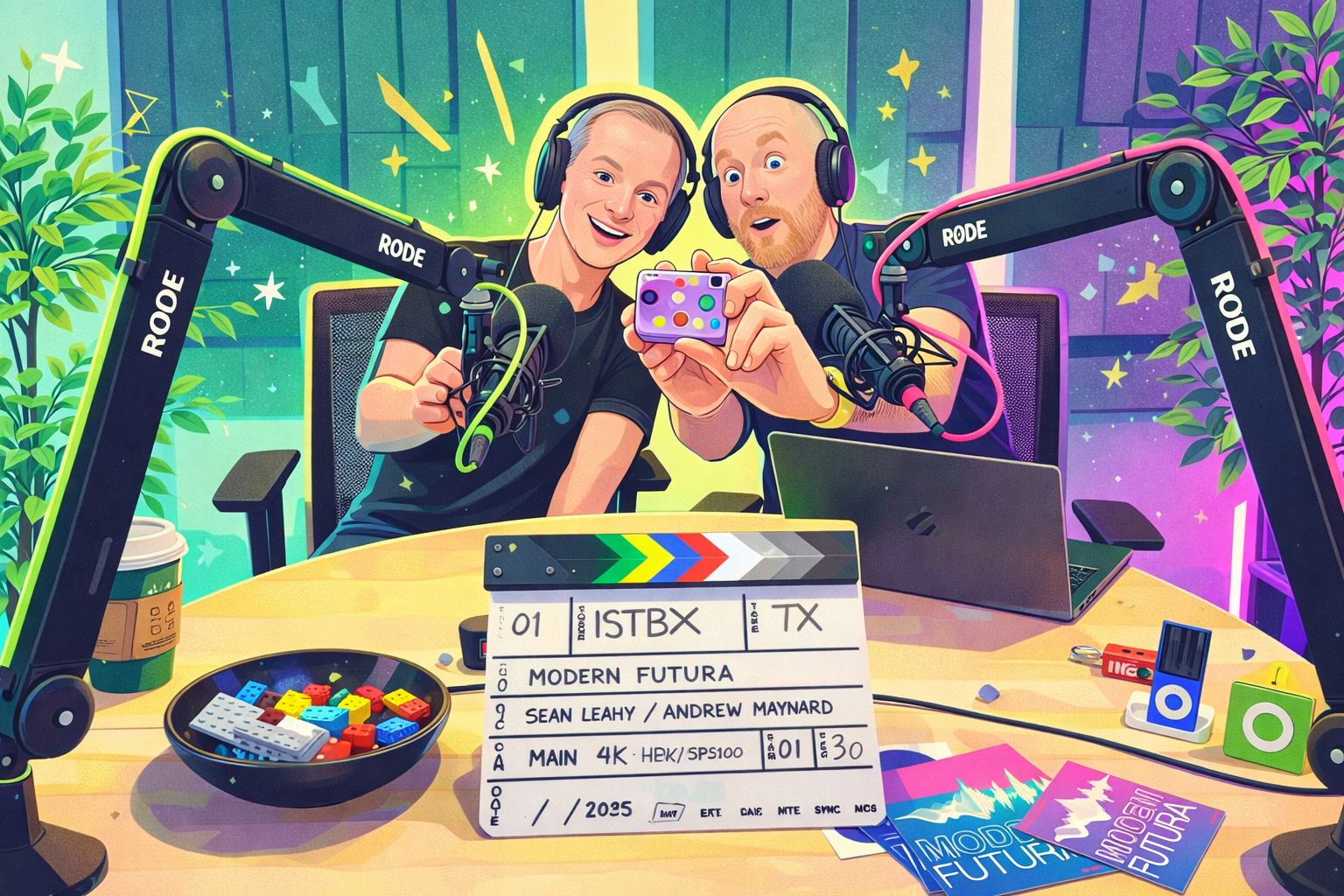
There's a moment in this episode of Modem Futura where two grown adults are hunched over a miniature Polaroid camera, watching a blurry selfie slowly develop — and laughing about it. It's objectively a terrible photograph. But it captures something that most modern technology has quietly optimized away: surprise, imperfection, and the distinctly human joy of not knowing exactly what you're going to get.
This episode began with a box of old iPods — tangled cables, dead batteries, and all — and evolved into a wide-ranging conversation about what we trade away every time we upgrade to something faster, thinner, and more connected. The themes are ones that touch anyone who has ever felt a pang of something unnamed while scrolling through an infinite library of music and being unable to choose a single song.
Ownership in the age of access. The iPods in the conversation are air-gapped — no internet connection, no cloud sync, no subscription. The music on them belongs to their owner in a way that a Spotify library simply does not. This distinction matters more than it might seem, especially when you consider that digital books, photos, and music can disappear when a service shuts down or an account holder passes away. The question of digital legacy — who inherits your cloud — is one most people haven't thought through yet.
Craft, care, and the "fast food" of technology. Sean raises a pointed observation about a recently released video game that shipped with fewer features than its predecessor from a decade ago. It's a pattern that extends well beyond gaming: the pressure to release fast increasingly overrides the commitment to release well. When did "good enough" become the standard?
The paradox of abundance. One of the episode's most compelling threads is the tension between scarcity and surplus. Limited storage on an old iPod forced intentional curation — playlists that became personal time capsules. Unlimited streaming offers everything and, paradoxically, can deliver less meaning. Andrew's students, however, offer a counterpoint: raised in abundance, they've developed their own sophisticated habits of curation and care. Perhaps the pendulum is already swinging.
Imperfection as a feature. The tiny Kodak keychain camera. The Polaroid with its gloriously blurry output. The analog photograph whose chemistry introduces an element of chance. These aren't failures of technology — they're reminders that the most human experiences are often the least predictable ones.
This episode doesn't offer prescriptions. It offers an invitation: to notice, to question, and to be intentional about the role technology plays in your life before someone else makes that choice for you.
🎧 Listen to Episode 73 of Modem Futura — available on Apple Podcasts, Spotify, and wherever you listen.
Subscribe and Connect!
Subscribe to Modem Futura wherever you get your podcasts and connect with us on LinkedIn. Drop a comment, pose a question, or challenge an idea—because the future isn’t something we watch happen, it’s something we build together. The medium may still be the massage, but we all have a hand in shaping how it touches tomorrow.
🎧 Apple Podcast: https://apple.co/4b3P8L8
🎧 Spotify: https://open.spotify.com/episode/2UNsDaZox2jdEb1QYN1m44?si=FUkqjQ0gSEecnYyrjKfoVA
📺 YouTube: https://youtu.be/UKC7UHkGNJQ
🌐 Website: https://www.modemfutura.com/

Sora, Slop, and the AI Economy: When ChatGPT Meets Walmart – Episode 54

Image illustrated adaptation by ChatGPT
If you’ve ever wondered what happens when the world’s largest retailer merges with the world’s most talked-about AI, you’re not alone. In our newest episode of Modem Futura, Andrew Maynard and I explore how OpenAI’s latest moves—from Sora 2’s eerily lifelike videos to Walmart’s direct-to-ChatGPT shopping partnership—signal a seismic shift in how we live, learn, and buy in a post-search world.
Andrew also just returned from Lisbon for the global launch of his new book AI and the Art of Being Human, a deeply personal and practical guide to thriving with AI while staying grounded in what makes us human. Together we discuss the book’s central question: how can we build a meaningful life amid tools that increasingly think, speak, and create like us?
We also dive into futurist Amy Webb’s sharp warning that the financial plumbing of the internet is changing fast. As she notes, when an AI company built on venture debt begins replacing Google’s ad-based model, we risk building the next era of commerce on borrowed money—and borrowed trust.
From there, the episode ranges widely: we unpack the ethics of open-source AI groups like Nous Research, debate what “guardrails” really mean, and share our growing fatigue with synthetic content—the endless churn of what the internet now calls “AI-slop.”
But it’s not all doomscrolling. We end with a new round of Futures Improv—our playful segment imagining speculative scenarios like subscription-based immortality and AI DJs reading your neural signals. It’s improv, futures-style: serious ideas approached with humor and imagination.
Whether you’re an AI enthusiast, a creative technologist, or simply trying to stay human in a rapidly transforming world, this episode captures the heart of Modem Futura: thoughtful conversations that remind us the future isn’t just something that happens to us—it’s something we co-create, signal by signal.
Subscribe and Connect!
Subscribe to Modem Futura on a favorite podcast platform, follow on LinkedIn, and join the conversation by sharing thoughts and questions. The medium may still be the massage, but everyone has a chance to shape how it kneads modern culture—and to decide what kind of global village we ultimately build.
🎧 Apple Podcast: https://apple.co/48C8PtS
🎧 Spotify: https://open.spotify.com/episode/38IopMk5XBA9xVsKU71UlM?si=wdAtLLaaQxGvNEjPVfqWTQ
📺 YouTube: https://youtu.be/aK-ev5T8Tu8
🌐 Website: https://www.modemfutura.com/

Summer Vibes & Spatial Rides: Inside Vision Pro, F1 & Jurassic Reboots - Episode 39
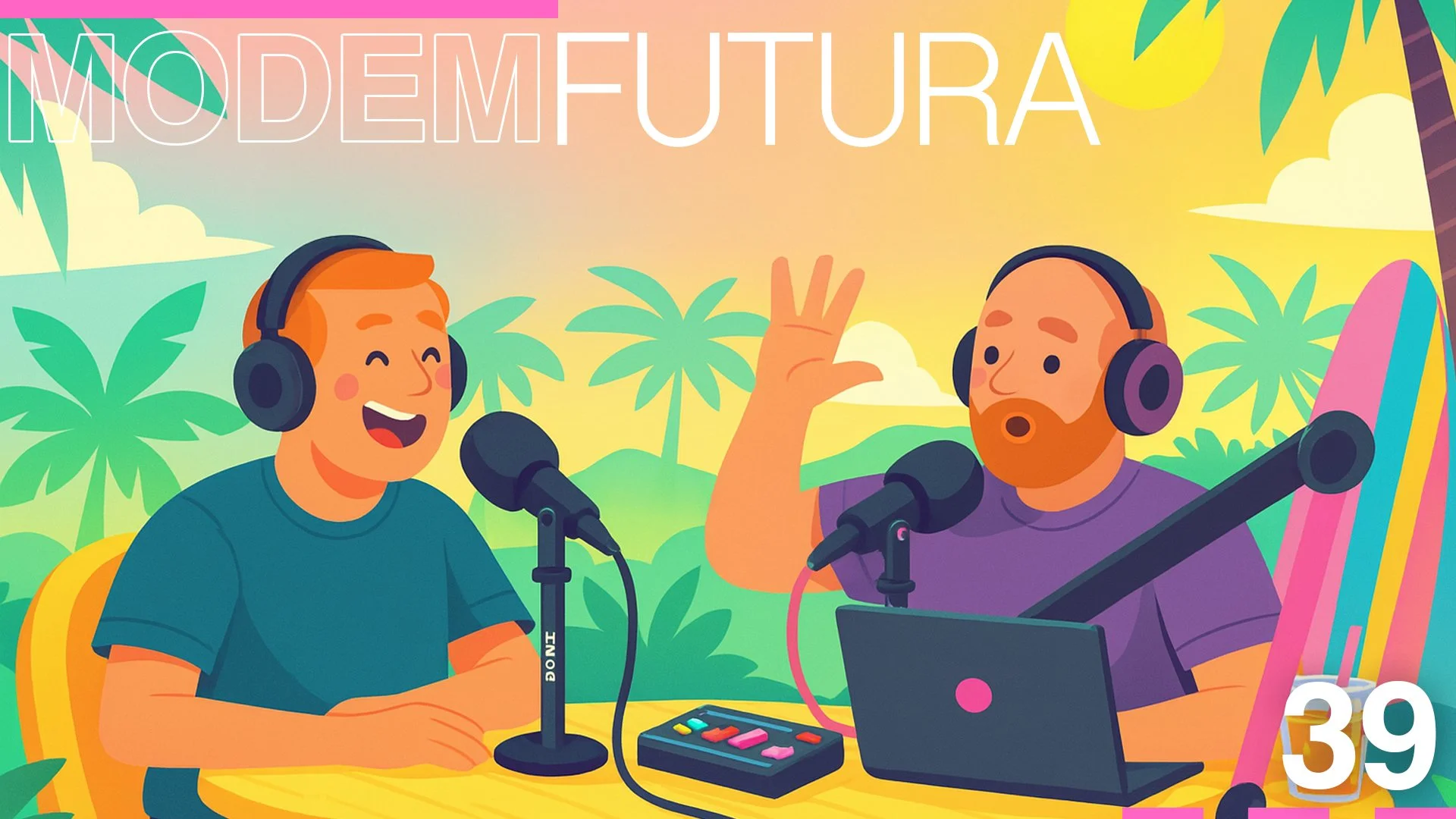
☀️ It’s HOT in here… Dive into Modem Futura’s “Summer Vibes” episode, where hosts Sean Leahy and Andrew Maynard unpack Apple Vision Pro spatial video, Jurassic World’s reboot, Formula 1’s cinematic debut, and China’s AI surge after WEF’s “Summer Davos”—all while exploring how these breakthroughs reshape humanity’s tech‑driven future.
🏖️ While the heat is cranked up in the studio (and Arizona in general) Andrew and I have a chance to unwind from our various summer travels for what we might call a “potpourri” episode where we just get to talk about several topics hot on our minds… So whether you’re off to the beach, the mountains, heading out on a grand holiday, or a much needed staycation - we hope you’ll enjoy some of these “summer” topics.
A Hands‑On Reality Check for Apple Vision Pro
After months of real‑world testing, Sean and Andrew compare wish‑list features and day‑to‑day realities of Apple’s first‑gen spatial computer. From stitching multi‑cam spatial video to designing XR‑ready podcast sets, they deliver practical tips, pitfalls to avoid, and a glimpse of how “work in mixed reality” could eclipse the old‑school laptop sooner than you think.
Jurassic Park vs. Jurassic World—Why Practical Effects Still Matter
Next the duo rewind to 1993’s Jurassic Park to ask: Did Spielberg’s animatronics age better than today’s CGI? Their verdict? New film Jurassic World: Rebirth nails spectacle, but the tactile magic of rubberized T‑rex skin still wins hearts. The debate morphs into a larger conversation on authenticity in digital storytelling—and what it might mean for future filmmakers, brand marketers, and immersive‑media designers.
Formula 1 Meets Hollywood IMAX
Gear-heads rejoice: Brad Pitt’s upcoming Formula 1 feature has Sean and Andrew excited over ultra‑wide‑angle cockpit shots, in‑camera VFX, and how motorsport’s data‑rich culture could reinvent cinematic narratives. They speculate on live telemetry overlays, fan‑controlled POV streams, and why F1 is the perfect test‑bed for mainstreaming real‑time spatial / immersive video.
China’s “Summer Davos” & the AI Arms Race
Fresh off the World Economic Forum’s Annual Meeting of New Champions in Dalian, Andrew unpacks Beijing’s new national AI strategy, and start‑up phenom DeepSeek. The takeaway: global AI leadership is no longer a two‑horse race; it’s a sprint where policy, compute, and culture collide.
Low-background Steel
Sean and Andrew discuss the concept of John Graham-Cumming's Low-background Steel (pre-Ai) website, that represents a point (or perhaps line) in human history, in which all output after the release of ChatGPT in late 2022 will carry some level of “contamination” from generative AI. We explore what this means of the future of being human - and how might we think about this indelible mark on human history.
Why It Matters
Whether you’re a product manager, educator, investor, or lifelong learner, these topics converge on a single question: How will emergent tech redefine what it means to be human? From XR workspaces replacing offices to generative AI altering creative identity, the future is arriving faster—and stranger—than forecast.
🎧 Listen on Apple Podcasts: https://apple.co/45YQ1Ur
📺 Watch us on YouTube: https://www.youtube.com/@ModemFutura
If you’d like to dive deeper, jump into the link and listen to the podcast or watch the YouTube video. Join us as we explore the forces shaping our collective future and the urgent need to keep human values at the heart of innovation.
Subscribe and Connect!
Subscribe to Modem Futura on a favorite podcast platform, follow on LinkedIn, and join the conversation by sharing thoughts and questions. The medium may still be the massage, but everyone has a chance to shape how it kneads modern culture—and to decide what kind of global village we ultimately build.
🎧 Apple Podcast: https://apple.co/45YQ1Ur
🎧 Spotify: https://open.spotify.com/episode/5pfl59Xi6W0rqcHce8QGwV?si=coazi5zDRt2Jm37ur4ouzw
📺 YouTube: https://youtu.be/-rAd8RuzUm0
🌐 Website: https://www.modemfutura.com/