
NEWS & UPDATES
Summer Reading List 2026: The Books That Inspired Our Imagination (Part 1)

Reading Backwards to Understand the Future
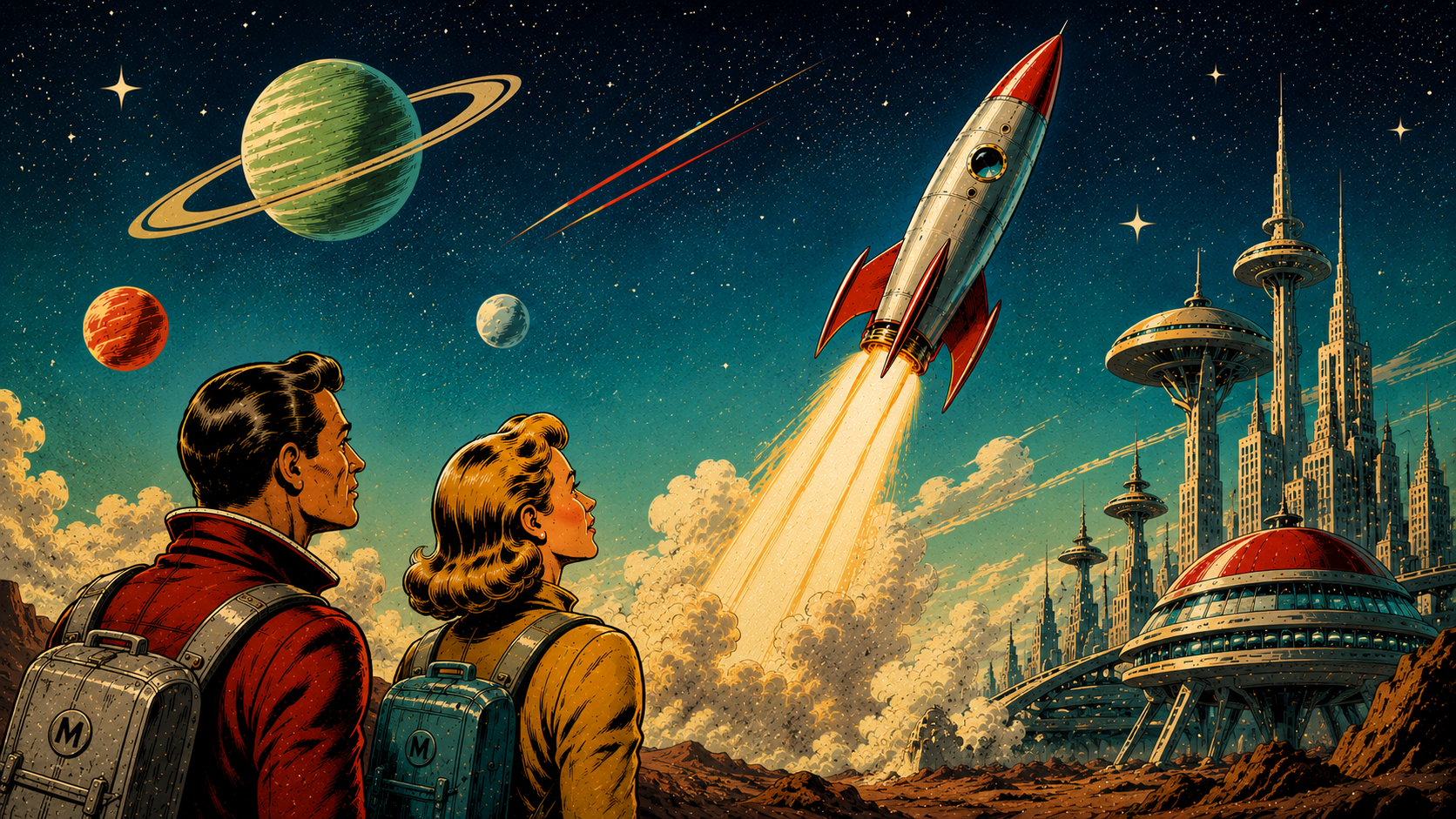
There's a particular kind of book list that shows up every summer — the one that seems designed mostly to signal how serious and well-read its author is. This isn't that. In the first part of our annual Summer Reading List, the guiding instinct was the opposite: lasers, space ships, escapism, the kind of book you genuinely can't put down. What we discovered while recording is that the most escapist reads on the list turned out to be some of the most useful lenses on the present.
The cyberpunk classics anchored the conversation. Neal Stephenson's Snow Crash (1992) coined "metaverse" and imagined a digital overlay on the physical world years before anyone could plausibly build one. William Gibson's Neuromancer (1984) did the same for "cyberspace." Both have been mined relentlessly by the technology industry — and both, the hosts argue, are routinely stripped of their context. Snow Crash is a satire and a warning; it's frequently read as a roadmap. That gap, between fiction written as caution and fiction adopted as ambition, is one of the more revealing dynamics in how Silicon Valley tells its own story.
The deeper thread is about cognition. Snow Crash turns on a virus that crosses from the digital realm into the human mind. In an era of AI systems that engage directly with how we reason and feel, that premise reads less like science fiction and more like a description. Iain M. Banks extends the inquiry in Surface Detail, imagining civilizations that construct virtual heavens and hells so immersive that the line between real and simulated experience dissolves — and asking who, if anyone, has the right to govern what happens inside them. His The Player of Games offers a gentler entry point to the same Culture universe, and a sly meditation on whether a frictionless utopia is something humans actually want. We also dive into some of the amazing and seemingly timeless work of Douglas Adams, whose original Hitchhikers Guide to the Galaxy radio scripts Andrew counts among his prized possessions and whose wit, he insists, anticipated our anxieties about AI with personality long before the chatbots arrived.
The list closes on firmer ground with Cory Doctorow's Enshittification, a nonfiction account of how convenient, delightful platforms decay once users are locked in. It opened onto a question that runs through the whole episode: what do we actually own in a digital age? A printed book from 1980 still works, unconditionally. A digital one comes with terms that can change beneath you. And when the historical record itself becomes editable without a trace, reliability becomes something we can no longer take for granted.
None of these tensions get resolved here — they aren't meant to. The takeaway is quieter and more durable: stories written decades ago remain among our best instruments for thinking clearly about technologies their authors never lived to see. Part 2 continues the list next week.
Subscribe and Connect!
Subscribe to Modem Futura wherever you get your podcasts and connect with us on LinkedIn. Drop a comment, pose a question, or challenge an idea—because the future isn’t something we watch happen, it’s something we build together. The medium may still be the massage, but we all have a hand in shaping how it touches tomorrow.
🎧 Apple Podcast: https://apple.co/444V3ws
🎧 Spotify: https://open.spotify.com/episode/5TXSx0QgY4CxUhWsJSF5wm?si=lHeVVcWHS5qE3wd5lFJl5w
📺 YouTube: https://youtu.be/KN8iEA5tfiQ
🌐 Website: https://www.modemfutura.com/
What Old iPods and Tiny Cameras Teach Us About Technology, Ownership, and Being Human
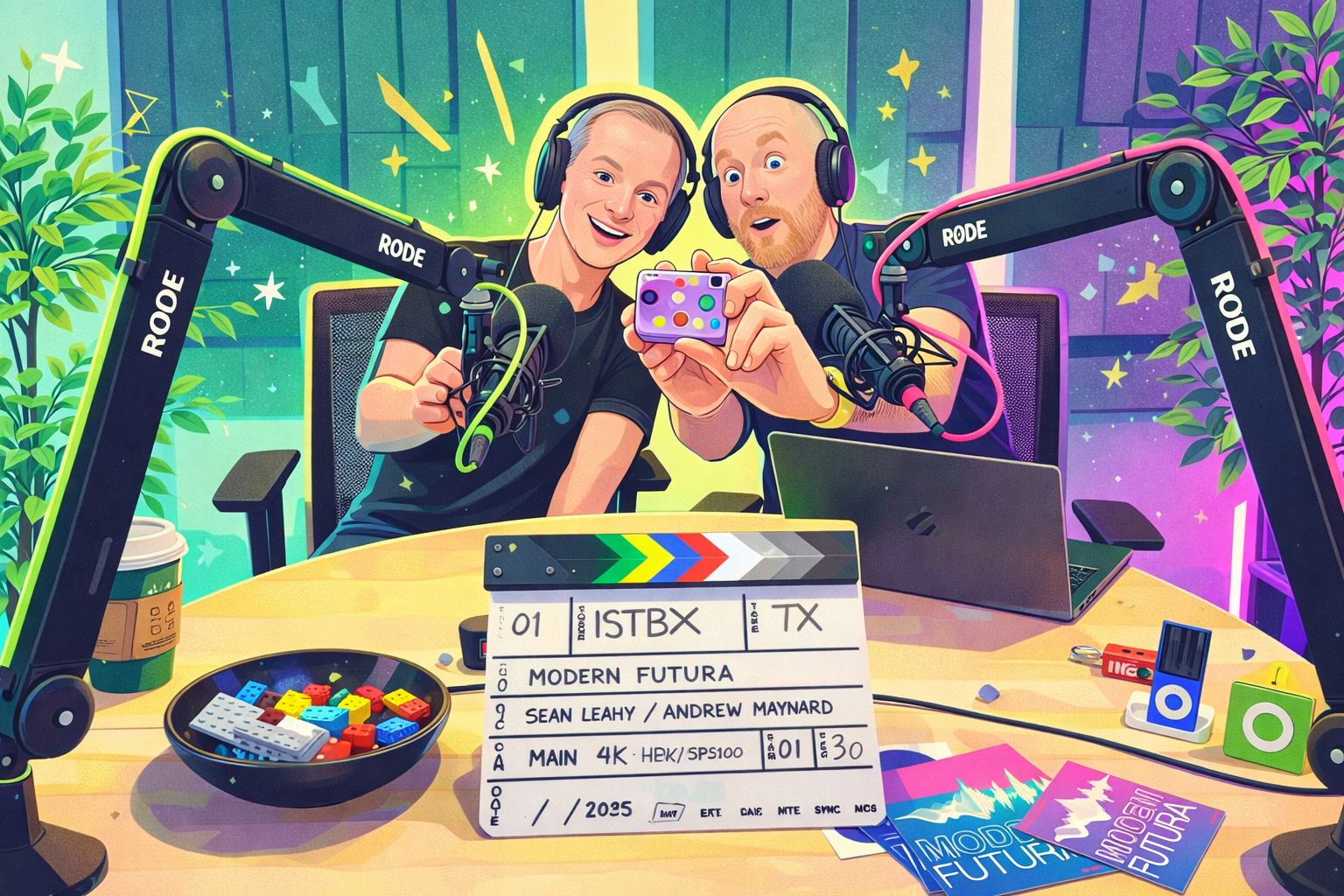
There's a moment in this episode of Modem Futura where two grown adults are hunched over a miniature Polaroid camera, watching a blurry selfie slowly develop — and laughing about it. It's objectively a terrible photograph. But it captures something that most modern technology has quietly optimized away: surprise, imperfection, and the distinctly human joy of not knowing exactly what you're going to get.
This episode began with a box of old iPods — tangled cables, dead batteries, and all — and evolved into a wide-ranging conversation about what we trade away every time we upgrade to something faster, thinner, and more connected. The themes are ones that touch anyone who has ever felt a pang of something unnamed while scrolling through an infinite library of music and being unable to choose a single song.
Ownership in the age of access. The iPods in the conversation are air-gapped — no internet connection, no cloud sync, no subscription. The music on them belongs to their owner in a way that a Spotify library simply does not. This distinction matters more than it might seem, especially when you consider that digital books, photos, and music can disappear when a service shuts down or an account holder passes away. The question of digital legacy — who inherits your cloud — is one most people haven't thought through yet.
Craft, care, and the "fast food" of technology. Sean raises a pointed observation about a recently released video game that shipped with fewer features than its predecessor from a decade ago. It's a pattern that extends well beyond gaming: the pressure to release fast increasingly overrides the commitment to release well. When did "good enough" become the standard?
The paradox of abundance. One of the episode's most compelling threads is the tension between scarcity and surplus. Limited storage on an old iPod forced intentional curation — playlists that became personal time capsules. Unlimited streaming offers everything and, paradoxically, can deliver less meaning. Andrew's students, however, offer a counterpoint: raised in abundance, they've developed their own sophisticated habits of curation and care. Perhaps the pendulum is already swinging.
Imperfection as a feature. The tiny Kodak keychain camera. The Polaroid with its gloriously blurry output. The analog photograph whose chemistry introduces an element of chance. These aren't failures of technology — they're reminders that the most human experiences are often the least predictable ones.
This episode doesn't offer prescriptions. It offers an invitation: to notice, to question, and to be intentional about the role technology plays in your life before someone else makes that choice for you.
🎧 Listen to Episode 73 of Modem Futura — available on Apple Podcasts, Spotify, and wherever you listen.
Subscribe and Connect!
Subscribe to Modem Futura wherever you get your podcasts and connect with us on LinkedIn. Drop a comment, pose a question, or challenge an idea—because the future isn’t something we watch happen, it’s something we build together. The medium may still be the massage, but we all have a hand in shaping how it touches tomorrow.
🎧 Apple Podcast: https://apple.co/4b3P8L8
🎧 Spotify: https://open.spotify.com/episode/2UNsDaZox2jdEb1QYN1m44?si=FUkqjQ0gSEecnYyrjKfoVA
📺 YouTube: https://youtu.be/UKC7UHkGNJQ
🌐 Website: https://www.modemfutura.com/